On this page
Freelancers rarely have a data science team, so a low code machine learning platform has to turn a spreadsheet into a working prediction without a PhD on staff. The seven tools below run from about eight dollars a month to a thousand dollars a month, and every price was checked on the vendor site on November 26, 2026. Most offer a free trial or free credits, so you can test a prediction on your own data before paying. Nanonets is our first pick — document AI that starts at a hundred dollars a month.
How we researched this
We started with the low code machine learning platforms freelancers actually buy, then read each price on the vendor pricing page on November 26, 2026 and noted the free trial or free credits each plan carries. We judged them for a solo operator who needs predictions from client data without hiring a data scientist. We kept only tools with a published price, and we dropped Obviously AI because it was renamed Zams in 2025, and Akkio because its published prices conflicted across sources.
Compare the tools
| Name | Best for | Starting price | Free plan | |
|---|---|---|---|---|
 Nanonets | Freelancers who extract data from client invoices, receipts and forms | $100/month | $50 in free credits to start | Visit |
 Pecan | Freelancers who build churn and demand predictions for clients without code | $760/month | No free tier published on the pricing page | Visit |
 Polymer | Freelancers who turn client spreadsheets into dashboards and forecasts | $50/month | No free tier published on the pricing page | Visit |
 BigML | Freelancers who need a full machine learning platform with an API | $1,000/month | No free tier published on the pricing page | Visit |
 Alteryx One | Freelancers who clean and blend messy client data before modeling | $250/user/month | No free tier published on the pricing page | Visit |
 Paperspace Gradient | Freelancers who train small models in GPU notebooks on a budget | $8/month | No free tier published on the pricing page | Visit |
 Google Vertex AI | Freelancers who want Google-scale AutoML without managing infrastructure | $3.47/hour | No free tier published on the pricing page | Visit |
The low code machine learning platforms software, compared
1. Nanonets
Best for: Freelancers who extract data from client invoices, receipts and forms
Paid tool Starting price: $100/month · Starter plan, $100 a month for 100 credits; $50 in free credits to start; higher tiers are quoted on usage
Free plan: $50 in free credits to start
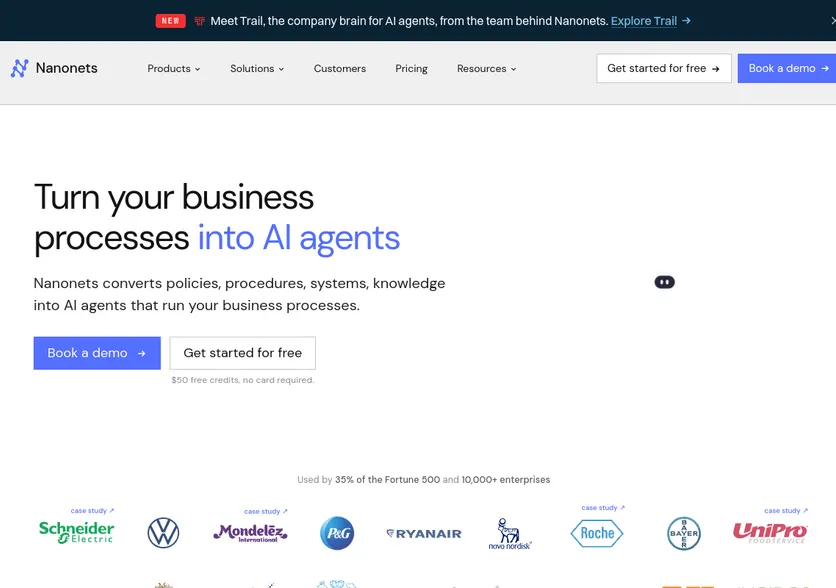
Paperwork is where most freelance data projects begin, and Nanonets reads invoices, receipts and forms so a solo operator never types numbers by hand again. This Nanonets Starter plan extracts the fields you need and sends them to your accounting or operations tool with no training data required. A freelancer can automate a client's document flow in an afternoon and bill for the result instead of the hours.
What we like
- Reads invoices and forms with no training data
- Free credits let you test on real documents first
- Connects to common accounting tools
Watch out for
- Starter costs a hundred dollars a month after the free credits
- Heavy volumes move to usage-based pricing
How to try it
- Open the Nanonets pricing page and claim the free credits
- Upload a sample invoice and check the extracted fields
- Connect the output to your client accounting tool and run a real batch
2. Pecan
Best for: Freelancers who build churn and demand predictions for clients without code
Paid tool Starting price: $760/month · Starter plan, $760 a month billed annually for two prediction batches and 500 million rows; the vendor pricing page redirects to a demo page, so the price is stated on the vendor blog
Free plan: No free tier published on the pricing page
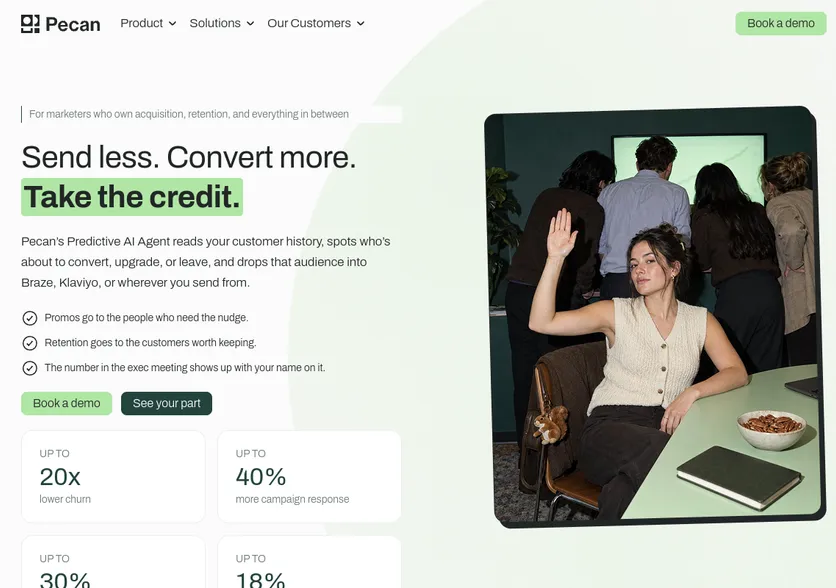
Client work often comes down to one question, and Pecan answers it with predictions built from warehouse tables instead of guesswork. This Pecan Starter plan builds churn, demand and lifetime value models and refreshes them on a schedule without a line of code. A freelancer can deliver a working prediction to a client in days and charge for insight instead of hours.
What we like
- Predictive models without writing code
- Works directly on warehouse tables
- Scheduled refreshes keep scores current
Watch out for
- Starter costs seven hundred and sixty dollars a month billed annually
- Only two prediction batches on the Starter plan
How to try it
- Open the Pecan pricing page and book a demo
- Connect your client data warehouse and pick a prediction goal
- Review the first model and put the scores into the client workflow
3. Polymer
Best for: Freelancers who turn client spreadsheets into dashboards and forecasts
Paid tool Starting price: $50/month · Starter plan, $50 a month billed monthly or $25 a month billed yearly
Free plan: No free tier published on the pricing page
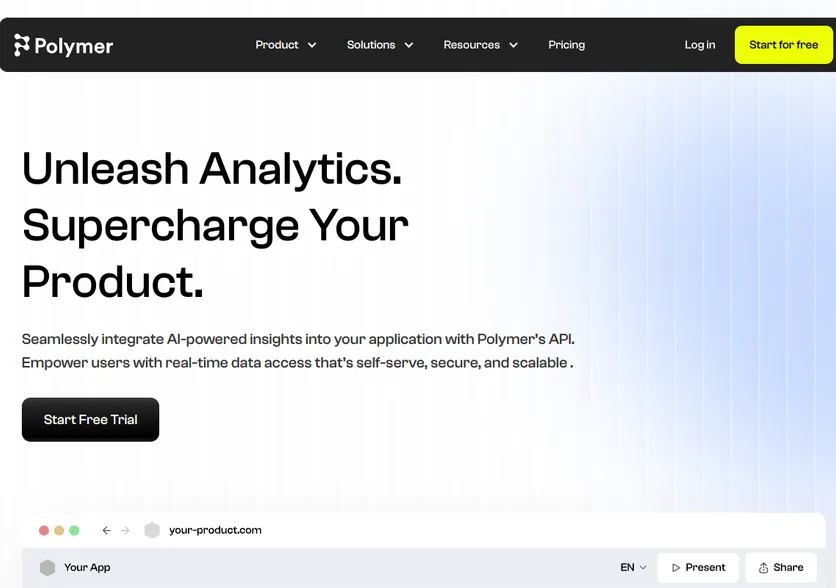
Most freelance data starts life in a spreadsheet, and Polymer adds AI dashboards and predictions on top of the sheet a client already keeps. This Polymer Starter plan turns rows into dashboards, spots patterns and builds simple forecasts without any setup. A freelancer can upload a sales sheet in the morning and show the client a working forecast by lunch.
What we like
- Starts from a plain spreadsheet
- Dashboards and predictions with no setup
- Yearly billing cuts the price in half
Watch out for
- Starter costs fifty dollars a month billed monthly
- Built for lighter analysis, not deep modeling
How to try it
- Open the Polymer pricing page and start a trial
- Upload your client spreadsheet and let Polymer read the columns
- Build a dashboard and share the forecast with the client
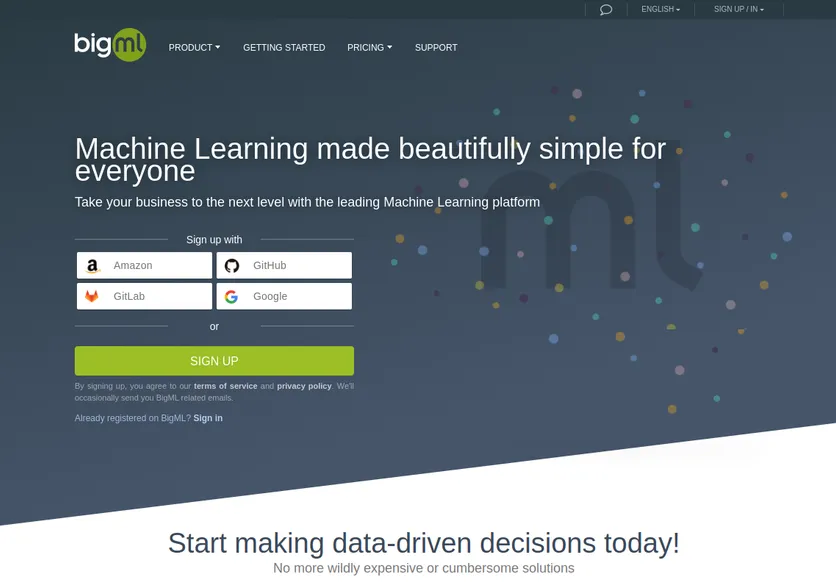
4. BigML
Best for: Freelancers who need a full machine learning platform with an API
Paid tool Starting price: $1,000/month · Lite plan, $1,000 a month or $10,000 a year; Bronze Enterprise is $45,000 a year plus a $10,000 setup fee
Free plan: No free tier published on the pricing page
Some client projects outgrow a spreadsheet, and BigML covers the whole journey from data upload to a live prediction API. This BigML Lite plan builds decision trees, clusters and anomaly detectors through a visual interface and serves predictions through an API. A freelancer can prototype a model in the browser and put it behind an endpoint without building any infrastructure.
What we like
- Full workflow from data to live API
- Visual modeling with no code required
- Wide choice of algorithms in one place
Watch out for
- Lite costs a thousand dollars a month
- Enterprise tiers add a large setup fee
How to try it
- Open the BigML pricing page and create an account
- Upload a dataset and train a decision tree
- Deploy the model as an API and test a live prediction
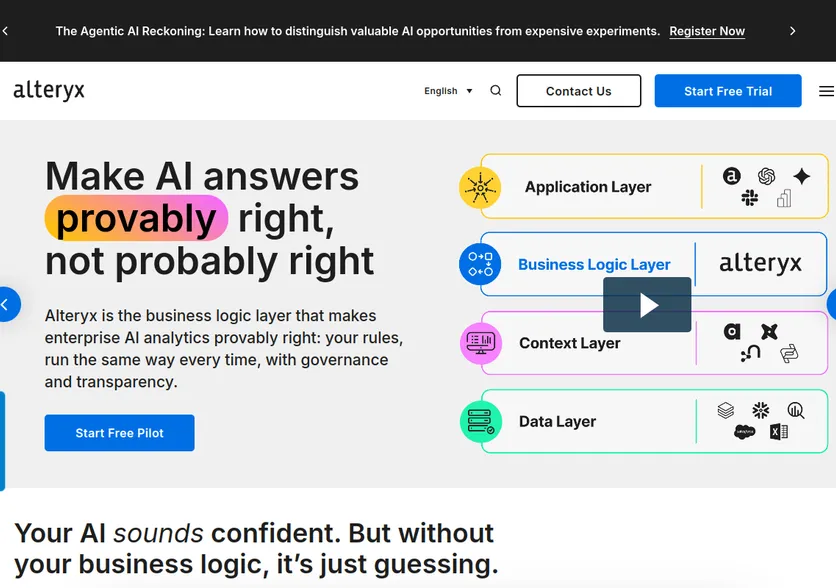
5. Alteryx One
Best for: Freelancers who clean and blend messy client data before modeling
Paid tool Starting price: $250/user/month · Alteryx One Starter plan, $250 a user a month billed annually
Free plan: No free tier published on the pricing page
Messy data eats most of a modeling project, and Alteryx One blends scattered sources into clean tables any model can learn from. This Alteryx One Starter plan gives a freelancer drag and drop workflows, scheduled runs and shared assets in one workspace. A solo operator who spends more time cleaning data than modeling will feel the difference in the first week.
What we like
- Drag and drop data blending
- Scheduled workflows keep data fresh
- Shared assets for the whole team
Watch out for
- Starter costs two hundred and fifty dollars a user a month billed annually
- Per user pricing adds up as the team grows
How to try it
- Open the Alteryx pricing page and start a trial
- Build a workflow that blends your client data sources
- Schedule the workflow and feed the clean output to your model
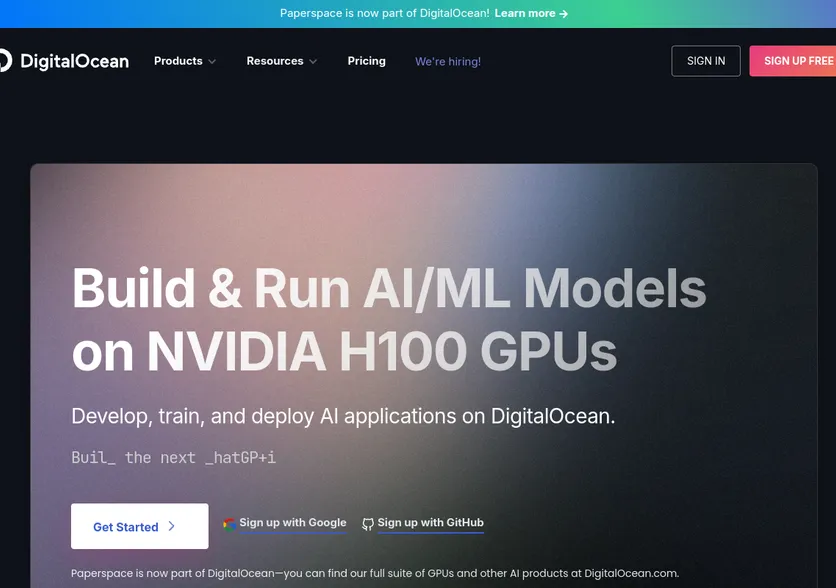
6. Paperspace Gradient
Best for: Freelancers who train small models in GPU notebooks on a budget
Paid tool Starting price: $8/month · Pro plan, $8 a month plus utilization costs for compute
Free plan: No free tier published on the pricing page
Renting a GPU for an afternoon beats buying hardware, and Paperspace Gradient gives a freelancer notebooks with compute that bills only while it runs. This Paperspace Gradient Pro plan adds faster machines, more storage and team workspaces on top of the notebook environment. A freelancer can train a small model for a client experiment and shut the machine down when the job is done.
What we like
- GPU notebooks from eight dollars a month
- Pay for compute only when you use it
- Team workspaces for shared projects
Watch out for
- Pro costs eight dollars a month plus utilization
- Compute bills can climb on long training runs
How to try it
- Open the Paperspace pricing page and create an account
- Launch a notebook with a GPU machine
- Train a model and shut the machine down when done
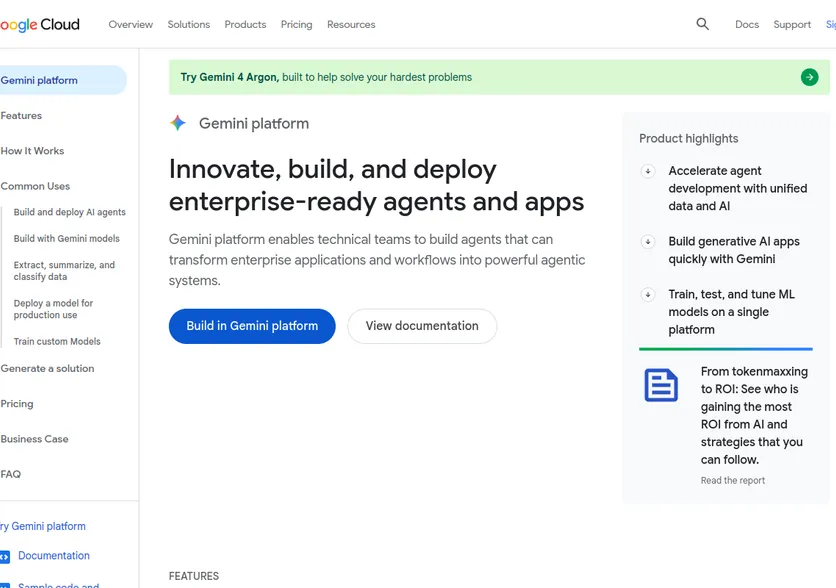
7. Google Vertex AI
Best for: Freelancers who want Google-scale AutoML without managing infrastructure
Paid tool Starting price: $3.47/hour · AutoML image classification training, $3.465 an hour; usage-based, so the monthly bill depends on training time
Free plan: No free tier published on the pricing page
When a client needs a production-grade model, Google Vertex AI trains and serves it on Google infrastructure with no servers to manage. This Google Vertex AI AutoML service builds image classification models from labeled data and charges by the training hour. A freelancer can train a serious model for a client without provisioning a single server or tuning a training loop.
What we like
- Managed training with no servers to run
- AutoML builds models from labeled data
- Scales from prototype to production
Watch out for
- Training costs about three and a half dollars an hour
- Usage-based billing needs a spending cap
How to try it
- Open the Vertex AI pricing page and create a project
- Upload labeled images and start an AutoML training job
- Deploy the trained model and test a prediction
Prices above were checked on each vendor’s own website on Nov 26, 2026 and can change — the vendor’s page is the final word. Vendor links are editorial: nobody paid to be listed or ranked here. Vendors who want a featured listing can see how it works on our Get listed page.
The low code machine learning platforms software, compared
A freelancer bills for outcomes, so the right platform is the one that turns a client spreadsheet into a working prediction before the invoice goes out. This list runs from about eight dollars a month for a notebook to a thousand dollars a month for a full platform, and usage-based tools like Vertex AI can cost almost nothing in a quiet month and far more during a training sprint. The headline plan each vendor shows on its own pricing page is the number in the table above, checked on November 26, 2026.
Start with the free credits or trial on two tools and train the same model through both. Compare the prediction quality and the hours saved, then pick the tool you will actually open for the next client. A hundred-dollar tool that ships a working prediction in a week beats a thousand-dollar platform that sits unused.
Before you buy
- Count the seats first, because most plans here charge per user and a freelancer feels every extra seat.
- Check the usage limits on the plan you like, because a cheap plan with a small cap costs more after overage fees.
- Test the tool on your own client data first, because a demo dataset never shows how it handles messy real spreadsheets.
- Ask whether the tool fits your client work: Nanonets reads documents, BigML builds models from tables, and Vertex AI trains image models.
- Add up the hours saved, because a hundred-dollar tool that ships a prediction in a week buys a freelancer a month of runway.
Official websites
Official websites of the products reviewed above. Features and prices were checked against these sites when this guide was written, and they can change, so confirm on the vendor site before you buy.
Frequently asked questions
Which low code machine learning platform is best for freelancers in 2026?
Nanonets, at a hundred dollars a month, is the safest default because it turns invoices and forms into structured data with no training data and no code. Pecan is better when your clients need churn or demand predictions from warehouse data, since it builds models from tables they already keep. Polymer wins on price and simplicity, at fifty dollars a month for spreadsheet dashboards and simple predictions.
What is the cheapest low code machine learning platform for freelancers?
Paperspace Gradient Pro, at eight dollars a month plus compute, is the cheapest entry here and gives you GPU notebooks for training small models. Polymer Starter, at fifty dollars a month billed monthly, is the cheapest no-code option for dashboards and forecasts. Nanonets Starter, at a hundred dollars a month, adds fifty dollars in free credits so you can test on real documents first.
Can freelancers try low code machine learning platforms for free?
Most of them, yes. Nanonets gives fifty dollars in free credits, and several tools on this list offer free trials from their pricing pages. Vertex AI, Paperspace and Polymer all let you start small before committing to a monthly plan. Test on your own client data first, not a demo file, to see the results your clients will actually get.
Do low code machine learning platforms need coding skills?
No, that is the point of this list. Nanonets, Pecan, Polymer and BigML all build models through visual interfaces or uploaded files, with no code required to get a first prediction. Vertex AI helps when you write some code, but it can be used through its web console. Start with a no-code tool and move to a code-friendly one only when your models outgrow it.
Which low code machine learning platform is best for predictions from a spreadsheet?
Polymer is the strongest pick for spreadsheet predictions, because it reads your sheet, builds dashboards and forecasts patterns without any setup. Pecan is better when your data lives in a warehouse and you need churn or lifetime value predictions. Both offer trials, so a freelancer can test the same spreadsheet through each one and compare the forecasts side by side.
Need everyday AI help too? Try Toolsvine's free AI tools for small teams right in your browser.
Browse AI Tools (In-Browser, No API) tools