On this page
A startup that reads customer feedback, support tickets or reviews by hand will drown in text before it learns anything from it. The seven platforms below turn that text into entities, sentiment and topics, and every price was checked on the vendor site on November 26, 2026. Most charge by the document or the character, so a small team can start for a few dollars and scale as volume grows. Google Cloud Natural Language is our first pick — a dollar per thousand units with the first five thousand free.
How we researched this
We started with the natural language processing platforms startups actually buy, then read each price on the vendor pricing page on November 26, 2026 and noted the free tier or trial each plan carries. We judged them for a small team that needs to understand customer text without building its own models. We kept only tools with a published price, and we dropped any tool whose price we could not verify on the vendor site.
Compare the tools
| Name | Best for | Starting price | Free plan | |
|---|---|---|---|---|
 Google Cloud Natural Language | Startups that want pay-as-you-go text analysis on Google infrastructure | $1.00 per 1,000 units | First 5,000 units free each month | Visit |
 TextRazor | Startups that need deep entity and topic extraction from documents | $200/month | No free tier published on the pricing page | Visit |
 Amazon Comprehend | Startups already on AWS that want text analysis next to their data | $0.0001 per unit | No free tier published on the pricing page | Visit |
 IBM Watson Natural Language Understanding | Startups that need emotion and semantic analysis on top of entities | $0.003 per item | Lite plan free for 30,000 items a month | Visit |
 Diffbot | Startups that need to extract structured data from web pages at scale | $299/month | No free tier published on the pricing page | Visit |
 Hugging Face | Startups that want to run open models on their own endpoints | $0.033/hour | No free tier published on the pricing page | Visit |
 OpenAI | Startups that want a frontier model for classification, extraction and summarization | $2.00 per 1M input tokens | No free tier published on the pricing page | Visit |
The natural language processing platforms, compared
1. Google Cloud Natural Language
Best for: Startups that want pay-as-you-go text analysis on Google infrastructure
Paid tool Starting price: $1.00 per 1,000 units · Standard pricing, $1.00 per 1,000-character unit for entity and sentiment analysis; the first 5,000 units each month are free
Free plan: First 5,000 units free each month
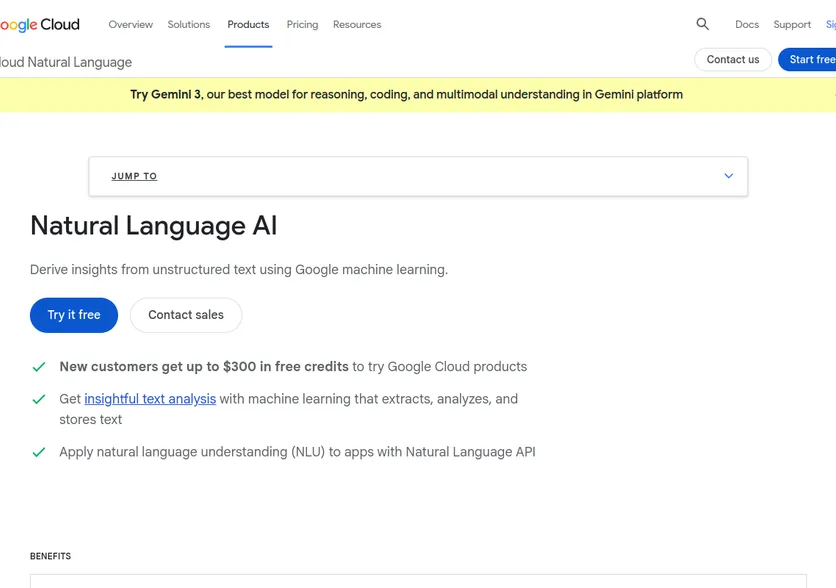
Google Cloud Natural Language is the simplest way to add entity extraction and sentiment analysis to a product, because you pay per unit and nothing else. This Google Cloud Natural Language API reads a document, returns the people, places and organizations it mentions, and scores the sentiment of every sentence. A startup can analyze a thousand support tickets for a dollar and find the complaints that matter most.
What we like
- Pay per unit with no monthly minimum
- First five thousand units free each month
- Entity and sentiment analysis in one call
Watch out for
- Costs a dollar per thousand units after the free tier
- Bills add up fast on very large volumes
How to try it
- Open the Google Cloud pricing page and create a project
- Send a sample document to the analyze API
- Store the entities and sentiment scores in your database
2. TextRazor
Best for: Startups that need deep entity and topic extraction from documents
Paid tool Starting price: $200/month · Starter plan, $200 a month for 6,000 requests a day
Free plan: No free tier published on the pricing page
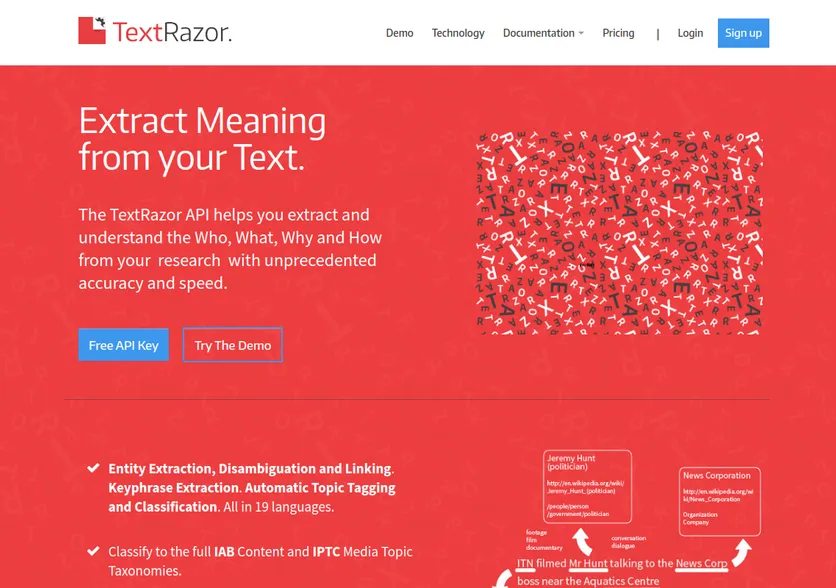
TextRazor goes deeper than most APIs here, pulling entities, topics, relations and sentiment out of a document in a single call. This TextRazor Starter plan handles six thousand requests a day, which covers a busy support inbox or a daily news feed with room to spare. A small team can build a research feed or a ticket triage system in days instead of months.
What we like
- Entities, topics and relations in one call
- Six thousand requests a day on Starter
- Strong accuracy on news and research text
Watch out for
- Starter costs $200 a month
- Priced per day of requests, not per month of use
How to try it
- Open the TextRazor plans page and create an account
- Send a sample article to the analysis API
- Use the entities and topics to build your first workflow
3. Amazon Comprehend
Best for: Startups already on AWS that want text analysis next to their data
Paid tool Starting price: $0.0001 per unit · Natural language APIs, $0.0001 per unit of 100 characters
Free plan: No free tier published on the pricing page
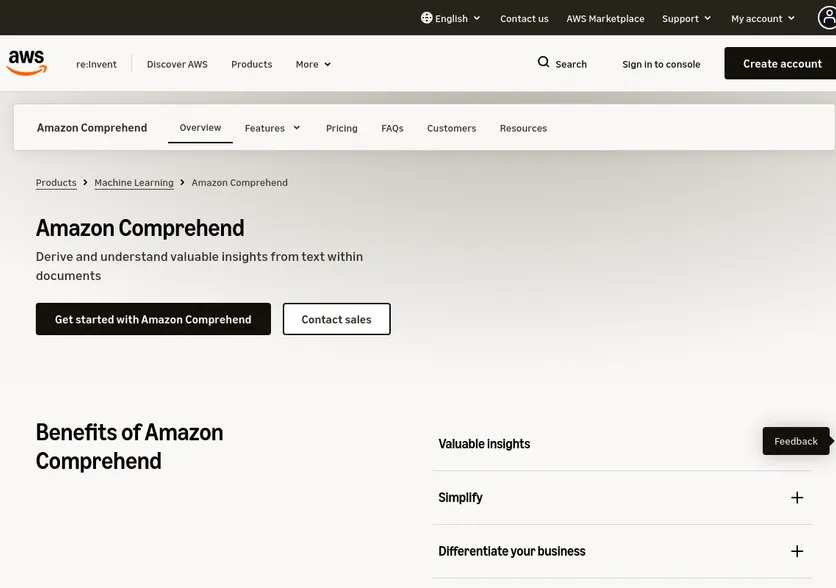
Amazon Comprehend is the natural choice for a team already running on AWS, because it sits next to your storage and your queues. This Amazon Comprehend API detects entities, key phrases, sentiment and language in any document you send it. A startup can pipe support tickets straight from storage into analysis without moving data to another vendor.
What we like
- Sits next to your AWS storage and queues
- Entity, sentiment and language detection
- Tiny per-unit price for small volumes
Watch out for
- Costs a fraction of a cent per unit of text
- Bills grow with every document you analyze
How to try it
- Open the Amazon Comprehend pricing page and open the console
- Send a sample document to the detect API
- Pipe your ticket store into Comprehend with a simple job
4. IBM Watson Natural Language Understanding
Best for: Startups that need emotion and semantic analysis on top of entities
Paid tool Starting price: $0.003 per item · Standard plan, $0.003 per NLU item; the Lite plan is free for 30,000 items a month
Free plan: Lite plan free for 30,000 items a month
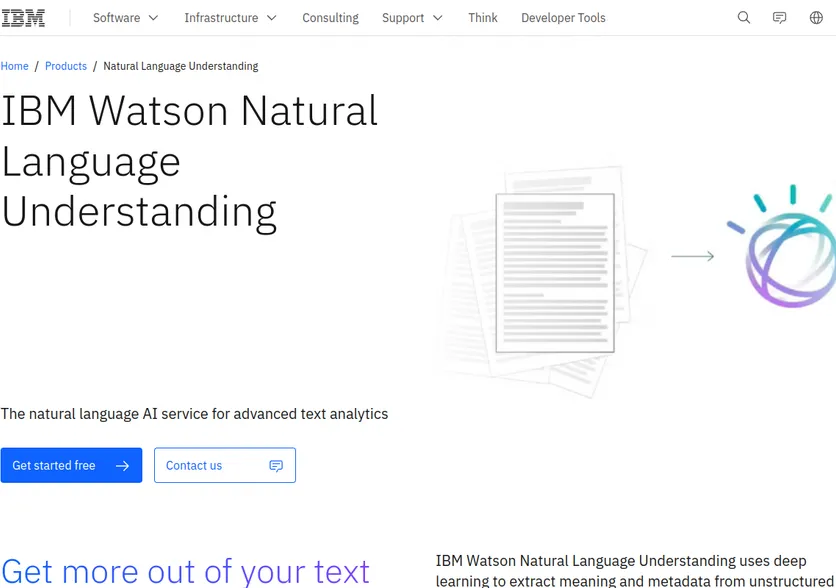
IBM Watson Natural Language Understanding adds emotion and semantic roles to the usual entity and sentiment mix, which helps when tone matters as much as topic. This IBM Watson Natural Language Understanding Standard plan analyzes documents through one API and returns categories, concepts and emotion scores. A startup can tell angry customers from happy ones and route each ticket to the right person.
What we like
- Emotion and semantic analysis included
- Lite plan free for thirty thousand items a month
- Strong category and concept detection
Watch out for
- Standard costs three tenths of a cent per item
- Per-item pricing needs volume tracking
How to try it
- Open the IBM pricing page and create a service instance
- Send a sample ticket to the analyze API
- Use the emotion and category scores to route tickets
5. Diffbot
Best for: Startups that need to extract structured data from web pages at scale
Paid tool Starting price: $299/month · Startup plan, $299 a month for 250,000 credits a month; the Natural Language API costs one credit per document
Free plan: No free tier published on the pricing page
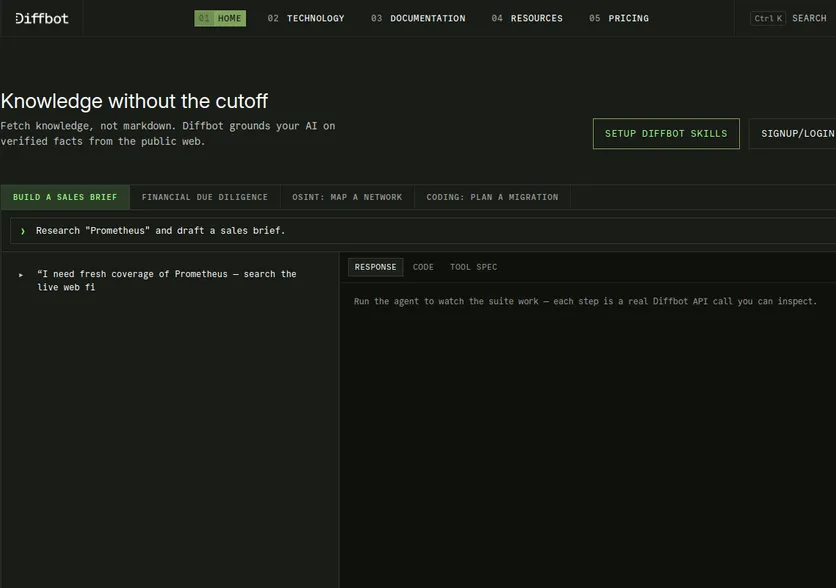
Diffbot is the web data specialist here, turning whole pages into structured records your product can use. This Diffbot Startup plan gives you a quarter of a million credits a month, and each document through the Natural Language API costs a single credit. A startup can monitor competitor pages, track product mentions and build a research database without writing a scraper.
What we like
- A quarter of a million credits a month
- One credit per document analyzed
- Built for web pages and articles
Watch out for
- Startup costs $299 a month
- Credits burn fast on very large crawls
How to try it
- Open the Diffbot pricing page and create an account
- Send a page URL to the Natural Language API
- Store the structured output and schedule regular crawls
6. Hugging Face
Best for: Startups that want to run open models on their own endpoints
Paid tool Starting price: $0.033/hour · Inference Endpoints, $0.033 an hour for a small CPU endpoint; GPU endpoints cost more
Free plan: No free tier published on the pricing page
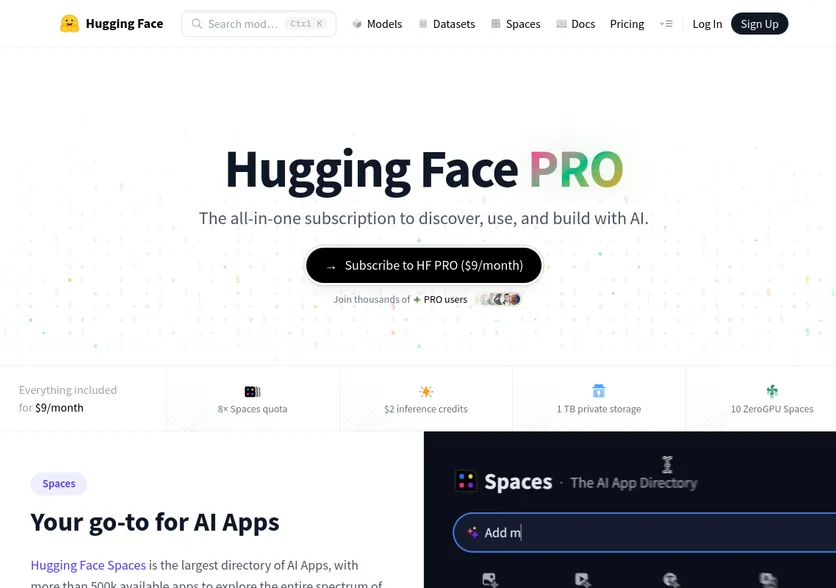
Hugging Face is the open model hub, and its endpoints let a startup run those models behind a private API. This Hugging Face Inference Endpoints service deploys a model of your choice and charges by the hour it stays up. A team can ship a custom classifier or summarizer without training anything from scratch.
What we like
- Thousands of open models to choose from
- Private endpoints from three cents an hour
- No training needed to start
Watch out for
- Endpoints cost about three cents an hour while running
- GPU endpoints cost considerably more
How to try it
- Open the Hugging Face pricing page and pick a model
- Deploy it as an Inference Endpoint
- Send text to your endpoint and read the results
7. OpenAI
Best for: Startups that want a frontier model for classification, extraction and summarization
Paid tool Starting price: $2.00 per 1M input tokens · API pricing, $2.00 per one million input tokens for GPT-6.2 Sol; output tokens cost more
Free plan: No free tier published on the pricing page
OpenAI is the most flexible option here, because one API can classify, extract, summarize and rewrite text in the same call. This OpenAI API charges by the token, so a short classification costs a fraction of a cent and a long summary costs a few cents. A startup can prototype any text workflow in an afternoon and pay only for what it actually runs.
What we like
- One API for classification, extraction and summary
- Pay per token with no monthly minimum
- Fastest way to prototype a text workflow
Watch out for
- Input costs two dollars per million tokens
- Output tokens cost more than input tokens
How to try it
- Open the OpenAI pricing page and create an API key
- Send a sample ticket to the model with a short prompt
- Tune the prompt and put the call into your product
Prices above were checked on each vendor’s own website on Nov 26, 2026 and can change — the vendor’s page is the final word. Vendor links are editorial: nobody paid to be listed or ranked here. Vendors who want a featured listing can see how it works on our Get listed page.
What natural language processing costs in 2026
Most of these platforms charge by the document, the character or the token, so the monthly bill follows your volume instead of your headcount. This list runs from a dollar per thousand units on Google to two hundred and ninety nine dollars a month for a Diffbot Startup plan, and the cheapest option depends entirely on how much text you process. The headline plan each vendor shows on its own pricing page is the number in the table above, checked on November 26, 2026.
Start with the free tier on two platforms and run the same thousand documents through both. Compare the entity accuracy and the sentiment scores, then pick the platform your team will actually call every day. A pay-as-you-go API that costs a few dollars in a quiet month beats a flat plan that bills the same in December as in July.
Before you buy
- Count your monthly documents first, because per-unit pricing is cheap at startup volume and painful at scale.
- Check the free tier on the plan you like, because Google and IBM both give away thousands of free units every month.
- Test the API on your own text first, because a demo on news articles never shows how it handles your support tickets.
- Ask whether the tool fits your stack: Comprehend suits AWS shops, while Hugging Face suits teams that run open models.
- Watch the output costs too, because OpenAI charges more for output tokens than for input tokens.
Official websites
Official websites of the products reviewed above. Features and prices were checked against these sites when this guide was written, and they can change, so confirm on the vendor site before you buy.
Frequently asked questions
Which natural language processing platform is best for a startup in 2026?
Google Cloud Natural Language, at a dollar per thousand units with the first five thousand free, is the safest default because it covers entities and sentiment with no monthly minimum. TextRazor is better when your team needs deep topic and relation extraction from long documents. Diffbot wins when the text comes from web pages, since it turns whole pages into structured data.
What is the cheapest natural language processing platform for a startup?
Google Cloud Natural Language is the cheapest way to start, at a dollar per thousand units with the first five thousand units free each month. IBM Watson Natural Language Understanding is close behind, with a free Lite plan covering thirty thousand items a month. For a flat monthly price, Hugging Face Inference Endpoints start at about three cents an hour for a small CPU endpoint.
Can I try natural language processing platforms for free?
Yes, most of them offer a free tier or trial. Google gives away five thousand units a month and IBM gives away thirty thousand items a month on its Lite plan. TextRazor, Diffbot and Hugging Face all offer trial access from their pricing pages. Run a thousand of your own documents through two platforms before paying, and compare the results side by side.
Do natural language processing platforms work with support tickets?
Yes, that is one of the most common uses. Comprehend, Watson and Google all read tickets, extract entities and score sentiment, so your team can route angry customers first and spot the issues that keep repeating. Diffbot adds web monitoring on top, and OpenAI can classify and summarize tickets in plain language. Start with one inbox and one use case, then expand.
Which natural language processing platform is best for sentiment analysis?
Google Cloud Natural Language is the strongest pick for plain sentiment scoring, because it returns a score and magnitude for every sentence at a dollar per thousand units. IBM Watson adds emotion detection on top of sentiment, which helps when tone matters. OpenAI is the most flexible choice, since a short prompt can return sentiment, urgency and a summary in one call.
Need everyday AI help too? Try Toolsvine's free AI tools for small teams right in your browser.
Browse AI Tools (In-Browser, No API) tools