On this page
Lab work runs on protocols, samples and deadlines: a study has steps that must happen in order, equipment that must be booked, and results that must be recorded. The eight tools below cover that job for lab teams of every size, from a three-dollar seat for a small bench team to a database-backed system for a lab tracking many samples. Airtable leads because its tables, views and automations match how labs already think about data for twenty dollars per user a month, and the rest are ranked on how well they handle protocols, samples and study deadlines for the price.
How we researched this
We checked every price on the vendor pricing page on November 28, 2026, and only included tools with a published US dollar list price. Quote-only laboratory systems that publish no prices, including LabWare LIMS, STARLIMS and Benchling enterprise plans, are not in this list. Prices change, so confirm the current figure on the vendor site before you buy.
Compare the tools
| Name | Best for | Starting price | Free plan | |
|---|---|---|---|---|
 Airtable | Teams that track structured data behind their projects | $20/user/month | Free plan | Visit |
 ClickUp | Teams that want every view and tool in one workspace | $9/user/month | Free plan | Visit |
 Asana | Teams that need timelines, goals and portfolios in one place | $10.99/user/month | Free plan (up to 2 users) | Visit |
 Monday.com | Teams that want visual boards and no-code automations | $9/seat/month | Free plan (up to 2 seats) | Visit |
 Smartsheet | Teams that think in spreadsheets and need real project controls | $9/member/month | No free plan; 30-day free trial | Visit |
 Notion | Teams that want docs, wikis and projects in one workspace | $10/user/month | Free plan | Visit |
 Trello | Teams that want the simplest possible visual board | $5/user/month | Free plan (up to 10 collaborators) | Visit |
| nTask | Small teams that want the cheapest capable option | $3/user/month | Free plan (up to 5 members) | Visit |
The project management software for lab teams, compared
1. Airtable
Best for: Teams that track structured data behind their projects
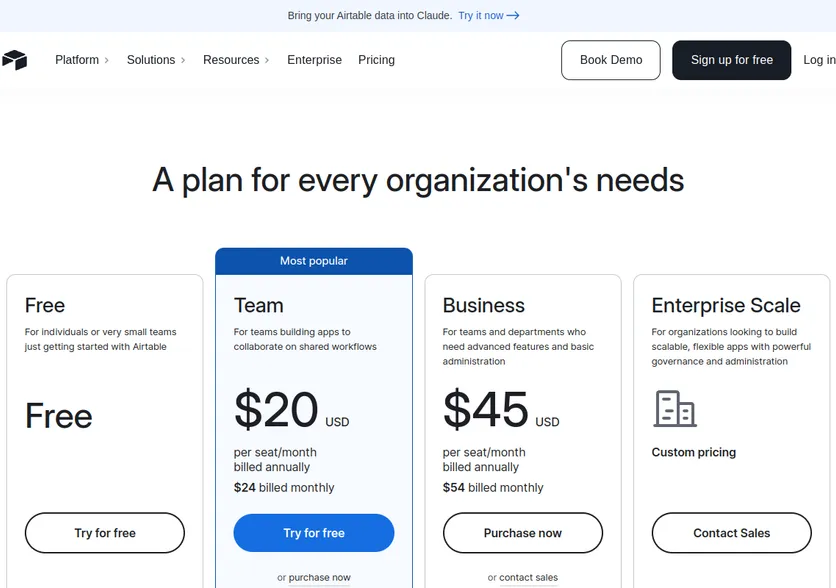
Paid tool Starting price: $20/user/month · Twenty dollars per user a month billed annually on Team ($24 billed monthly); Business is $45 a user a month billed annually; Enterprise Scale is quoted; the free plan covers up to five users
Free plan: Free plan
Lab teams that track samples, experiments and results as structured data get a real database behind the work in this Airtable plan, which costs twenty dollars per user a month billed annually, with views for every bench and study. Grid, calendar, Kanban and gallery views turn the same records into whatever the team needs to see. Automations and interfaces connect the data to the people who use it, without a separate database tool.
What we like
- Grid, calendar, Kanban and gallery views of the same records
- Automations connect the data to the people who use it
- Interfaces give each role a clean view without extra tools
Watch out for
- The entry paid tier is dearer than most rivals here
- Heavy relational set-ups need someone who enjoys databases
How to try it
- Build a base with one table per workstream and link the records
- Add a Kanban view for daily work and a calendar view for deadlines
- Create an interface that shows stakeholders only what they need
2. ClickUp
Best for: Teams that want every view and tool in one workspace
Paid tool Starting price: $9/user/month · Nine dollars per user a month billed annually on Core ($12 billed monthly); Business is $17 a user a month billed annually; Enterprise is quoted; the old Unlimited tier name was retired in the October to November 2026 ladder rebuild
Free plan: Free plan
A lab team that mixes protocols, sample tracking and equipment bookings in one place finds room for all of them in this ClickUp plan, which costs nine dollars per user a month billed annually, with a view for every kind of work. Views span lists, boards, calendars and Gantt charts, so each person works in the layout that suits them best. Docs, goals and time tracking sit inside the same workspace, which keeps the tool count down.

What we like
- List, board, calendar and Gantt views in the same workspace
- Docs, goals and time tracking included without extra tools
- Deep customisation suits almost any workflow
Watch out for
- The breadth of features takes real time to set up well
- Some teams find the interface busy compared with simpler boards
How to try it
- Set up a Space for each project and pick the view that suits the work
- Add custom fields for the details the team tracks every week
- Turn on time tracking and goals so progress reports itself
3. Asana
Best for: Teams that need timelines, goals and portfolios in one place
Paid tool Starting price: $10.99/user/month · Ten dollars and ninety-nine cents per user a month billed annually ($13.49 billed monthly); Advanced is $24.99 a user a month billed annually ($30.49 monthly); Enterprise is quoted
Free plan: Free plan (up to 2 users)
When a lab runs several studies at once, each with its own protocol steps and deadlines, this Asana plan costs ten dollars and ninety-nine cents per user a month billed annually and keeps every study on its own timeline. Timeline and Gantt views keep every workstream visible, while custom fields and forms capture the details each project needs. Automations move routine updates off the team so people spend their time on the work itself.

What we like
- Timeline and Gantt views keep every workstream visible
- Unlimited automations and forms on the Starter plan
- Goals and portfolios connect daily work to strategy
Watch out for
- The free Personal plan now covers only two users
- Portfolios and workload need the dearer Advanced plan
How to try it
- Create a project from a template and add every task with an owner and due date
- Switch to Timeline view and link dependencies between tasks
- Set up a dashboard that reports progress to stakeholders each week
4. Monday.com
Best for: Teams that want visual boards and no-code automations
Paid tool Starting price: $9/seat/month · Nine dollars per seat a month billed annually on Basic ($12 billed monthly); Standard is $12 a seat a month billed annually ($14 monthly); Pro is $19 ($24 monthly); paid plans start at three seats
Free plan: Free plan (up to 2 seats)
Lab teams that track experiments, reagents and instrument time across benches get one visual board in this Monday.com plan, which costs nine dollars per seat a month billed annually, with automations that flag overdue steps. Colourful boards and timeline views make the whole workload visible at a glance, and automations handle status changes and reminders without manual chasing. Dashboards roll every project into one view for managers who need the big picture.
What we like
- Colourful boards make the whole workload visible at a glance
- Automations handle status changes and reminders without chasing
- Dashboards roll every project into one view for managers
Watch out for
- Basic has no timeline view and almost no automations
- Paid plans sell in seat blocks with a three-seat minimum
How to try it
- Build a board with groups for each project phase and columns for status and owner
- Add an automation that moves items and notifies owners when dates slip
- Create a dashboard that shows progress across all boards at once
5. Smartsheet
Best for: Teams that think in spreadsheets and need real project controls
Paid tool Starting price: $9/member/month · Nine dollars per member a month billed annually on Pro ($12 billed monthly); Business is $19 a member a month billed annually ($24 monthly); Enterprise is quoted; Pro caps at ten members and the free plan is closed to new sign-ups
Free plan: No free plan; 30-day free trial
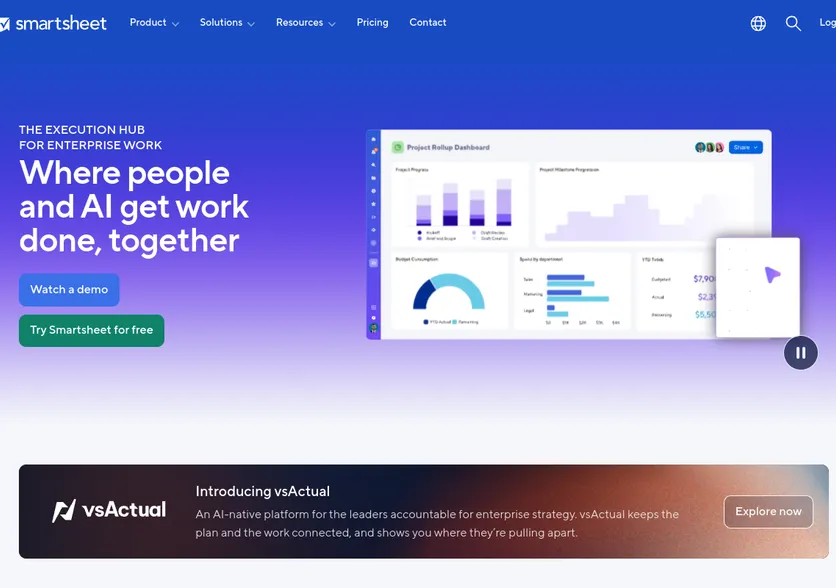
Lab teams that already plan studies in spreadsheets can keep the grid and add real project controls in this Smartsheet plan, which costs nine dollars per member a month billed annually, with reports that roll up every experiment. Grids, Gantt charts and dashboards feel familiar to anyone who lives in spreadsheets, with automations and approvals layered on top. Reports pull live data from many sheets, so status updates write themselves.
What we like
- Grids, Gantt charts and dashboards feel familiar to spreadsheet users
- Reports pull live data from many sheets at once
- Automations and approvals run on top of the familiar grid
Watch out for
- Pro caps at ten members, so growing teams must move to Business
- Only paid members can edit, which can surprise new buyers
How to try it
- Build a sheet for the project with columns for owner, status and due date
- Add a Gantt view and set dependencies between key milestones
- Create a report that pulls live status from every project sheet
6. Notion
Best for: Teams that want docs, wikis and projects in one workspace
Paid tool Starting price: $10/user/month · Ten dollars per user a month billed annually on Plus ($12 billed monthly); Business is $20 a user a month billed annually ($24 monthly) and includes the full Notion AI suite; Enterprise is quoted; the standalone AI add-on was withdrawn in May 2025
Free plan: Free plan
A lab team that keeps protocols, SOPs and study notes beside the daily tasks gets all of it in this Notion plan, which costs ten dollars per user a month billed annually, with pages and databases in one workspace. Pages, databases and wikis combine notes and project tracking in one flexible workspace. Templates and linked databases let a team shape the tool around its own process instead of the other way round.

What we like
- Pages, databases and wikis combine notes and tracking in one place
- Templates and linked databases shape the tool around the team
- Flexible views turn the same data into boards, calendars or tables
Watch out for
- Full Notion AI needs the Business plan at double the price
- Freedom to build anything means set-up takes real thought
How to try it
- Create a database for projects with properties for owner, status and deadline
- Build a board view for daily work and a calendar view for deadlines
- Link a wiki page to each project so notes stay beside the tasks
7. Trello
Best for: Teams that want the simplest possible visual board
Paid tool Starting price: $5/user/month · Five dollars per user a month billed annually on Standard ($6 billed monthly); Premium is $10 a user a month billed annually ($12.50 monthly); Enterprise is $17.50 a user a month billed annually only, with a fifty-seat minimum and a ten-thousand-dollar minimum spend
Free plan: Free plan (up to 10 collaborators)
A small lab that runs samples through clear stages gets the simplest possible board in this Trello plan, which costs five dollars per user a month billed annually, with a list for every step from receipt to result. Boards, lists and cards make the work visible in seconds, and Power-Ups add calendars, timelines and integrations when a team outgrows the basics. The free plan covers small teams, so trying it costs nothing.
What we like
- Boards, lists and cards make work visible in seconds
- Power-Ups add calendars, timelines and integrations as needed
- The free plan covers small teams with no card required
Watch out for
- Timeline, calendar and dashboard views need Premium
- Every Workspace member counts as billable on paid plans
How to try it
- Create a board with a list for each stage of the work
- Add cards for every task with a member, due date and checklist
- Turn on the calendar Power-Up to see deadlines across the board
8. nTask
Best for: Small teams that want the cheapest capable option
Paid tool Starting price: $3/user/month · Three dollars per user a month billed annually on Premium ($4 billed monthly); Business is $8 a user a month billed annually ($12 monthly); Enterprise is quoted
Free plan: Free plan (up to 5 members)
A small lab team that needs task tracking, meetings and risk logs without a big budget fits this nTask plan, which costs three dollars per user a month billed annually, the cheapest seat in this list. Tasks, meetings, timesheets and issue tracking share one simple workspace, with a risk module most budget tools skip. The low per-seat price makes it an easy choice for small teams watching costs.
What we like
- Tasks, meetings, timesheets and issue tracking in one place
- A risk module most budget tools skip entirely
- The lowest per-seat price in this list by a wide margin
Watch out for
- Fewer integrations than the bigger platforms here
- The interface feels simpler and less polished than rivals
How to try it
- Create a workspace and add a project for each workstream
- Log meetings with agendas and turn decisions into tasks
- Track risks on the Business plan and review them each week
Prices above were checked on each vendor’s own website on Nov 28, 2026 and can change — the vendor’s page is the final word. Vendor links are editorial: nobody paid to be listed or ranked here. Vendors who want a featured listing can see how it works on our Get listed page.
How to run lab studies without losing a sample or a step
Start with one project per study, not one project per bench, because the study is what the results belong to. Put every protocol step on the board with its owner and due date, and link each sample to the study it came from so nothing is anonymous. Book equipment on the same timeline as the work, since a double-booked instrument is the usual reason a study slips a week. Review the board at the weekly lab meeting and record results in the tool the same day, because results written from memory are where errors creep in.
Before you buy
- Confirm the tool can link samples, protocols and results in one place
- Check whether equipment bookings can sit on the same timeline as the work
- Make sure protocol steps can be templated and reused across studies
- Ask if the tool keeps an audit trail of who changed a step or a result
- Test the tool on a real study before paying, including a full protocol
Official websites
Official websites of the products reviewed above. Features and prices were checked against these sites when this guide was written, and they can change, so confirm on the vendor site before you buy.
Frequently asked questions
What is project management software for lab teams?
It is software that plans and tracks lab studies, protocols, samples and equipment bookings in one place, with steps that must happen in order and results recorded beside the work. Good tools link each sample to its study, template protocols for reuse, and keep an audit trail of who changed a step or a result.
How much does Airtable cost for lab teams?
Airtable Team costs twenty dollars per user a month billed annually, or twenty-four dollars billed monthly. Business is forty-five dollars per user a month billed annually and adds advanced permissions and more automation runs. Enterprise Scale is quoted by sales, and the free plan covers up to five users.
Can I manage a lab for free?
Yes, with Trello, which offers a free plan for up to ten collaborators and ten boards, and Airtable, which offers a free plan for up to five users. Those free tiers suit a tiny lab team, but a lab that needs timeline views or unlimited boards will need a paid plan, and the cheapest paid seat here is nTask at three dollars a user a month.
Which tool is best for a small lab team?
nTask is the cheapest capable option for a small lab team, at three dollars a user a month billed annually, with tasks, meetings, timesheets and a risk module. Airtable is the better pick if sample and study data are the main job, since its tables and views are built for structured data.
What should lab teams look for in project management software?
Look for protocol templates, sample tracking, equipment booking and an audit trail first, because those are what lab work actually runs on. Then weigh the per-seat price against the team size, since a twenty-dollar Airtable seat is dear for a big bench team, and test the tool on a real study.
Compare the eight tools above, then start with a free trial or the free plan on the tool that matches how the lab already tracks studies and samples before paying for a full year.
Browse Business Tools tools