On this page
Pharmaceutical work runs on trials, submissions and compliance deadlines that cannot slip, and every document needs an owner, a version and an approval. The eight tools below give a pharma team one tracker for that work, so study managers see the schedule and quality sees the approvals. Wrike leads because its approvals and workload views fit regulated work, it costs nine dollars and eighty cents a user a month, and its dashboards show the whole programme at a glance.
How we researched this
We checked every price on the vendor pricing page on November 28, 2026, and only included tools with a published US dollar list price. The quote-only platforms, including Kantata, LiquidPlanner, Accelo and Veeva (quote-only), publish no prices, so they are not in this list. Prices change, so confirm the current figure on the vendor site before you buy.
Compare the tools
| Name | Best for | Starting price | Free plan | |
|---|---|---|---|---|
 Wrike | Teams running complex work with approvals | $9.80/user/month | Free plan | Visit |
 Smartsheet | Teams that already think in spreadsheets | $9/user/month | No free plan; 30-day free trial | Visit |
 monday.com | Teams that want a visual, colour-coded workspace | $9/seat/month | Free plan (up to 2 seats) | Visit |
 Asana | Teams that want a shared view of every deadline | $10.99/user/month | Free plan (up to 2 users) | Visit |
 ClickUp | Teams that want every view in one cheap seat | $9/user/month | Free plan | Visit |
 Jira | Teams that plan work in sprints | $9.70/user/month | Free plan (up to 10 users) | Visit |
 Basecamp | Teams that want one flat bill for everyone | $29/month | Free plan | Visit |
 Scoro | Billable teams that need quote-to-cash | $29/user/month | No free plan; 14-day free trial | Visit |
The project management software for pharmaceutical teams, compared
1. Wrike
Best for: Teams running complex work with approvals
Paid tool Starting price: $9.80/user/month · Nine dollars and eighty cents per user a month billed annually, shown as $10 on the vendor page; Business is $24.80 a user a month billed annually; Team covers two to fifteen users, so larger teams move to Business
Free plan: Free plan
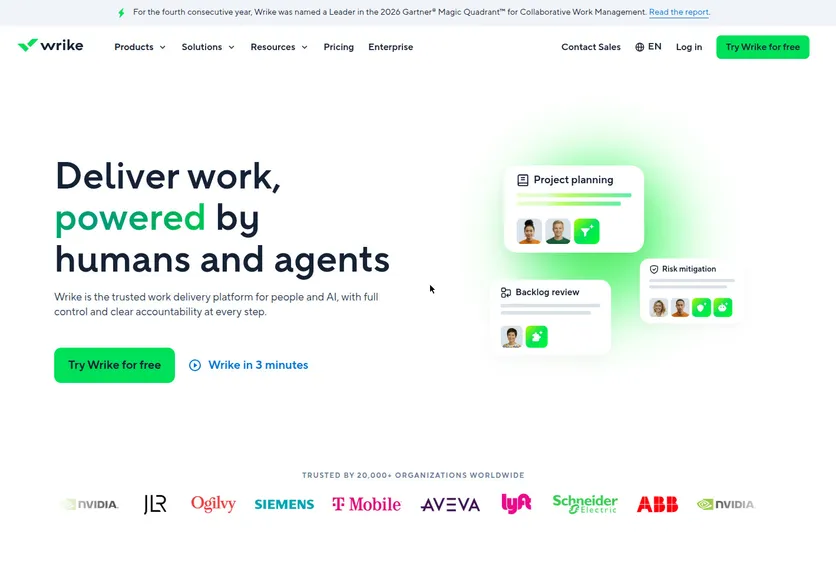
For a pharmaceutical team coordinating trials, submissions and compliance deadlines, this Wrike plan costs nine dollars and eighty cents a user a month billed annually, and it brings Gantt charts and dashboards to the whole team. Gantt charts, shared dashboards, custom fields and request forms come with Team, while Business adds workload views, native time tracking and approvals. It suits a pharmaceutical team that run complex work with approvals and dependencies.
What we like
- Gantt charts and dashboards from the Team plan
- Request forms turn intake into tracked tasks
- Business adds workload views and native time tracking
Watch out for
- Team stops at fifteen users, then the price jumps to Business
- The interface has a steeper learning curve than Trello
How to try it
- Create a space for the team and add its first projects
- Build a Gantt chart and link dependent tasks together
- Set up a request form so new work arrives as a task
2. Smartsheet
Best for: Teams that already think in spreadsheets
Paid tool Starting price: $9/user/month · Nine dollars per member a month billed annually ($12 billed monthly) on Pro, capped at ten members; Business is $19 a member a month billed annually ($24 monthly) with a three-member minimum; the free plan was discontinued in 2025
Free plan: No free plan; 30-day free trial
For a pharmaceutical team coordinating trials, submissions and compliance deadlines, this Smartsheet plan costs nine dollars a member a month billed annually, and it turns familiar spreadsheet rows into tracked work. Grid, Gantt, card and calendar views share one sheet-based workspace, with forms, reports and automations built in rather than bolted on. It suits a pharmaceutical team that already think in spreadsheets and want structure on top.

What we like
- Familiar grid layout with Gantt, card and calendar views
- Forms and reports built into the same workspace
- Unlimited sheets and viewers on the Pro plan
Watch out for
- No free plan, only a thirty-day trial of Business
- Pro caps at ten members, so growing teams must move up
How to try it
- Start a sheet from a template and add columns for owners and dates
- Switch to the Gantt view to see the schedule as a timeline
- Add a form so new requests land straight in the sheet
3. monday.com
Best for: Teams that want a visual, colour-coded workspace
Paid tool Starting price: $9/seat/month · Nine dollars per seat a month billed annually ($12 billed monthly) with a three-seat minimum; Standard is $12 a seat a month billed annually ($14 monthly) and Pro is $19 ($24 monthly)
Free plan: Free plan (up to 2 seats)
For a pharmaceutical team coordinating trials, submissions and compliance deadlines, this monday.com plan costs nine dollars a seat a month billed annually, and it puts the whole workload on one visual board. Colour-coded boards, timeline and Gantt views, automations and integrations sit on one visual workspace, and the Standard tier adds calendar views and guest access. It suits a pharmaceutical team that want a visual board the whole team can read at a glance.

What we like
- Visual boards that anyone can read without training
- Automations and integrations from the Standard plan
- Timeline, Gantt and calendar views for planning
Watch out for
- Paid plans start at three seats, so a solo user overpays
- Time tracking and private boards need the Pro plan
How to try it
- Pick a board template and add the columns the work needs
- Add items, owners and due dates, then switch on automations
- Share the board with guests and watch the timeline view
4. Asana
Best for: Teams that want a shared view of every deadline
Paid tool Starting price: $10.99/user/month · Ten dollars and ninety-nine cents per user a month billed annually ($13.49 billed monthly); Advanced is $24.99 a user a month billed annually ($30.49 monthly); Personal is free for up to two users
Free plan: Free plan (up to 2 users)
For a pharmaceutical team coordinating trials, submissions and compliance deadlines, this Asana plan costs ten dollars and ninety-nine cents a user a month billed annually, and it keeps every deadline visible in one shared workspace. Timeline and Gantt views, unlimited automations, custom fields and dashboards come with the Starter plan, and unlimited free guests keep outside collaborators off the paid seat count. It suits a pharmaceutical team that need one shared view of every project without a long setup.

What we like
- Timeline and Gantt views included from the first paid plan
- Unlimited free guests keep clients off the paid seat count
- Unlimited automations and custom fields on Starter
Watch out for
- Seats are sold in blocks, so the bill can jump at thresholds
- Workload and portfolios need the pricier Advanced plan
How to try it
- Create a project and add its tasks with owners and due dates
- Switch to the Timeline view and set dependencies between tasks
- Invite guests free and track progress on the project dashboard
5. ClickUp
Best for: Teams that want every view in one cheap seat
Paid tool Starting price: $9/user/month · Nine dollars per user a month billed annually ($12 billed monthly) on Core; Business is $17 a user a month billed annually; the ladder was rebuilt in October and November 2026
Free plan: Free plan
For a pharmaceutical team coordinating trials, submissions and compliance deadlines, this ClickUp plan costs nine dollars a user a month billed annually, and it packs tasks, docs and goals into a single workspace. Tasks, docs, whiteboards, goals and time tracking share one workspace, with unlimited storage and custom views from the Core plan. It suits a pharmaceutical team that want every kind of work view in one cheap seat.

What we like
- Fifteen-plus views including Gantt, board and calendar
- Docs, whiteboards and goals in the same workspace
- Core is nine dollars, among the cheapest paid seats here
Watch out for
- So many features that new users can feel lost
- Some views and automations need the Business plan
How to try it
- Create a space and add lists for each project
- Switch views to see the same work as a board or Gantt chart
- Set a goal and link tasks to it for progress tracking
6. Jira
Best for: Teams that plan work in sprints
Paid tool Starting price: $9.70/user/month · Nine dollars and seventy cents per user a month on Standard at list for one to one hundred users; Premium is $19.60; annual billing runs in fixed tiers, $950 a year for up to ten users on Standard; the $8.48 figure seen in some listings is a derived blended figure, not the list price
Free plan: Free plan (up to 10 users)
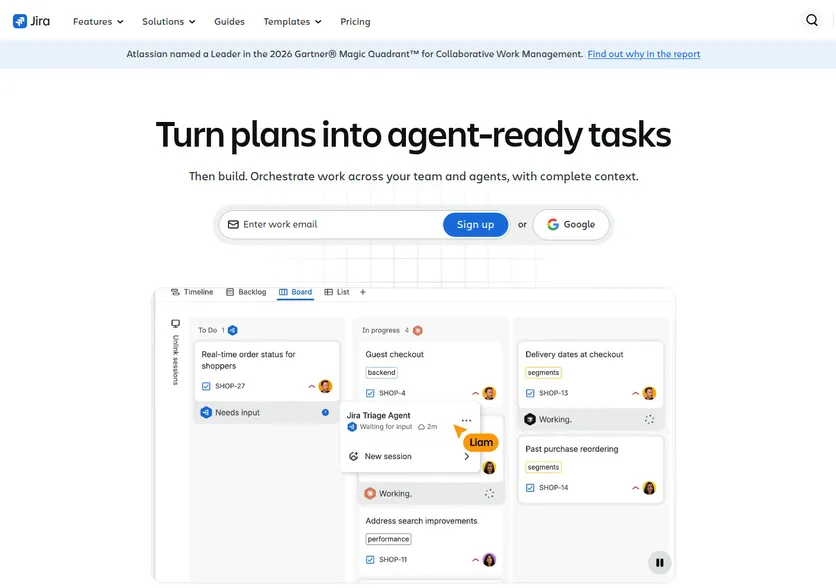
For a pharmaceutical team coordinating trials, submissions and compliance deadlines, this Jira plan costs nine dollars and seventy cents a user a month, and it runs sprints, backlogs and roadmaps in one place. Scrum and Kanban boards, backlogs, sprints, roadmaps and reporting come with Standard, and the free plan covers up to ten users. It suits a pharmaceutical team that plan in sprints and need real agile boards.
What we like
- Real Scrum and Kanban boards with backlogs and sprints
- Roadmaps and reporting included on Standard
- Free plan covers up to ten users
Watch out for
- Built for software teams, so setup takes longer for others
- Annual billing uses fixed tiers, not per-user pricing
How to try it
- Create a project and choose a Scrum or Kanban board
- Add issues to the backlog and plan the first sprint
- Review the roadmap and burndown chart each week
7. Basecamp
Best for: Teams that want one flat bill for everyone
Paid tool Starting price: $29/month · Twenty-nine dollars a month flat for Freelancer; Pro is $79 a month flat, Pro Plus is $99 a month flat and Pro Unlimited is $199 a month billed annually ($329 billed monthly); only Pro Unlimited has annual billing; the old $15 per user Plus tier was retired around October 2026
Free plan: Free plan
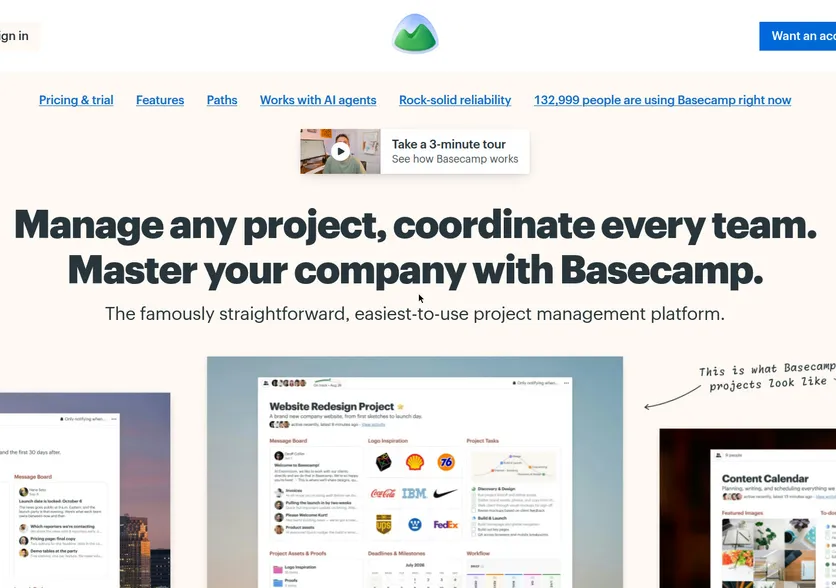
For a pharmaceutical team coordinating trials, submissions and compliance deadlines, this Basecamp plan costs twenty-nine dollars a month flat, and it covers the whole team for one flat monthly fee. Message boards, to-do lists, schedules, documents and group chat live in one flat-priced workspace, with no per-seat maths at all. It suits a pharmaceutical team that want one flat bill whatever the headcount.
What we like
- One flat monthly fee, no matter how many people join
- Message boards, to-dos, schedules and chat in one place
- Simple enough that the whole team actually uses it
Watch out for
- No Gantt chart or native time tracking
- Reporting is lighter than Asana or Smartsheet
How to try it
- Create a project and add its to-do lists and owners
- Post updates on the message board instead of email
- Check the schedule view for upcoming milestones
8. Scoro
Best for: Billable teams that need quote-to-cash
Paid tool Starting price: $29/user/month · Twenty-nine dollars per user a month billed annually on the Projects and Resources bundle; Time-billing is seventeen dollars, Quote to Cash is twenty-nine dollars and End-to-end is fifty-seven dollars; five-user minimum on every plan, so the real floor on Projects and Resources is one hundred and forty-five dollars a month. The older Essential, Standard and Pro tiers were retired on November 1, 2026.
Free plan: No free plan; 14-day free trial
For a pharmaceutical team coordinating trials, submissions and compliance deadlines, this Scoro plan costs twenty-nine dollars a user a month billed annually on the Projects and Resources bundle, and it carries a job from quote to invoice in one system. Quotes, projects, time entries, utilisation reports and invoices share one record, so billable work is tracked from first quote to final payment. It suits a pharmaceutical team that sell billable hours and need quote-to-cash in one system.
What we like
- Quotes, time, utilisation and invoicing in one record
- Resource planning and project budgets from Standard
- Detailed financial reports on every project
Watch out for
- Five-user minimum makes the real entry cost $130 a month
- The most expensive starting price in this list
How to try it
- Create a quote and turn it into a project when it is won
- Log time against tasks with billable rates
- Check utilisation and send the invoice from the project
Prices above were checked on each vendor’s own website on Nov 28, 2026 and can change — the vendor’s page is the final word. Vendor links are editorial: nobody paid to be listed or ranked here. Vendors who want a featured listing can see how it works on our Get listed page.
How a pharma team tracks trials, submissions and approvals
Give every trial or submission its own project, with milestones for protocol, enrolment, analysis and filing, and an owner on each one. Route every document through an approval step before it counts as done, and keep versions linked to the task so nobody works from an old copy. Track compliance deadlines on a separate calendar view, and review the overdue list daily, since a missed filing date can cost months. Keep the audit trail in the tool, not in email, so the history is there when quality asks. Review the approval queue every morning, since a stuck document delays the whole programme.
Before you buy
- Check that documents route through an approval step before they count as done
- Confirm versions stay linked to tasks so nobody works from an old copy
- Make sure compliance deadlines are visible on a separate calendar view
- Ask whether the audit trail is kept in the tool rather than in email
- Test the tool on one trial workstream before moving a whole programme onto it
Official websites
Official websites of the products reviewed above. Features and prices were checked against these sites when this guide was written, and they can change, so confirm on the vendor site before you buy.
Frequently asked questions
What is the best project management software for a pharmaceutical team?
Wrike leads this list for pharmaceutical teams because it is the easiest of the eight to roll out. It costs nine dollars and eighty cents a user a month billed annually, and Business is twenty-four dollars and eighty cents a user a month billed annually, so a team can start cheap and move up only when it needs to. A free plan is available too, so a small team can start without paying.
How much does Wrike cost?
Wrike costs nine dollars and eighty cents a user a month billed annually. Business is twenty-four dollars and eighty cents a user a month billed annually. A free plan is available too, so a small team can start without paying. Prices are list prices checked on November 28, 2026, so confirm the current figure on the vendor site before you buy, since vendors change prices without notice.
Is there a free project management tool for pharmaceutical teams?
Yes. Wrike, monday.com, Asana, ClickUp, Jira and Basecamp all offer free plans, so a pharma team can start without paying. The free tiers cap projects or users, so a growing team will outgrow them, but they are genuine free plans rather than trials. The cheapest paid plan in this list is Smartsheet at nine dollars a member a month billed annually, which is the next step when the free tier runs out.
Can project software handle document approvals for compliance?
Yes, if the tool has approvals and version control, which Wrike, Smartsheet and monday.com all do. Route every document through an approval step before it counts as done, keep each version linked to its task, and keep the audit trail in the tool rather than in email. Never use a project tool as the system of record for regulated documents; it tracks the work, while the validated document system holds the approved file.
Which tool is best for a small pharma team?
Smartsheet is the best value for a small pharma team, at nine dollars a member a month billed annually, with sheet-based planning and reports. Wrike is the better pick if the team wants Gantt charts and dashboards, since it grows further without a switch. Start on the free plan or trial of either, and move up only when the free limits start to bite.
Compare the eight tools above, then start with a free trial or the free plan on the tool that matches how the pharma team already runs its projects before paying for a full year.
Browse Business Tools tools