On this page
Dental practices run on computers that cannot fail mid-appointment: the booking system, the imaging software, the card terminal. When one of them stalls, the fix has to arrive in minutes, not next week, and the person fixing it is usually not in the building. The eight tools below cover that job for practices of every size, from a free self-hosted option to a full help-desk platform. TeamViewer leads because it connects to any workstation in seconds for twenty-four dollars and ninety-nine cents a month, and the rest are ranked on how quickly and safely they get a practice working again.
How we researched this
We checked every price on the vendor pricing page on November 28, 2026, and only included tools with a published US dollar list price. N-able Take Control, Datto RMM, NinjaOne and LogMeIn Rescue publish no prices, so they are not in this list. Prices change, so confirm the current figure on the vendor site before you buy.
Compare the tools
| Name | Best for | Starting price | Free plan | |
|---|---|---|---|---|
 TeamViewer | Remote support for dental practices with mixed devices | $24.90/month | Free plan (personal use); 14-day free trial | Visit |
 Splashtop Business Access | Budget remote access for dental practices | $6/month | 14-day free trial | Visit |
 Zoho Assist | Support desks serving dental practices | $10/technician/month | Free plan (1 technician, 5 computers); 15-day free trial | Visit |
 RemotePC | Simple remote access for dental practices | $22.12/year | 7-day free trial | Visit |
| RustDesk | Self-hosted remote access for dental practices | $11.88/month | Free plan (open-source client and server) | Visit |
 AnyDesk | Fast remote sessions for dental practices | $28.90/month | Free plan (personal use only) | Visit |
 ConnectWise ScreenConnect | Managed support for dental practices | $30/month | 14-day free trial | Visit |
 RealVNC Connect | A one-dentist office with three computers | $8.75/month | Free plan (Lite, non-commercial use); 14-day free trial | Visit |
The remote support software for dental practices, compared
1. TeamViewer
Best for: Remote support for dental practices with mixed devices
Paid tool Starting price: $24.90/month · Twenty-four dollars and ninety cents a month billed annually on Remote Access (one user, three managed devices); Business is fifty dollars and ninety cents a month billed annually; Premium is one hundred and twenty dollars and ninety cents; all plans bill yearly only
Free plan: Free plan (personal use); 14-day free trial
When a vendor needs to fix the front-desk computer between patients, this TeamViewer plan costs twenty-four dollars and ninety cents a month billed annually, and it connects in seconds without anyone travelling to the practice. The session can be recorded for the practice log, and unattended access lets a technician restart a machine after hours. It suits a practice that wants one familiar tool for every workstation rather than a separate app per room.
What we like
- Connects to Windows, Mac and mobile devices from one console
- Unattended access lets technicians fix machines after hours
- Session recording and file transfer are built into every plan
Watch out for
- Only one session runs at a time on the cheaper plans
- Business use needs a paid licence, so the free plan does not cover it
How to try it
- Install the TeamViewer client on the computer you need to reach
- Start a session with the device ID and a one-time password
- End the session and check the connection log before closing the case
2. Splashtop Business Access
Best for: Budget remote access for dental practices
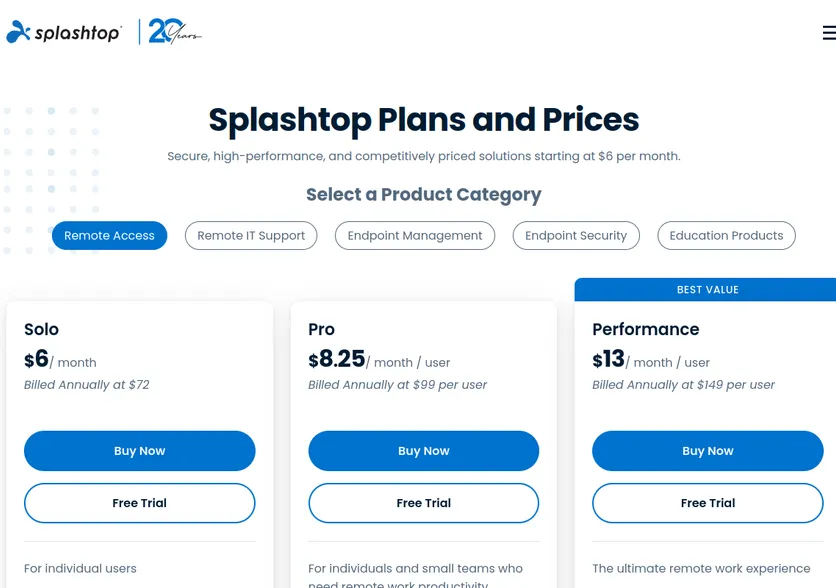
Paid tool Starting price: $6/month · Six dollars a month billed annually at seventy-two dollars a year on Solo for one user and two computers; Pro is eight dollars and twenty-five cents per user a month billed annually; Performance is thirteen dollars
Free plan: 14-day free trial
A small practice that pays for support by the seat will like the maths here, because this Splashtop Business Access plan costs six dollars a month billed annually and still covers unattended access, file transfer and remote printing. Connections stay fast even on the shared broadband most practices run on, and the console groups computers by room or site. It is the cheapest dependable way to reach a treatment-room PC from the front desk.
What we like
- Fast, high-quality screen sharing even on slow connections
- Simple per-user pricing with no charge per device
- Unattended access, file transfer and remote printing included
Watch out for
- Business Access covers your own computers, not client fleets
- The SOS attended-support product is priced separately
How to try it
- Create your Splashtop account and install the Streamer on each computer
- Group computers by site or team in the web console
- Connect, help the user, and log the session when you finish
3. Zoho Assist
Best for: Support desks serving dental practices
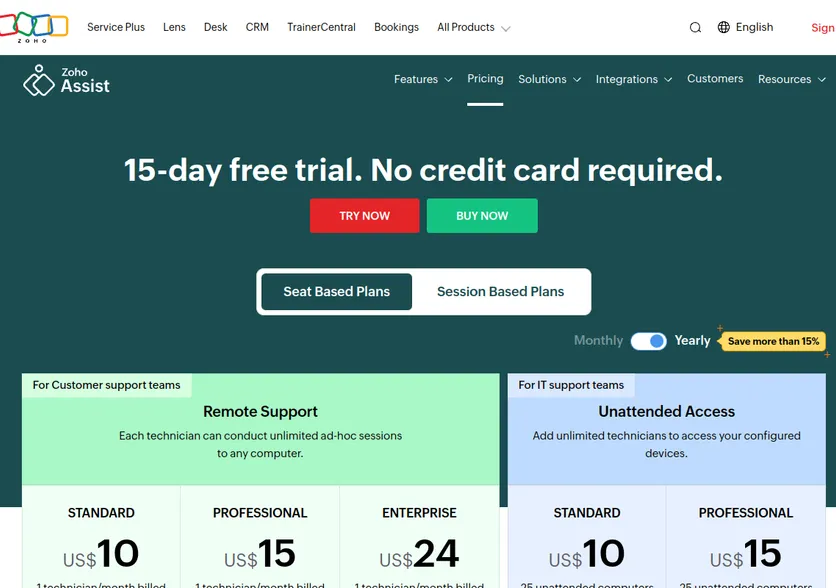
Paid tool Starting price: $10/technician/month · Ten dollars per technician a month billed annually on Remote Support Standard (twelve dollars billed monthly); Professional is fifteen dollars billed annually; Enterprise is twenty-four dollars
Free plan: Free plan (1 technician, 5 computers); 15-day free trial
Practices that already run their office on Zoho apps get the smoothest fit from this Zoho Assist plan, which costs ten dollars per technician a month billed annually and opens attended sessions from a browser. The free tier covers one technician and five computers, so a single-location practice may never pay at all. Session transfer and voice chat help a technician talk a receptionist through a fix while working on the machine.
What we like
- Monthly billing with no annual lock-in on paid plans
- A genuinely free tier covers one technician and five computers
- Unattended access and session transfer work from a browser
Watch out for
- Remote Support and Unattended Access are sold as separate plans
- Concurrent sessions are capped at two on the Standard plan
How to try it
- Open the Zoho Assist console and invite the user to a session
- Share the session link and take control once they approve it
- Transfer files, restart the machine, and close with session notes
4. RemotePC
Best for: Simple remote access for dental practices
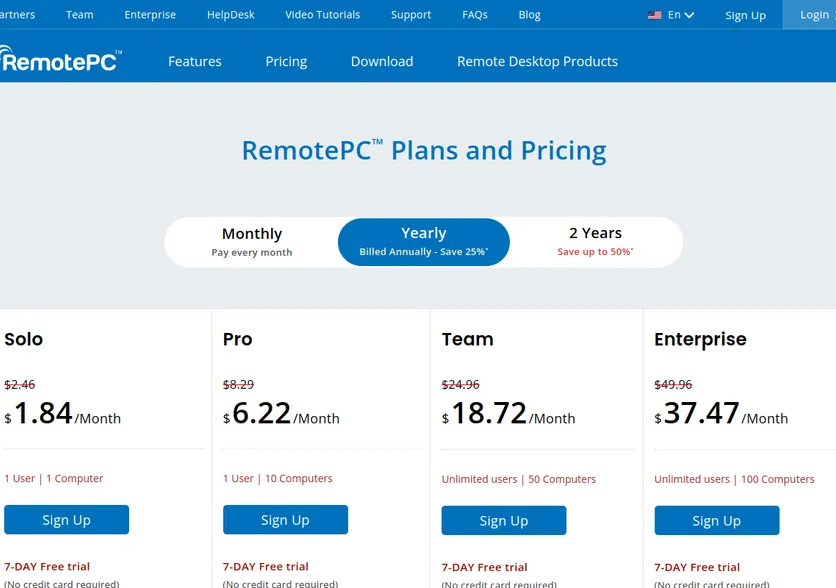
Paid tool Starting price: $22.12/year · Twenty-two dollars and twelve cents a year is the first-year promotional price for Solo (one computer), renewing at twenty-nine dollars and fifty cents a year; SOHO is seventy-four dollars and sixty-two cents first year for ten computers; monthly billing is two dollars and ninety-five cents a month
Free plan: 7-day free trial
For a practice with a handful of computers and no IT staff, this RemotePC plan costs twenty-two dollars and twelve cents a year on the first-year promotion, and it reaches every machine from any device. Flat annual pricing means the bill never grows with headcount, and session recording keeps a record of what changed. It is a plain, cheap way to keep the booking system and imaging software running.
What we like
- Flat annual pricing with unlimited user licences on most plans
- Covers PC, Mac, Linux and mobile devices in one subscription
- Session recording and remote printing are included
Watch out for
- The headline rate is a first-year promotion, so renewals cost more
- Help desk features such as ticketing need the dearer plans
How to try it
- Install RemotePC on each computer and sign in with your account
- Organise computers into groups for each site or team
- Connect from any device and lock the screen when you disconnect
5. RustDesk
Best for: Self-hosted remote access for dental practices
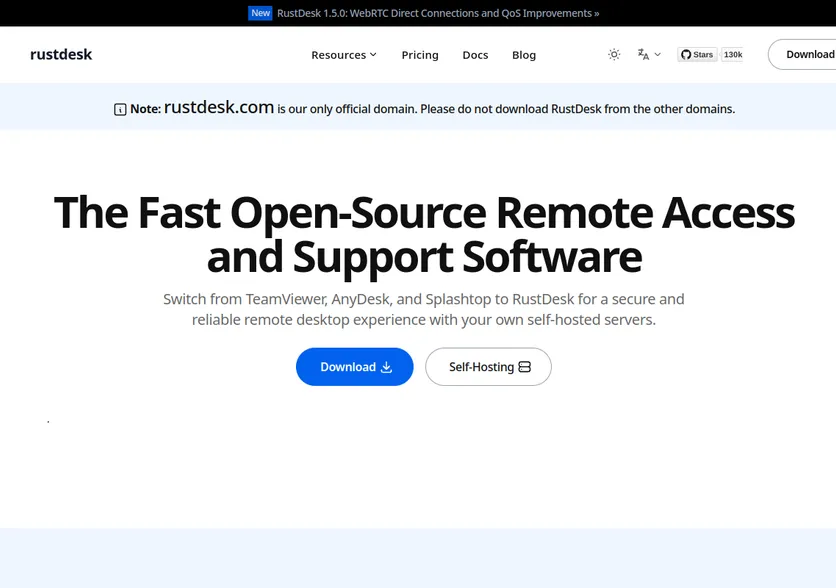
Paid tool Starting price: $11.88/month · Eleven dollars and eighty-eight cents a month billed annually for Server Pro Individual (one login user, twenty managed devices); Basic is twenty-three dollars and eighty-eight cents a month; Pro licences do not auto-renew; you still pay for the server you host it on
Free plan: Free plan (open-source client and server)
A practice that wants its patient data to stay on its own network will appreciate this RustDesk plan, which costs eleven dollars and eighty-eight cents a month billed annually for the Pro console while the client itself is free and open source. You host the relay server yourself, so no session traffic passes through a vendor cloud. It fits a practice with someone technical on staff and a firm rule about where data travels.
What we like
- Open-source client you can self-host with no vendor cloud
- A published Pro price, which is rare for self-hosted tools
- Runs on Windows, Mac, Linux, Android and iOS
Watch out for
- You must run and maintain your own relay and ID server
- The Pro console adds cost on top of the server you host
How to try it
- Install the RustDesk client on the computers you support
- Point the clients at your own ID and relay server
- Connect with the device ID and password, then end the session cleanly
6. AnyDesk
Best for: Fast remote sessions for dental practices
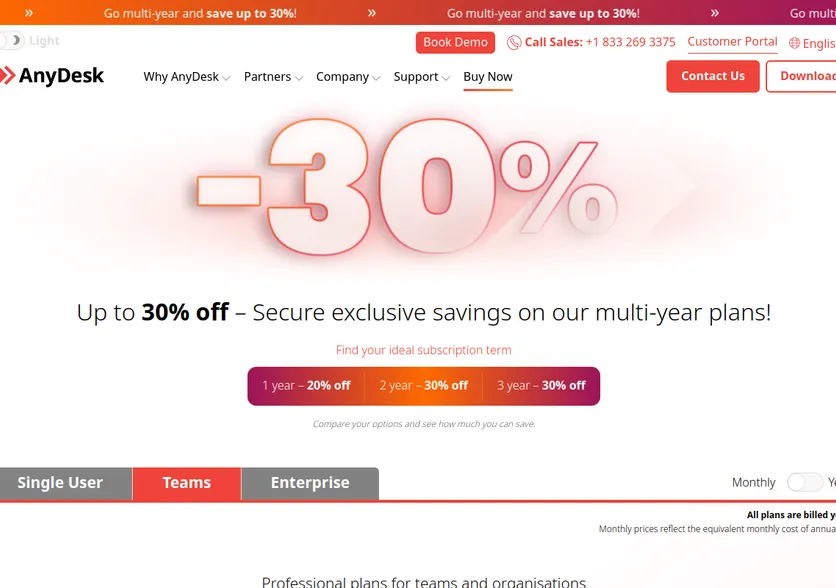
Paid tool Starting price: $28.90/month · Twenty-eight dollars and ninety cents a month billed annually on Solo (one licensed user, one connection, one hundred managed devices); a twenty percent first-year promotion cuts it to twenty-three dollars and twelve cents a month; Standard is forty-nine dollars and ninety cents and Advanced is one hundred and eleven dollars and ninety cents; older listings showing fourteen dollars and ninety cents are stale
Free plan: Free plan (personal use only)
Speed matters when a patient is waiting and the imaging software has frozen, and this AnyDesk plan costs twenty-eight dollars and ninety cents a month billed annually for quick, low-latency connections. One licensed user can reach one hundred managed devices, which covers a whole practice from a single seat. The trade is the annual-only billing, so the full year is paid up front.
What we like
- Quick connections with low latency on modest bandwidth
- A fixed device pool with no charge per session
- Custom client branding on Standard and above
Watch out for
- Every paid plan is billed annually with the full year up front
- Only one outgoing connection is included on Solo and Standard
How to try it
- Install AnyDesk on the support computer and the remote machine
- Connect with the remote address and wait for the user to accept
- Use file transfer and session recording, then close the connection
7. ConnectWise ScreenConnect
Best for: Managed support for dental practices
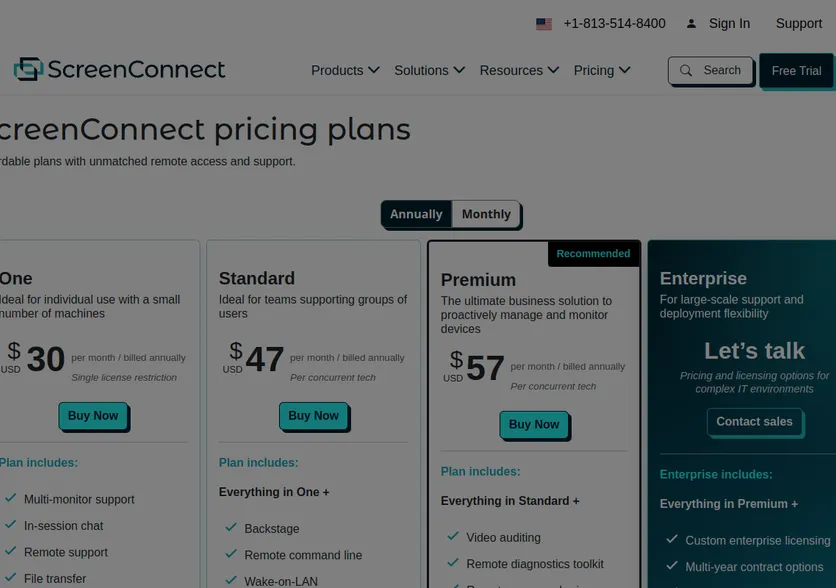
Paid tool Starting price: $30/month · Thirty dollars a month billed annually on One (one concurrent technician, one session, ten unattended agents); Standard is forty-seven dollars per concurrent technician a month billed annually (sixty-two dollars billed monthly); Premium is fifty-seven dollars; unattended-only Remote Access licences start at thirty-five dollars a month
Free plan: 14-day free trial
A practice that outsources IT to a provider will often meet this ConnectWise ScreenConnect plan, which costs thirty dollars a month billed annually and prices by concurrent technician rather than by device. One licence covers unlimited unattended agents from the Standard plan up, so a provider can watch every workstation in the building. Session recording from Standard gives the practice an audit trail for every remote fix.
What we like
- Per-technician pricing, so one licence covers unlimited agents
- Session recording and remote command line from Standard up
- Works attended and unattended from the same console
Watch out for
- The entry One plan allows only one session at a time
- Privileged access management is a separate add-on
How to try it
- Install the ScreenConnect agent on the machines you manage
- Start an attended session with a code or join an unattended agent
- Record the session and file a note in your help desk when done
8. RealVNC Connect
Best for: A one-dentist office with three computers
Paid tool Starting price: $8.75/month · Eight dollars and seventy-five cents a month billed annually on Essentials (one user, one active connection, three devices, one hundred and five dollars a year); Plus starts at eighteen dollars and twenty-five cents and Premium at twenty-nine dollars and seventy-five cents; older reads showing eight dollars and twenty-five cents appear stale
Free plan: Free plan (Lite, non-commercial use); 14-day free trial
A solo practice that only ever connects to three machines can stop shopping here, because this RealVNC Connect plan costs eight dollars and seventy-five cents a month billed annually for one user, one connection and three devices. Per-connection pricing means a quiet practice pays for the one session it actually runs, and the free Lite plan covers non-commercial use. It is the smallest, cheapest entry point in this list for a one-dentist office.
What we like
- Per-connection pricing suits teams that rarely connect at once
- Direct connections work without the vendor cloud on Premium
- A free Lite plan covers non-commercial use on three devices
Watch out for
- Essentials covers only three devices and one user
- Session recording needs Plus, and audit logs need Premium
How to try it
- Install RealVNC Server on the machine and Viewer on yours
- Sign in and connect through the cloud broker or directly
- Lock the remote screen and disconnect when the job is done
Prices above were checked on each vendor’s own website on Nov 28, 2026 and can change — the vendor’s page is the final word. Vendor links are editorial: nobody paid to be listed or ranked here. Vendors who want a featured listing can see how it works on our Get listed page.
How to run a remote support session in a dental practice without disrupting patients
Start every session with the patient out of the room and the screen angled away from the waiting area, because a support session can flash up records that should stay private. Agree a code word with the front desk so staff know when a session is genuine and when to hang up on a caller pretending to be IT. Test unattended access after hours first, so a technician can restart a machine without a member of staff standing by. Keep a simple log of who connected, when, and what changed, and review it monthly with your IT provider.
Before you buy
- Confirm the tool supports the operating systems on every practice workstation, including older machines
- Check how unattended access is approved and who can start a session without a patient present
- Ask how sessions are logged so you can show an auditor exactly what changed and when
- Verify that support staff can connect without closing the booking or imaging software
- Test the tool on a real treatment-room computer before rolling it out to the whole practice
Official websites
Official websites of the products reviewed above. Features and prices were checked against these sites when this guide was written, and they can change, so confirm on the vendor site before you buy.
Frequently asked questions
What should a dental practice look for in remote support software?
Look for secure remote access, clear session approval, and compatibility with the booking and imaging systems used at the front desk and in treatment rooms. Practices that rely on an IT provider should confirm which tool the provider supports, since matching their platform avoids duplicate tooling. Simplicity for staff during a support session matters as much as the feature list.
Is remote support software safe for patient data?
It can be, if sessions are approved by someone in the practice, connections are encrypted, and every session is logged. Self-hosted tools such as RustDesk keep traffic on your own network, while cloud tools should document encryption and access controls on their security pages. Never let an unknown caller start a session, and always verify the technician through your IT provider first.
What is the cheapest remote support tool for a dental practice?
RemotePC is the cheapest paid option here at twenty-two dollars and twelve cents a year on its first-year promotion for one computer, and Zoho Assist has a free tier covering one technician and five computers. RustDesk is free if you host it yourself, with an optional Pro console at eleven dollars and eighty-eight cents a month. The right cheap option depends on how many computers the practice has.
Does a small practice need IT staff to use these tools?
No, not for session-based tools such as TeamViewer, Splashtop or RemotePC, which a receptionist can operate with a link or a code. Tools built for IT teams, such as ScreenConnect or RustDesk, need someone technical to set them up. Most small practices pair a simple tool with an outsourced IT provider who runs the heavier platform.
Can a technician fix a computer after hours without anyone in the practice?
Yes, with unattended access, which most tools here include: the technician connects to a machine that is switched on and logged in, even with no one present. Set it up only on machines that need it, protect it with a strong password and two-factor authentication, and review the access log regularly. Disable unattended access on any machine that holds patient records when it is not needed.
Compare the eight tools above, then start with a free trial on the tool that matches how the practice already handles IT support before paying for a full year.
Browse Business Tools tools