On this page
Marketing teams create the content sales needs, but it only helps if sellers can find it, trust it and use it in a live deal. The eight tools below store the content, train reps on it and connect marketing activity to closed revenue. HubSpot Sales Hub leads because sequences, templates and playbooks sit inside the CRM marketing already uses, at fifteen dollars per seat a month, and the rest are ranked on how well they bridge marketing and sales.
How we researched this
We checked every price on the vendor pricing page or in multiple agreeing November 2026 reads, and only included tools with a published US dollar list price. The big enablement suites, including Seismic, Highspot, Showpad, Allego and Bigtincan, publish no prices, so they are not in this list. Prices change, so confirm the current figure on the vendor site before you buy.
Compare the tools
| Name | Best for | Starting price | Free plan | |
|---|---|---|---|---|
 HubSpot Sales Hub | Marketing and sales teams that share one CRM | $15/seat/month | Free plan | Visit |
 Notion | Lightweight playbooks, wikis and deal notes in one place | $10/user/month | Free plan | Visit |
 Confluence | Playbooks and battlecards the whole team can edit | $7.15/user/month | Free plan | Visit |
 LearnWorlds | Interactive branded training for partners and customers | $24/month | 30-day free trial | Visit |
 Thinkific | Simple course hosting with no transaction fees | $36/month | Free plan | Visit |
 Salesforce Starter Suite | Teams planning to grow on one CRM | $25/user/month | Free plan (Free Suite) | Visit |
 Pipedrive | Small sales teams that live in the pipeline | $14/user/month | 14-day free trial | Visit |
 Close | Outbound teams that live on the phone | $35/user/month | 14-day free trial | Visit |
The sales enablement software for marketing teams, compared
1. HubSpot Sales Hub
Best for: Marketing and sales teams that share one CRM
Paid tool Starting price: $15/seat/month · Fifteen dollars per seat a month on Starter, billed annually ($20 billed monthly); new customers have seen a limited-time $7 annual rate; Professional is quoted from $90 a seat
Free plan: Free plan
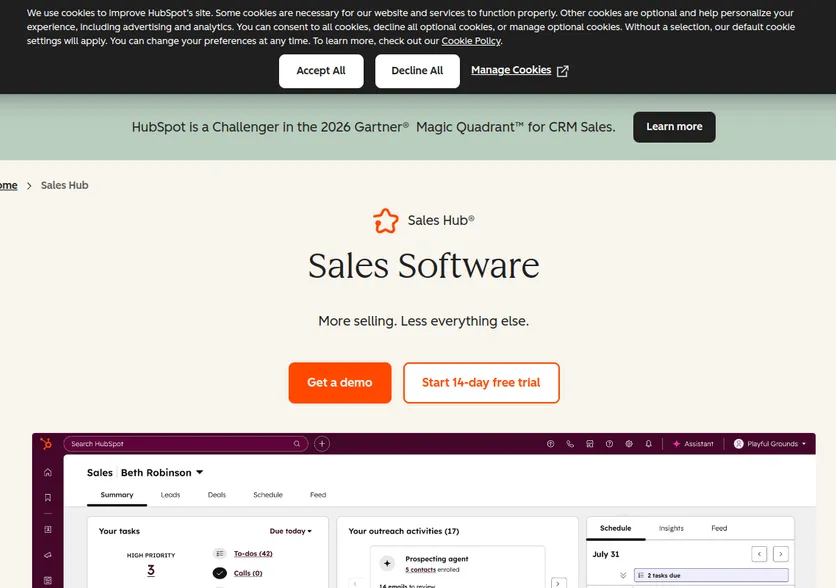
For a marketing team that already lives in HubSpot, this HubSpot Sales Hub plan costs fifteen dollars per seat a month on Starter billed annually. Sequences, templates and playbooks sit inside the CRM, so the content marketing creates is one click from the seller who needs it. Reporting connects campaigns to closed deals, which is the proof marketing teams always want.
What we like
- Sequences, templates and playbooks sit inside the CRM
- Free CRM tier covers the basics for a small team
- Reporting connects marketing activity to closed deals
Watch out for
- Seat-based pricing climbs fast once editors multiply
- Professional tier adds a $1,500 onboarding fee
How to try it
- Import contacts and connect the inbox and calendar
- Build sequences and templates for the sales motion
- Track the pipeline from first touch to close
2. Notion
Best for: Lightweight playbooks, wikis and deal notes in one place
Paid tool Starting price: $10/user/month · Ten dollars per member a month on Plus, billed annually ($12 billed monthly); Business is $20 per member a month billed annually; free plan for individuals
Free plan: Free plan
A marketing team that wants one home for every playbook and battlecard finds it here, since this Notion plan costs ten dollars per user a month on Plus billed annually. Linked pages hold the messaging, databases track objections and wins, and sales and marketing share the same workspace. The free plan covers a small team well, though large wikis need curation.

What we like
- Docs, wikis and tasks live in a single workspace
- Databases turn playbooks into filterable deal guides
- Free plan is genuinely useful for a small team
Watch out for
- No native coaching, certification or content analytics
- Large wikis need discipline or search gets messy
How to try it
- Build the playbook as a set of linked pages
- Add a database for objections, talk tracks and wins
- Share the workspace with sales and marketing together
3. Confluence
Best for: Playbooks and battlecards the whole team can edit
Paid tool Starting price: $7.15/user/month · Seven dollars and fifteen cents per user a month on Standard for one to 100 users, billed monthly; annual tiers are $720 a year for up to ten users; Premium is quoted per user
Free plan: Free plan
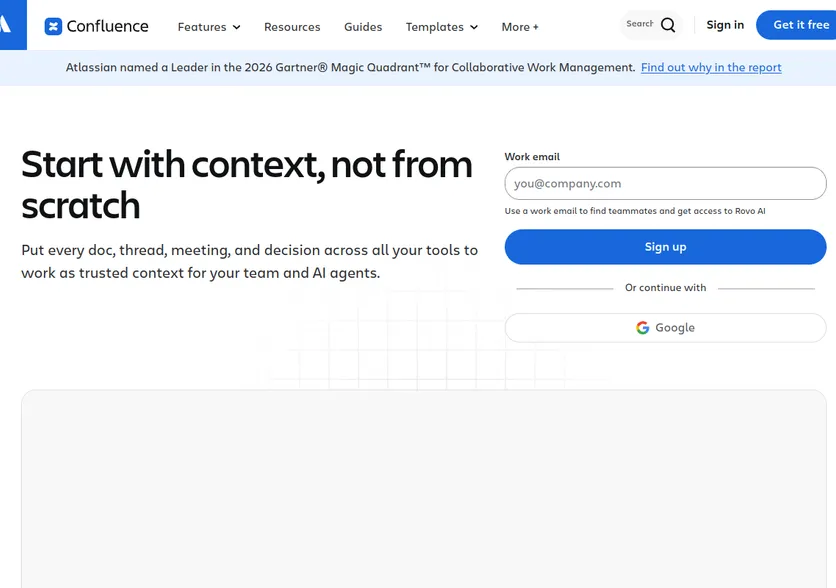
For a marketing team that needs version control on every message, this Confluence plan costs seven dollars and fifteen cents per user a month on Standard. Every battlecard has an owner and a history, so sellers always use the current claim, and templates keep the format consistent across products. It is a wiki, not a training tool, so pair it with a course platform.
What we like
- Every playbook lives in one searchable wiki
- Templates keep battlecards and talk tracks consistent
- Deep integration with Jira and the Atlassian stack
Watch out for
- Content goes stale fast without an owner per page
- No coaching or training workflows built in
How to try it
- Create a space for the sales playbook
- Write the battlecards and talk tracks as pages
- Review pages on a schedule so nothing goes stale
4. LearnWorlds
Best for: Interactive branded training for partners and customers
Paid tool Starting price: $24/month · Twenty-four dollars a month on Starter, billed annually ($29 billed monthly), plus a $5 fee per paid course enrolment; Pro Trainer is $79 and Learning Center is $249 a month billed annually
Free plan: 30-day free trial
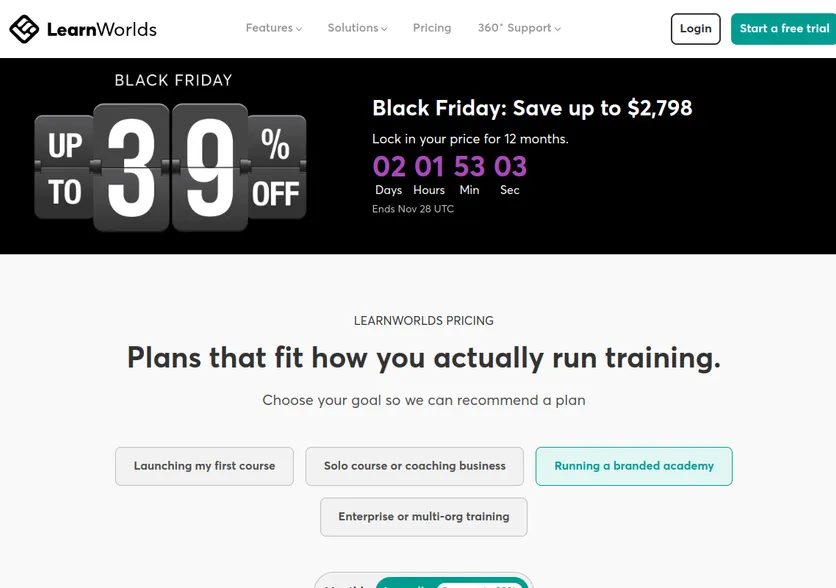
A marketing team that turns product knowledge into branded training should look here, because this LearnWorlds plan costs twenty-four dollars a month on Starter billed annually. Interactive video with embedded quizzes makes product training stick, and the branded school carries the company's own look. The five dollar fee per paid enrolment adds up, so check the maths for large audiences.
What we like
- Interactive video with embedded quizzes and hotspots
- Branded school with white-label mobile apps
- Certificates and assessments are built in
Watch out for
- Starter charges $5 per paid enrolment, which adds up fast
- No free plan, only a 30-day trial
How to try it
- Build the course with interactive video and quizzes
- Brand the school and publish the training
- Track enrolments and issue certificates on completion
5. Thinkific
Best for: Simple course hosting with no transaction fees
Paid tool Starting price: $36/month · Thirty-six dollars a month on Basic, billed annually ($49 billed monthly); Start is $74 and Grow is $149 a month billed annually; no transaction fees on paid plans; free plan covers one course
Free plan: Free plan
For a marketing team that wants simple course hosting with no transaction fees, this Thinkific plan costs thirty-six dollars a month on Basic billed annually. Courses publish fast from video or live lessons, the free plan lets the team test with one real course, and unlimited courses start from the Basic tier. SCORM needs the custom-priced Plus tier, which is the main gap.
What we like
- No transaction fees on any paid plan
- Free plan lets a team test with one real course
- Unlimited courses from the Basic tier up
Watch out for
- SCORM needs the custom-priced Plus tier
- Marketing tools are thinner than the course-first rivals
How to try it
- Create the course from video, text or live lessons
- Set the price and publish the course page
- Track enrolments and completion in the reports
6. Salesforce Starter Suite
Best for: Teams planning to grow on one CRM
Paid tool Starting price: $25/user/month · Twenty-five dollars per user a month on Starter Suite, billed monthly or annually at the same rate; Pro Suite is $100, Core is $195, Advanced is $395 and Max is $550; a Free Suite is listed at $0
Free plan: Free plan (Free Suite)
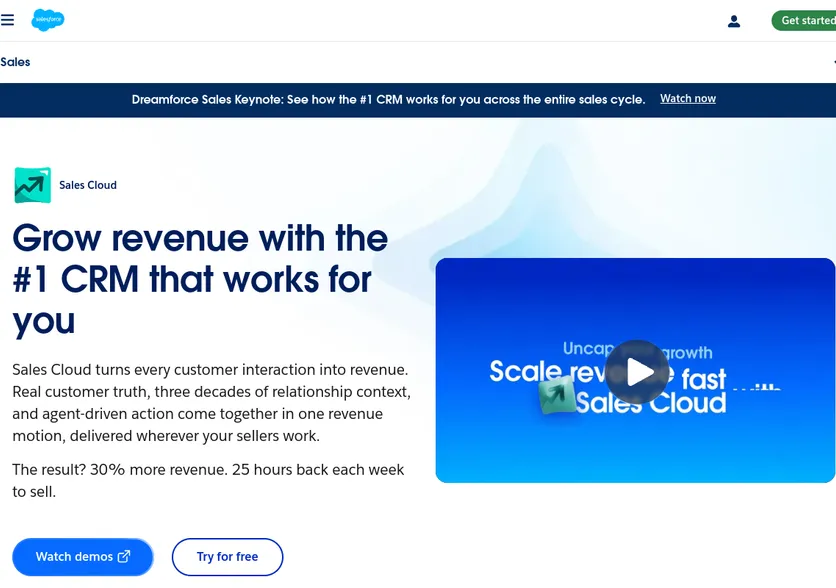
A marketing team planning to scale on one CRM gets the room here, since this Salesforce Starter Suite plan costs twenty-five dollars per user a month. Sales, service, marketing and commerce tools share one platform, and AppExchange adds enablement apps without switching CRM. The Starter tier is a suite, not the full Sales Cloud, so check the feature list before buying.
What we like
- One platform that scales from startup to enterprise
- AppExchange adds enablement apps without switching CRM
- Reporting and AI grow with the paid tiers
Watch out for
- The $25 tier is a suite, not the full Sales Cloud edition
- Implementation can cost far more than the subscription
How to try it
- Set up the pipeline stages for the sales motion
- Add the playbooks and templates reps need daily
- Review the dashboards weekly and fix the weak stages
7. Pipedrive
Best for: Small sales teams that live in the pipeline
Paid tool Starting price: $14/user/month · Fourteen dollars per user a month on Essential, billed annually; Professional is about $49 to $59 and Power is $99; LeadBooster is a $32.50 a month add-on
Free plan: 14-day free trial
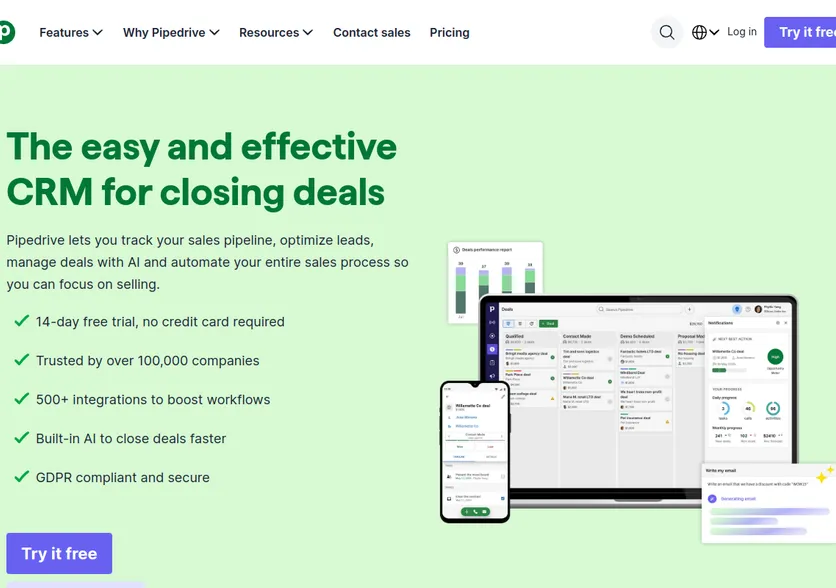
For a marketing team that wants sales to actually work the pipeline, this Pipedrive plan costs fourteen dollars per user a month on Essential billed annually. The pipeline view is the clearest in this guide, automations handle follow-up busywork, and the entry price is the lowest of any CRM here. Enablement content needs a separate home, so pair it with a wiki.
What we like
- Pipeline view is the clearest of any CRM here
- Lowest entry price of the CRMs in this guide
- Automations handle the follow-up busywork
Watch out for
- Enablement content needs a separate home
- Add-ons like LeadBooster push the real bill higher
How to try it
- Import the deals and set the pipeline stages
- Add automations for follow-ups and reminders
- Work the pipeline daily and review the forecast weekly
8. Close
Best for: Outbound teams that live on the phone
Paid tool Starting price: $35/user/month · Thirty-five dollars per user a month on Essentials, billed annually ($49 billed monthly); Solo is $9 a month for one user; Growth is $99 and Scale is $139; calling minutes and SMS bill separately
Free plan: 14-day free trial
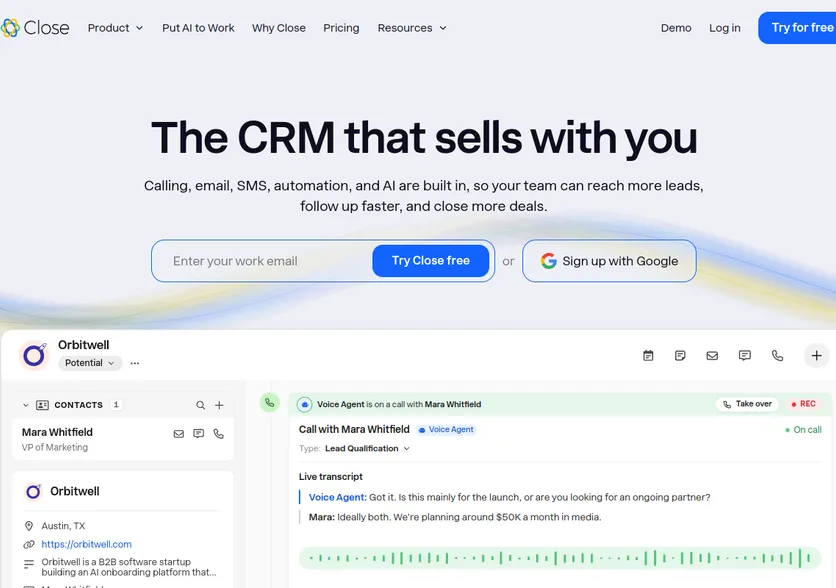
A marketing team that hands leads to an outbound sales team gets a phone-first fit here, because this Close plan costs thirty-five dollars per user a month on Essentials billed annually. Calling, SMS and email are built into the CRM, so the outreach marketing generates is worked from one screen. Call minutes and texts bill separately, which pushes the real cost above the seat price.
What we like
- Calling, SMS and email built into the CRM
- Power dialer keeps high-volume outreach moving
- Solo plan fits a one-person sales team at $9 a month
Watch out for
- Call minutes and texts bill on top of the seat price
- No free plan, only a 14-day trial
How to try it
- Import leads and connect the phone and inbox
- Build the outreach sequence with calls, SMS and email
- Work the list and log every outcome in the CRM
Prices above were checked on each vendor’s own website on Nov 28, 2026 and can change — the vendor’s page is the final word. Vendor links are editorial: nobody paid to be listed or ranked here. Vendors who want a featured listing can see how it works on our Get listed page.
How marketing and sales should share one enablement stack
Start by agreeing what good looks like, because marketing measures content downloads while sales measures deals, and the two rarely meet. Put every asset in one searchable place with an owner and a review date, so sellers stop using last year's deck. Train reps on new content the week it ships, not the quarter after, and track which assets appear in won deals. Retire content nobody uses, since a bloated library hides the assets that actually close business.
Before you buy
- Confirm the content library is searchable from the CRM, not only from a separate portal
- Check whether training ships with new content or arrives a quarter late
- Ask if reporting connects marketing assets to won deals, not just to downloads
- Make sure every asset has an owner and a review date so stale claims die
- Test the tool with a real campaign launch and time how fast reps adopt the new content
Official websites
Official websites of the products reviewed above. Features and prices were checked against these sites when this guide was written, and they can change, so confirm on the vendor site before you buy.
Frequently asked questions
What is sales enablement software for marketing teams?
It is software that stores marketing content, trains sellers on it and measures which assets help close deals. Good tools put playbooks, battlecards and case studies one click from the seller, and they report which content appears in won opportunities. The aim is to stop marketing output sitting unused while sellers build their own decks.
How much does HubSpot Sales Hub cost?
HubSpot Sales Hub Starter costs fifteen dollars per seat a month billed annually, or twenty dollars billed monthly. New customers have seen a limited-time seven dollar annual rate. Professional is quoted from ninety dollars a seat and adds a one thousand five hundred dollar onboarding fee, so the jump from Starter is steep.
Why is content adoption the real problem?
Most marketing teams produce plenty of content, but sellers cannot find it, do not trust it or never learn it. A shared library with search, ownership and training fixes the find and trust parts, while reporting on won deals proves which assets matter. Without those three, even the best content sits unused in a shared drive.
Can a wiki replace a full enablement platform?
A wiki covers the content half well: Confluence and Notion keep playbooks searchable for seven to ten dollars per user a month. Neither trains reps, certifies them or reports on content in won deals. A marketing team that needs those jobs should pair the wiki with a training tool or a CRM that has playbooks built in.
Which tool is best for a marketing team on a budget?
Notion is the budget pick, at ten dollars per user a month with a genuinely useful free plan, because it holds the whole playbook in one searchable workspace. Confluence is cheaper per seat at seven dollars and fifteen cents and adds version history. Either pairs well with a CRM such as HubSpot for sequences and reporting.
Compare the eight tools above, then start with a free trial on the one that puts marketing content where sellers actually use it.
Browse Business Tools tools