On this page
A remote team has no office to gather in, so the chat tool is the office, and the wrong one turns every day into a stream of interruptions. The eight tools below were picked for teams that work across time zones, from a fast channel app to a calm threaded workspace. Slack leads because its channels and threads keep a distributed team in step for seven dollars and twenty-five cents per user a month, and the rest are ranked on how well they let people work without always being online.
How we researched this
We checked every price on the vendor pricing page on November 29, 2026, and only included tools with a published US dollar list price. Tools that sell only by quote were left out, as were tools built for a single office rather than for a distributed team. Prices change, so confirm the current figure on the vendor site before you buy.
Compare the tools
| Name | Best for | Starting price | Free plan | |
|---|---|---|---|---|
 Slack | Remote teams spread across time zones | $7.25/user/month (Pro) | Free plan (90-day message history) | Visit |
 Microsoft Teams | Remote teams that already run on Microsoft 365 | $4/user/month (Essentials) | Free plan | Visit |
 Google Chat | Remote teams that live in Gmail and Docs | $7/user/month (Workspace Starter) | Free plan (personal Google account) | Visit |
 Rocket.Chat | Remote teams that want to own and host their chat | $8/user/month (Pro) | Free plan (Community, self-hosted) | Visit |
 Mattermost | Remote teams on sensitive projects that need data control | $10/user/month (Professional) | Free plan (Starter, self-hosted) | Visit |
 Twist | Remote teams that want calm async threads, not a live stream | $6/user/month (Unlimited) | Free plan (1 month of history) | Visit |
 Chanty | Small remote teams that want the cheapest paid chat | $3/user/month (Business) | Free plan (up to 5 users) | Visit |
 Zoho Cliq | Remote teams that already run on Zoho | $3/user/month (Unlimited) | Free plan (unlimited users) | Visit |
The team chat software for remote teams, compared
1. Slack
Best for: Remote teams spread across time zones
Paid tool Starting price: $7.25/user/month (Pro) · Seven dollars and twenty-five cents per user a month on Pro billed annually (eight dollars and seventy-five cents billed monthly); Business+ is fifteen dollars per user a month billed annually (eighteen dollars monthly), after a June 2025 rise from twelve dollars and fifty cents, though older listings still show the old figure
Free plan: Free plan (90-day message history)
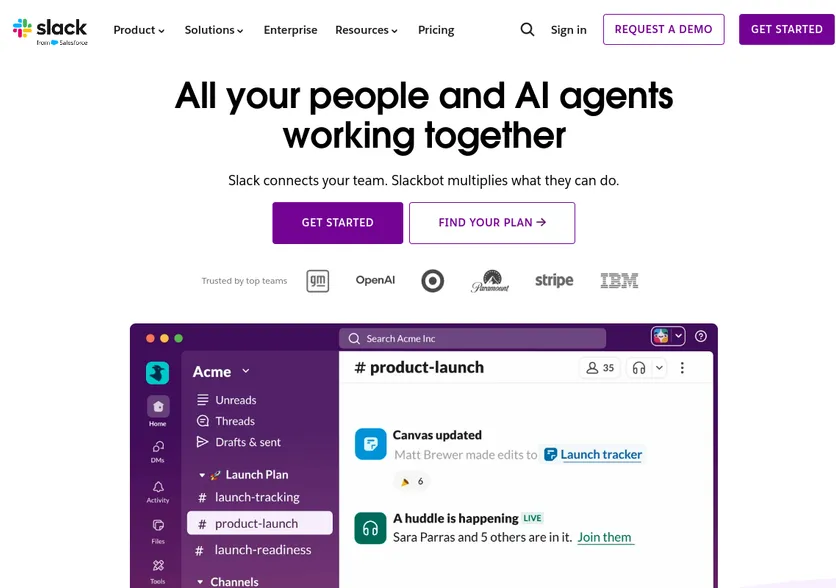
A remote team spread across time zones needs chat that works when half the team is asleep, and this Slack plan costs seven dollars and twenty-five cents per user a month on Pro billed annually for channels that keep the whole conversation. Threads let a teammate in a later time zone read the full discussion in order, huddles cover the quick call, and the app directory connects the tools the team already uses. The free plan keeps only ninety days of history, so a team that needs a long searchable record must pay.
What we like
- Threads let a teammate in a later time zone read the full discussion
- Huddles cover the quick call without a meeting
- Huge app directory connects the tools the team already uses
Watch out for
- Free plan keeps only ninety days of history
- Always-on channels can interrupt a team across time zones
How to try it
- Create a channel for each project and each team
- Answer in threads so latecomers can catch up
- Set notification hours so the team is not pinged overnight
2. Microsoft Teams
Best for: Remote teams that already run on Microsoft 365
Paid tool Starting price: $4/user/month (Essentials) · Four dollars per user a month on Essentials billed annually; the free plan covers chat and meetings for small teams, and fuller Microsoft 365 plans that include Teams start higher
Free plan: Free plan
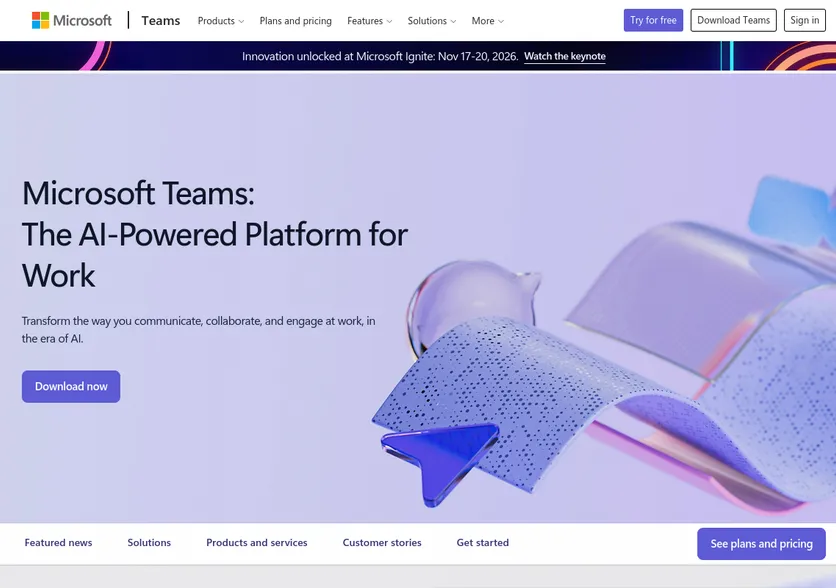
A remote team that already runs on Microsoft 365 gets chat, meetings and files for the lowest price here, and this Microsoft Teams plan costs four dollars per user a month on Essentials billed annually. Meetings are built in for the daily standup, files sit in OneDrive beside the chat, and the free plan covers a small team that only needs the basics. It is less flexible than Slack for integrations, though the price is hard to beat for a Microsoft shop.
What we like
- Meetings built in for the daily standup
- Files sit in OneDrive beside the chat
- Cheapest paid chat in this list
Watch out for
- Less flexible than Slack for integrations
- Guest access is clunkier than the dedicated chat tools
How to try it
- Create a team per project with channels for each workstream
- Schedule the daily standup as a recurring meeting
- Store shared files in OneDrive beside the chat
3. Google Chat
Best for: Remote teams that live in Gmail and Docs
Paid tool Starting price: $7/user/month (Workspace Starter) · Seven dollars per user a month for Google Workspace Business Starter on a one-year commitment, which includes Chat alongside Gmail, Drive and Meet; Standard is fourteen dollars and Plus is twenty-two dollars; Chat is not sold separately
Free plan: Free plan (personal Google account)
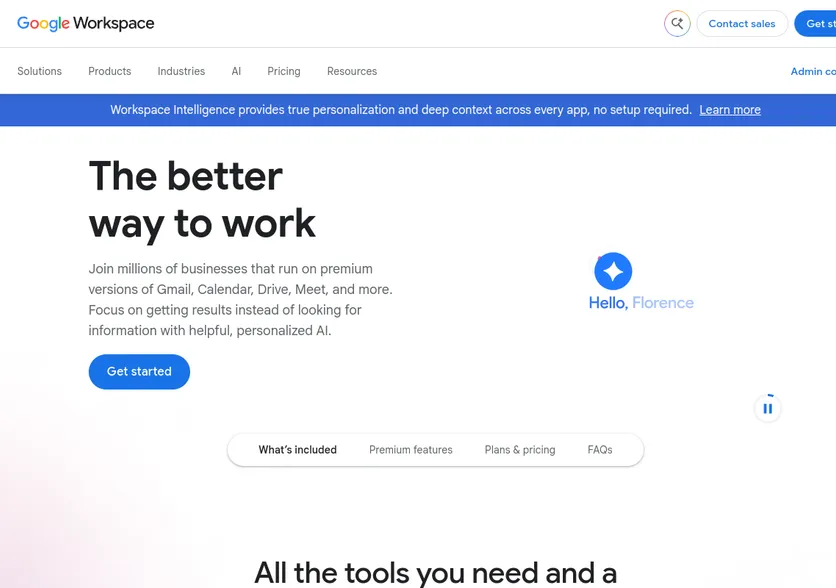
A remote team that lives in Gmail and Docs will find chat already waiting in the sidebar, and this Google Chat plan costs seven dollars per user a month for Workspace Business Starter on a one-year commitment. Spaces hold each project beside the inbox, threads keep the discussion readable across time zones, and Meet is built in for the call that a chat cannot solve. Chat is not sold separately, so the price is really the price of a Workspace seat.
What we like
- Chat sits inside Gmail and Docs
- Spaces hold each project beside the inbox
- Meet is built in for the call a chat cannot solve
Watch out for
- Chat is not sold separately, so the price is a Workspace seat
- Gemini in Chat needs the Standard tier, not Starter
How to try it
- Create a space for each project
- Answer in threads so the discussion stays readable
- Start a Meet call from the space when a case needs a voice
4. Rocket.Chat
Best for: Remote teams that want to own and host their chat
Paid tool Starting price: $8/user/month (Pro) · Eight dollars per user a month on Pro billed annually; the Community edition is free for self-hosting and Enterprise is quoted; one November 2026 guide treats Pro as quote-only because the vendor page shows no dollar figure without a quote flow, but multiple vendor-page reads agree on eight dollars
Free plan: Free plan (Community, self-hosted)
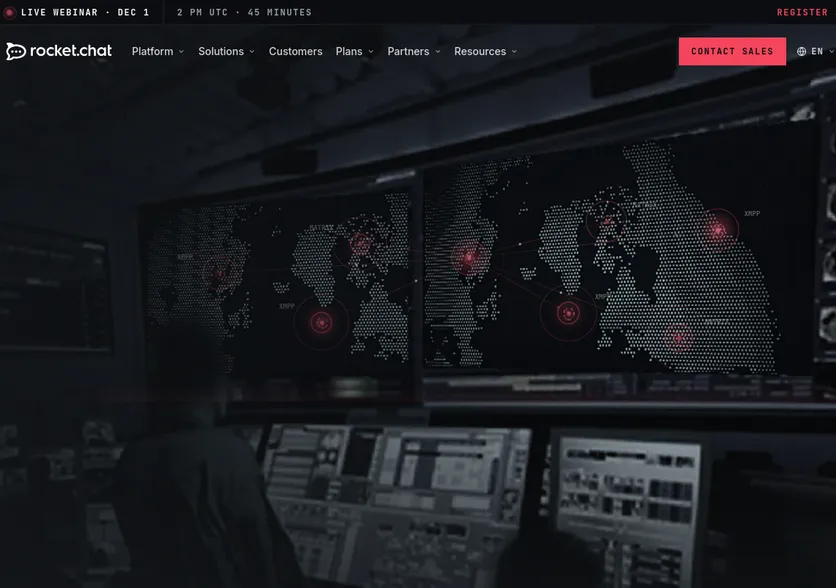
At eight dollars per user a month on Pro billed annually, this Rocket.Chat plan gives a remote team that wants to own its chat the managed version of an open-source chat. The Community edition is free for self-hosting, the Pro plan adds standard support and capacity for five hundred users, and the chat works across web, desktop and mobile. One guide treats Pro as quote-only, though multiple vendor-page reads agree on the price.
What we like
- Open-source chat the team can host itself
- Community edition is free for self-hosting
- Works across web, desktop and mobile
Watch out for
- One guide treats Pro as quote-only, though vendor reads agree on the price
- Self-hosting needs someone to run the server
How to try it
- Start on the free Community edition to test the fit
- Connect the channels the team uses
- Move to Pro when the team needs standard support
5. Mattermost
Best for: Remote teams on sensitive projects that need data control
Paid tool Starting price: $10/user/month (Professional) · Ten dollars per user a month on Professional, sold as a prepaid annual licence; Enterprise and Enterprise Advanced are quoted; Professional is capped at two hundred and fifty licensed users
Free plan: Free plan (Starter, self-hosted)
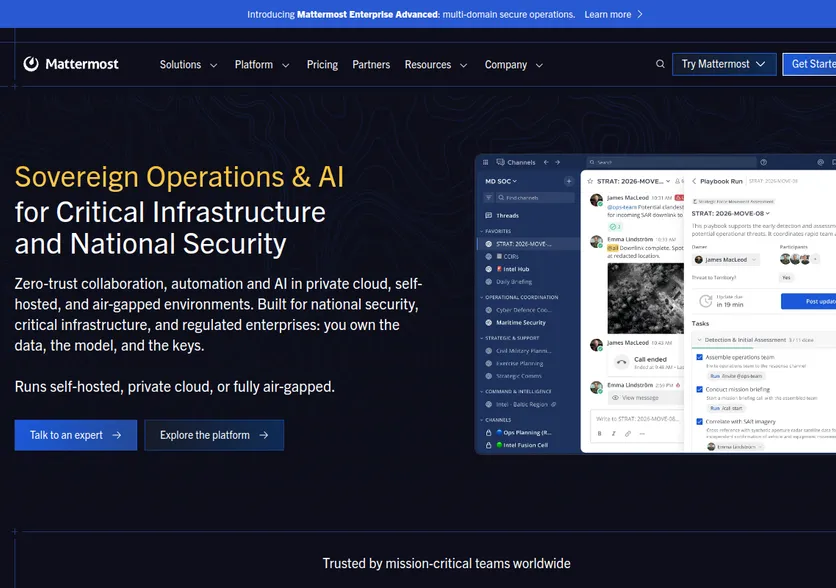
A remote team that works on sensitive projects and needs to control its data will find it here, and this Mattermost plan costs ten dollars per user a month on Professional, sold as a prepaid annual licence. The team can run the chat on its own servers, in the cloud or in an air-gapped environment, and Professional adds single sign-on and guest accounts for outside collaborators. The plan is capped at two hundred and fifty users, so a large team needs the Enterprise tier.
What we like
- Runs on the firm's own servers, in the cloud or air-gapped
- Professional adds single sign-on and guest accounts
- Built for teams that work on sensitive projects
Watch out for
- Professional is capped at two hundred and fifty users
- Licences are prepaid annually with no monthly option
How to try it
- Choose self-hosted or cloud deployment
- Set up single sign-on for the team
- Invite outside collaborators as guests
6. Twist
Best for: Remote teams that want calm async threads, not a live stream
Paid tool Starting price: $6/user/month (Unlimited) · Six dollars per user a month on Unlimited billed annually (eight dollars billed monthly); the free plan keeps one month of comments and messages, five integrations and five gigabytes of storage
Free plan: Free plan (1 month of history)
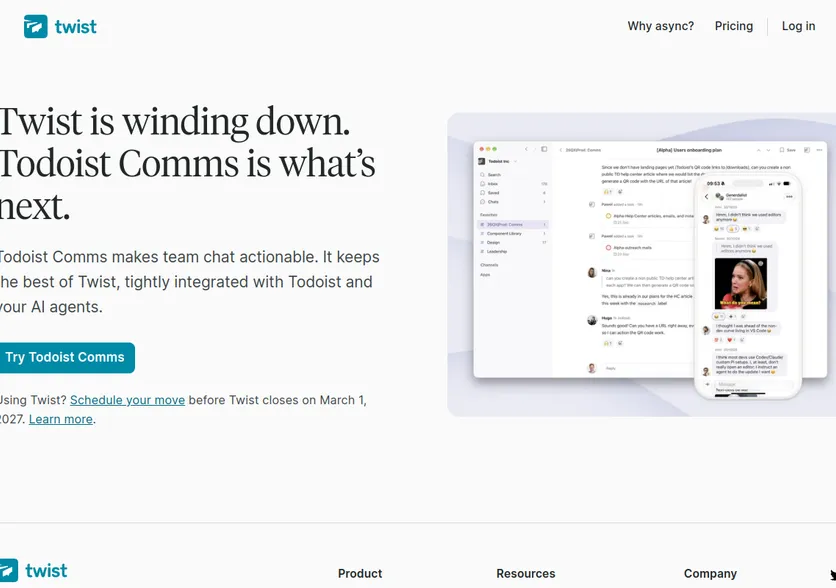
A remote team that is tired of a chat stream that never stops will love the calm here, and this Twist plan costs six dollars per user a month on Unlimited billed annually for threaded conversations instead of a live feed. Every discussion is a thread with a subject, so a teammate in a later time zone can read the full context and reply without a call, and the free plan keeps one month of history. Guests on a single channel are always free, though multi-channel guests are billed like team members.
What we like
- Every discussion is a thread with a subject
- Teammates in later time zones read the full context
- Single-channel guests are always free
Watch out for
- Multi-channel guests are billed like team members
- No live chat stream for teams that want instant replies
How to try it
- Create a channel per topic with threads inside
- Write updates as threads with a clear subject
- Let teammates catch up in their own time
7. Chanty
Best for: Small remote teams that want the cheapest paid chat
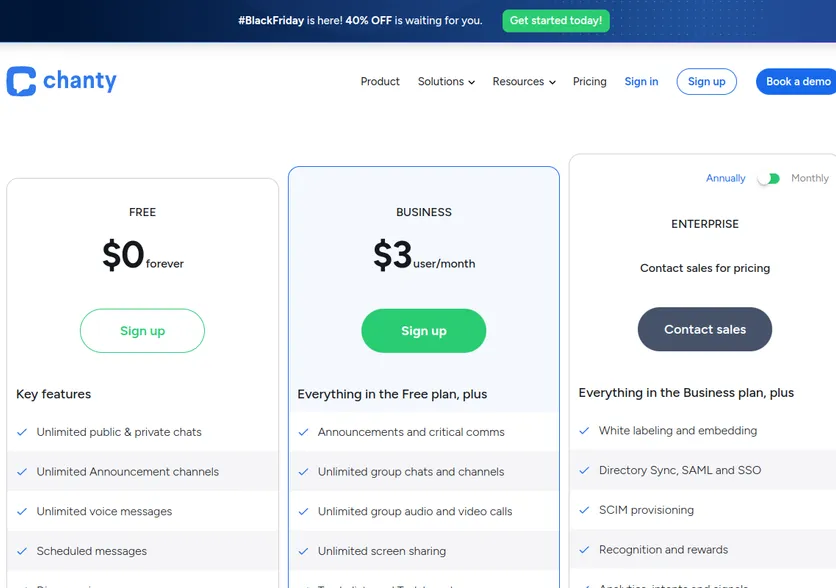
Paid tool Starting price: $3/user/month (Business) · Three dollars per user a month on Business billed annually (four dollars billed monthly); the free plan covers up to five members with unlimited message history; Enterprise is quoted and nonprofits and schools get fifty percent off
Free plan: Free plan (up to 5 users)
A small remote team that wants the cheapest paid chat with tasks built in will find it here, and this Chanty plan costs three dollars per user a month on Business billed annually. Channels, direct messages and calls cover the daily work, any message can turn into a task on a Kanban board, and the free plan covers up to five members with unlimited history. The integration library is smaller than the big chat tools, so a team that needs many connections will feel the limit.
What we like
- Cheapest paid chat in this list
- Any message can turn into a task on a Kanban board
- Free plan covers five members with unlimited history
Watch out for
- Integration library is smaller than the big chat tools
- Free plan stops at five members
How to try it
- Create channels for each project
- Turn messages into tasks on the Kanban board
- Use group calls for the cases a chat cannot solve
8. Zoho Cliq
Best for: Remote teams that already run on Zoho
Paid tool Starting price: $3/user/month (Unlimited) · Three dollars per user a month on Unlimited for teams of up to ten users, dropping to two dollars and fifty cents for eleven to fifty users, two dollars for fifty-one to one hundred, one dollar and fifty cents for one hundred to five hundred, and one dollar above five hundred; the free plan covers unlimited users with ten thousand searchable messages
Free plan: Free plan (unlimited users)
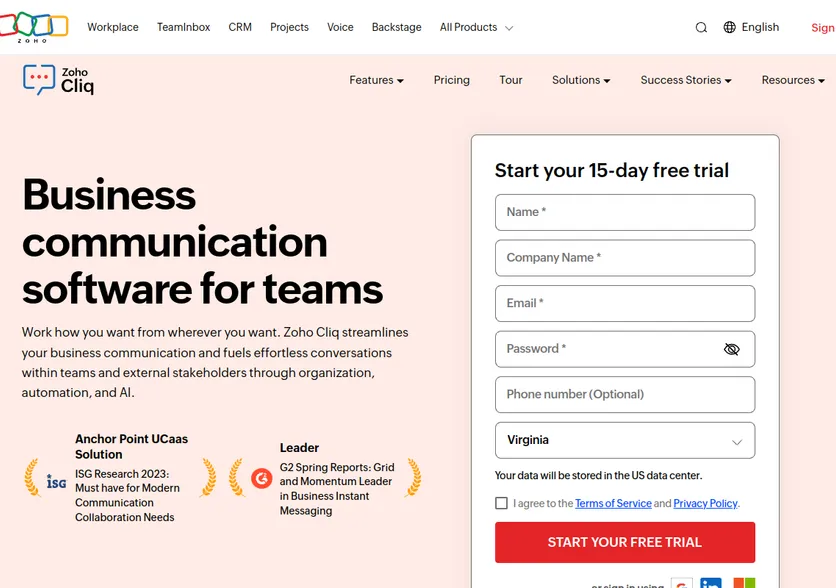
A remote team that already runs on Zoho will find chat for almost nothing, and this Zoho Cliq plan costs three dollars per user a month on Unlimited for teams of up to ten users. The price drops as the team grows, reaching one dollar a user above five hundred, and the chat plugs straight into Zoho CRM and Projects so work surfaces inside conversations. The free plan covers unlimited users with ten thousand searchable messages, which suits a small team starting out.
What we like
- Price drops as the team grows, reaching one dollar above five hundred
- Plugs straight into Zoho CRM and Projects
- Free plan covers unlimited users
Watch out for
- Interface feels utilitarian next to the polished chat tools
- External integrations are restricted
How to try it
- Connect Cliq to the firm's Zoho apps
- Create channels for each project
- Use the flexible subscription to mix plans by role
Prices above were checked on each vendor’s own website on Nov 29, 2026 and can change — the vendor’s page is the final word. Vendor links are editorial: nobody paid to be listed or ranked here. Vendors who want a featured listing can see how it works on our Get listed page.
How a remote team chats without always being online
Write in threads with a clear subject, because a teammate in a later time zone should be able to read the full discussion without scrolling a live stream. Agree on core hours when the whole team is online, and let the rest of the day run on written updates instead of calls. Pin the decisions where everyone can find them, and keep a separate channel for the social chat that builds trust. When a thread grows long, summarise it in one message so the next person does not have to read it all.
Before you buy
- Check that threads keep the full discussion in order, because a teammate in a later time zone reads it cold
- Make sure message history is unlimited on the paid plan, since a remote team needs a searchable record
- Ask whether the tool works well on mobile, because remote teammates chat from phones as often as laptops
- Confirm the tool handles video calls, since a remote team still needs to meet face to face
- Test the tool with a real week of remote work before paying, including a day with no live meetings
Official websites
Official websites of the products reviewed above. Features and prices were checked against these sites when this guide was written, and they can change, so confirm on the vendor site before you buy.
Frequently asked questions
What is the best team chat software for remote teams?
Slack is the best overall pick for most remote teams, at seven dollars and twenty-five cents per user a month on Pro, because its channels and threads keep a distributed team in step. Twist is the best pick for a team that wants calm async work, at six dollars a month, and Microsoft Teams is the best value for a team that already runs on Microsoft 365, at four dollars a month.
How much does team chat software cost a remote team?
Prices in this list run from three dollars per user a month for Chanty Business and Zoho Cliq to ten dollars for Mattermost Professional, with most tools between four and eight dollars a month. A team of ten on Slack Pro should expect roughly seventy-two dollars and fifty cents a month, and the same team on Teams Essentials pays about forty dollars. The free plans cover small teams, so a tiny team may pay nothing at all.
Is Twist better than Slack for remote teams?
Twist is better when the team wants calm async work, since every discussion is a thread with a subject and nobody has to watch a live stream. Slack is better when the team needs fast channels, huddles and a huge integration library. A team that feels interrupted all day should try Twist, and a team that needs speed and integrations should pick Slack.
Can a remote team use free team chat software?
Yes. Slack, Teams, Google Chat, Chanty, Zoho Cliq, Rocket.Chat, Mattermost and Twist all have free plans that cover a small remote team. The free plans usually limit message history, guests or integrations, so a team that needs a long searchable record will need a paid plan. Start free, and pay only when the team grows past the free limits.
How do remote teams handle time zones in chat?
Write in threads with a clear subject, so a teammate who wakes up later can read the full discussion in order instead of scrolling a live stream. Agree on a few core hours when everyone is online, and let the rest of the day run on written updates. Twist is built for this style, and Slack threads do the same job when the team uses them well.
Compare the eight tools above, then start with the free Slack plan on the chat tool that matches how the team already works across time zones before paying for a full year.
Browse Productivity Tools tools