On this page
A startup cannot afford a time tracker that costs more than the hours it saves, so the list below starts with free plans and cheap paid tiers that still bill clients. Every tool here grows with the team, from a free tier for the founding few to paid plans that add invoicing, approvals and budgets as headcount rises. Clockify leads because it is free for up to five users and costs three dollars and ninety-nine cents a user a month billed annually on Basic, while the rest compete on how much they give away before the first payment.
How we researched this
We checked every price on the vendor pricing page on November 29, 2026, and only included tools with a published US dollar list price. Quote-only platforms and tools with no verifiable price were left out. Prices change, so confirm the current figure on the vendor site before you buy.
Compare the tools
| Name | Best for | Starting price | Free plan | |
|---|---|---|---|---|
 Clockify | Teams that want the cheapest paid plan that still bills clients | $3.99/user/month | Free plan (up to 5 users) | Visit |
 Toggl Track | Design studios and small teams that bill by the hour | $9/user/month | Free plan (up to 5 users) | Visit |
 TimeCamp | Small teams that want automatic tracking for free | $3.99/user/month | Free plan (unlimited users) | Visit |
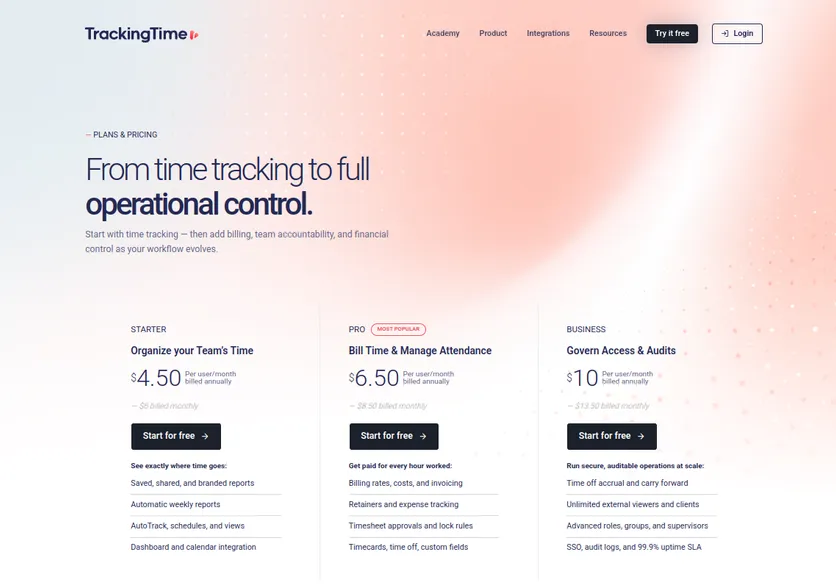
 TrackingTime | Small teams that want approvals without a big bill | $3.75/user/month | Free plan (limited) | Visit |
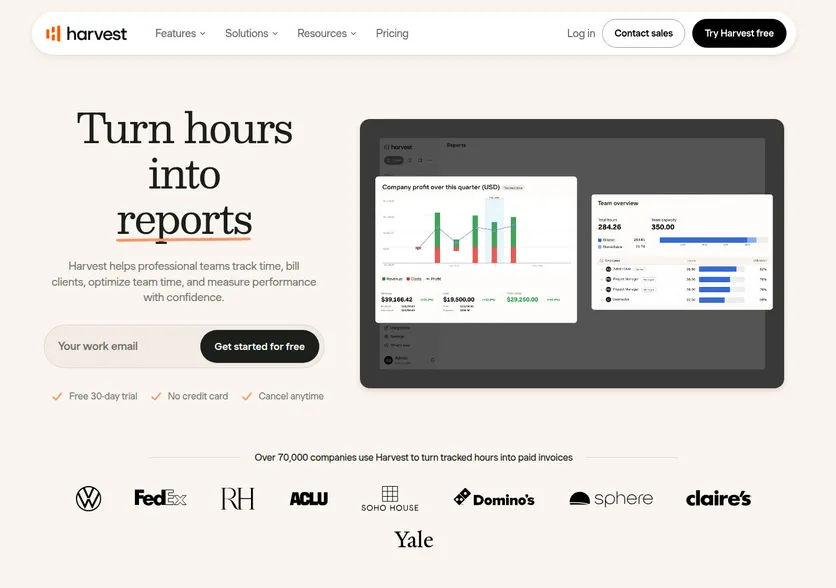
 Harvest | Studios and consultants who invoice from tracked time | $11/user/month | Free plan (1 seat, 2 projects) | Visit |
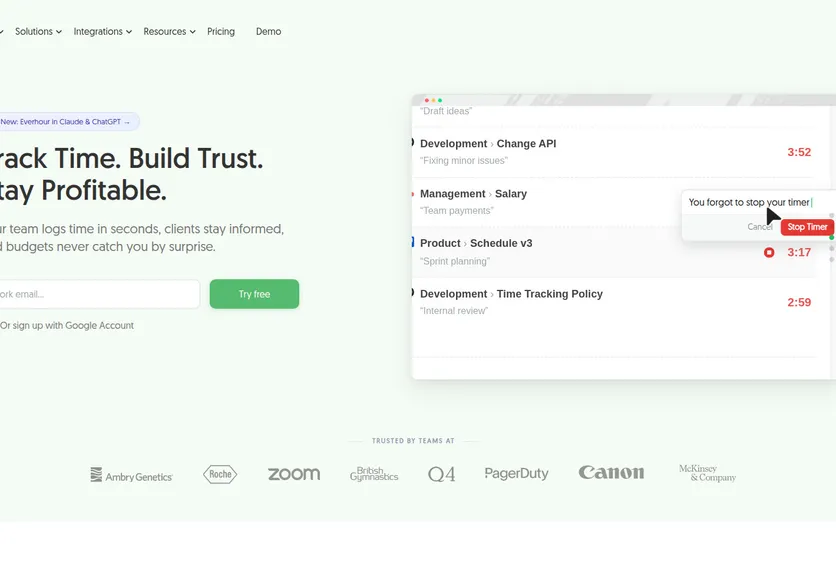
 Everhour | Teams that track time inside Asana, Jira or Trello | $8.50/user/month | Free plan (up to 5 seats) | Visit |
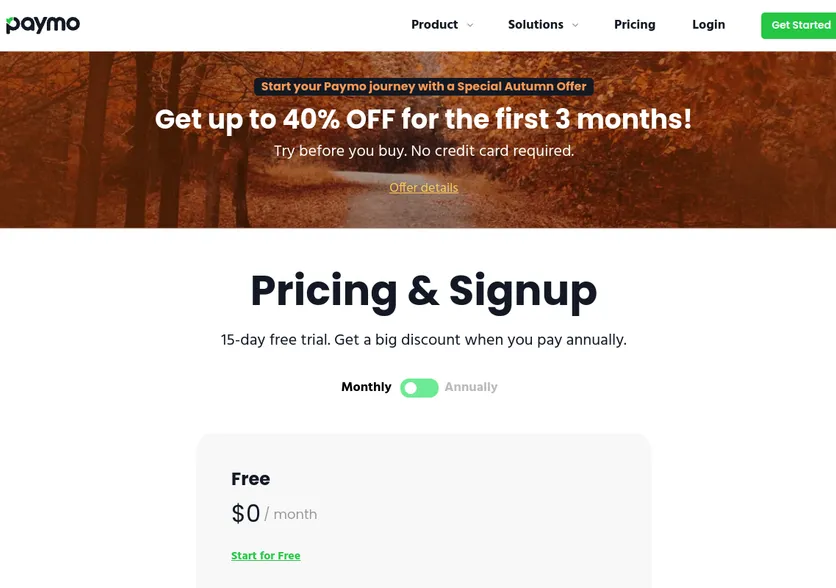
 Paymo | Small businesses that want projects, time and invoicing in one place | $5.90/user/month | Free plan (1 user) | Visit |
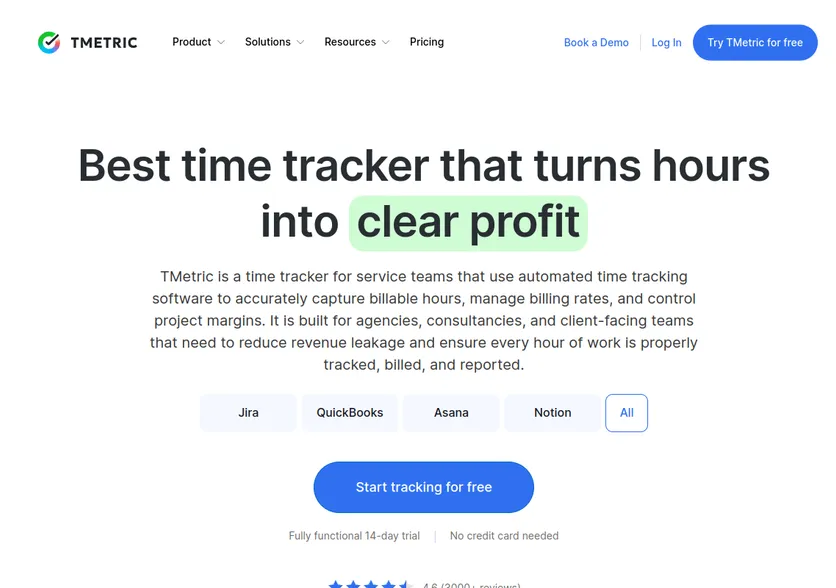
 TMetric | Small teams billing by work type or fixed fee | $5.83/user/month | Free plan (up to 2 seats) | Visit |
The time tracking software for startups, compared
1. Clockify
Best for: Teams that want the cheapest paid plan that still bills clients
Paid tool Starting price: $3.99/user/month · Three dollars and ninety-nine cents per user a month billed annually on Basic ($4.99 billed monthly); Standard is $5.49 billed annually and Pro is $7.99; Enterprise is $11.99; the free plan covers up to five users
Free plan: Free plan (up to 5 users)
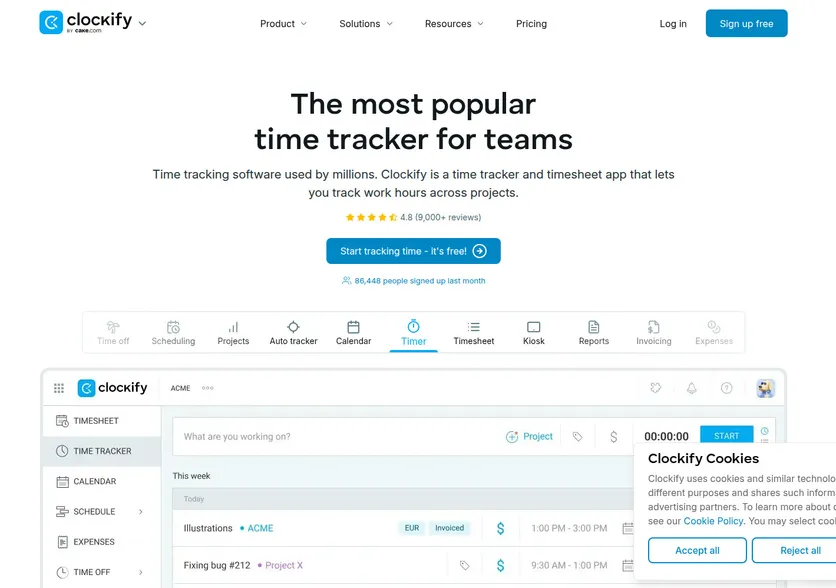
For a startup watching every dollar, Clockify costs three dollars and ninety-nine cents a user a month billed annually and covers the basics without a big subscription. It covers timers, timesheets, a calendar view and reports on the free plan, which is more than most rivals give away. Paid tiers add the pieces a growing team actually needs, like approvals, invoicing and activity tracking, without a jump in price.
What we like
- Free plan covers unlimited projects and time tracking
- Kiosk mode turns any tablet into a clock-in station
- Timesheet approvals and invoicing from Standard
Watch out for
- Screenshots and GPS tracking need the Pro plan
- The free plan lost billable rates and exports in April 2026
How to try it
- Create a workspace and invite the team with their hourly rates
- Start the timer or fill the timesheet at the end of each day
- Approve the weekly timesheet and export it for payroll or invoicing
2. Toggl Track
Best for: Design studios and small teams that bill by the hour
Paid tool Starting price: $9/user/month · Nine dollars per user a month billed annually on Starter ($10 billed monthly); Premium is $18 a user a month billed annually ($20 monthly, with a first-year promo of $14 that renews at $18); Enterprise is quoted
Free plan: Free plan (up to 5 users)
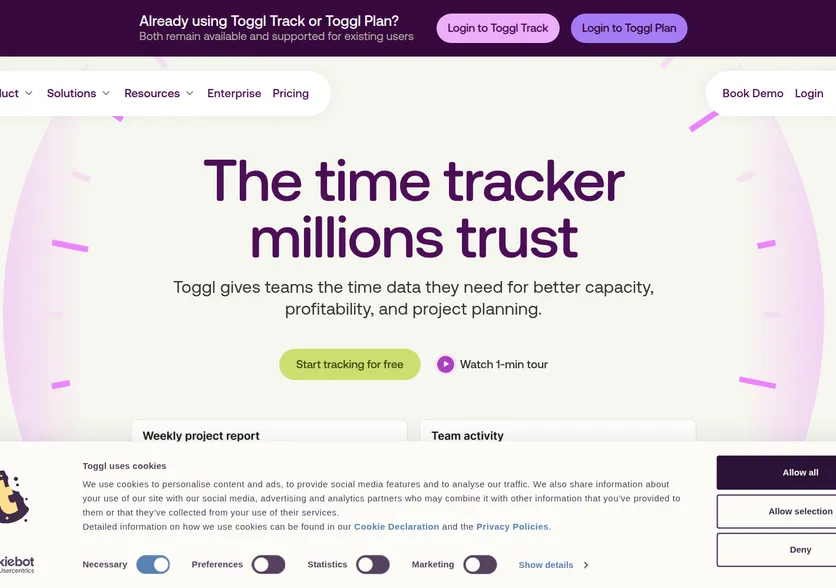
A young team that needs to track time and bill clients from day one gets a cheap start here, since Toggl Track costs nine dollars a user a month billed annually. Its reports show exactly how many billable hours each client used, and the project estimates warn the studio before a fixed-fee job runs over. The free plan covers five users, so a small studio can run real client work on it before paying.
What we like
- One-click timer with no learning curve
- Billable rates and project estimates on Starter
- Strong reports that turn hours into invoices
Watch out for
- No screenshots or activity monitoring at any tier
- Timesheet approvals need the Premium plan
How to try it
- Start the timer from the browser extension or desktop app when work begins
- Tag the entry with the client and project so billing stays accurate
- Review the weekly report and send the billable hours to the client
3. TimeCamp
Best for: Small teams that want automatic tracking for free
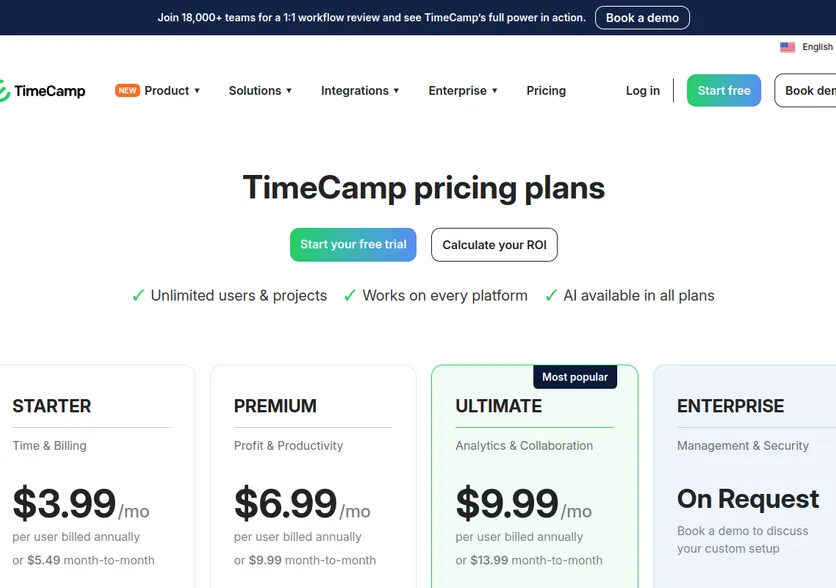
Paid tool Starting price: $3.99/user/month · Three dollars and ninety-nine cents per user a month billed annually on Starter ($5.49 billed monthly); Premium is $6.99 billed annually and Ultimate is $9.99; one November 2026 read lists lower Starter, Premium and Ultimate figures, which conflict with the vendor page reads, so confirm at checkout
Free plan: Free plan (unlimited users)
Startups that want room to grow will like this one, because TimeCamp costs three dollars and ninety-nine cents a user a month billed annually and scales from a free plan to a paid tier. Its free plan has no user cap, which is rare, and its automatic tracker fills in the day from the apps and sites the team actually used. Invoicing arrives on the cheapest paid plan, so a small team can bill clients without a big subscription.
What we like
- Free plan covers unlimited users and projects
- Automatic tracking captures apps and sites with no timer
- Invoicing starts on the cheapest paid plan
Watch out for
- Timesheet approvals wait for the Ultimate plan
- Premium allows only one synchronised tool integration
How to try it
- Create the workspace and invite the team
- Let the automatic tracker record apps and websites
- Turn the captured time into invoices from the Starter plan
4. TrackingTime
Best for: Small teams that want approvals without a big bill
Paid tool Starting price: $3.75/user/month · Three dollars and seventy-five cents per user a month billed annually on Starter ($5 billed monthly); Pro is $5.75 billed annually and Business is $10; a single-user Freelancer plan is $8 billed annually
Free plan: Free plan (limited)
For a startup watching every dollar, TrackingTime costs three dollars and seventy-five cents a user a month billed annually and covers the basics without a big subscription. It keeps timers, tasks and timesheets in one tidy workspace, and its browser extensions put the timer inside the tools the team already opens. Approvals and invoicing arrive on Pro for less than most rivals charge for a basic plan.
What we like
- Free plan covers tracking and task management
- Timesheet approvals and locking on Pro
- Works inside more than fifty apps with extensions
Watch out for
- Starter and Pro bill for at least two users
- The free plan has no billable rates or CSV exports
How to try it
- Create the workspace and add projects with their tasks
- Start timers from the browser extension inside the apps the team uses
- Submit the timesheet for approval at the end of the week
5. Harvest
Best for: Studios and consultants who invoice from tracked time
Paid tool Starting price: $11/user/month · Eleven dollars per user a month billed annually on Pro ($13.75 billed monthly); Premium is $14 billed annually and adds approvals and profitability reporting; some November 2026 reads of the vendor pricing page show a Teams tier at nine dollars billed annually, so confirm the tier name at checkout
Free plan: Free plan (1 seat, 2 projects)
A young team that needs to track time and bill clients from day one gets a cheap start here, since Harvest costs eleven dollars a user a month billed annually. Harvest was built to end in an invoice, so the timer, the expense log and the billing all live in one place. A studio can see the cost of a project while it is still running instead of discovering it after the month ends.
What we like
- Tracked hours flow straight into client invoices
- Expense tracking and online payments in the same app
- Clean reports show which projects make money
Watch out for
- The free plan stops at two projects, so most teams pay quickly
- Some November 2026 reads show a different tier name and price, so confirm at checkout
How to try it
- Set up clients and projects with their hourly rates
- Track time against tasks and log expenses as they happen
- Turn the approved hours into an invoice and send it from Harvest
6. Everhour
Best for: Teams that track time inside Asana, Jira or Trello
Paid tool Starting price: $8.50/user/month · Eight dollars and fifty cents per user a month billed annually on Team ($10 billed monthly); the Team plan bills a minimum of five seats, so the smallest paid account is $42.50 a month; Custom is quoted from fifty seats
Free plan: Free plan (up to 5 seats)
Startups that want room to grow will like this one, because Everhour costs eight dollars and fifty cents a user a month billed annually and scales from a free plan to a paid tier. Instead of asking the team to open another app, it puts the timer inside the tasks they already work on. Budgets, billable rates and invoices sit on top of those timers, so tracked time becomes a bill without extra admin.
What we like
- Timers live inside Asana, Trello, Jira and ClickUp tasks
- Budgets and estimates warn before a project runs over
- Invoicing and expenses in the same subscription
Watch out for
- The Team plan bills at least five seats even for smaller teams
- No screenshots or activity monitoring
How to try it
- Connect Everhour to the project tool the team already uses
- Add timers to tasks and set a budget for each project
- Review the time and cost reports before sending the invoice
7. Paymo
Best for: Small businesses that want projects, time and invoicing in one place
Paid tool Starting price: $5.90/user/month · Five dollars and ninety cents per user a month billed annually on Starter ($9.90 billed monthly); Small Office is $10.90 billed annually and Business is $16.90; older listings showing three dollars and ninety cents or eleven dollars and ninety-five cents are stale
Free plan: Free plan (1 user)
For a startup watching every dollar, Paymo costs five dollars and ninety cents a user a month billed annually and covers the basics without a big subscription. It folds project management, time tracking and billing into a single app, so a small team plans the work, logs the hours and invoices the client without switching tools. The free plan suits a solo freelancer, while Small Office opens the same workflow to a whole team.
What we like
- Projects, time tracking and invoicing in one workspace
- Gantt charts and profitability reports on Small Office
- Resource scheduling and leave management on Business
Watch out for
- Starter covers a single user, so teams need Small Office
- Scheduling and workload views wait for the Business plan
How to try it
- Create a project and add its tasks with estimates
- Track time against tasks and log expenses as they arise
- Turn approved hours into an invoice and send it from Paymo
8. TMetric
Best for: Small teams billing by work type or fixed fee
Paid tool Starting price: $5.83/user/month · Five dollars and eighty-three cents per user a month billed annually on Professional ($7 billed monthly); Business is $7.50 billed annually and adds approvals, locking and QuickBooks sync; Enterprise is quoted
Free plan: Free plan (up to 2 seats)
A young team that needs to track time and bill clients from day one gets a cheap start here, since TMetric costs five dollars and eighty-three cents a user a month billed annually. It is a low-cost tracker that still handles the billing details, with rates set by project, person or work type and invoices sent from the app. Offline mode keeps the timer running when the connection drops, which field teams notice.
What we like
- Offline mode works on every plan
- Billable rates by project, person or work type
- Browser extensions add timers to more than fifty web apps
Watch out for
- Approvals and time locking need the Business plan
- The free plan covers only two seats
How to try it
- Create the workspace and add clients and projects
- Start the timer from the browser extension in the apps used daily
- Review the reports and send invoices from the billable hours
Prices above were checked on each vendor’s own website on Nov 29, 2026 and can change — the vendor’s page is the final word. Vendor links are editorial: nobody paid to be listed or ranked here. Vendors who want a featured listing can see how it works on our Get listed page.
How a startup picks a time tracker it will not outgrow
Start on the free plan and run real client work through it for a month, because a free tier that breaks under real use is worse than no free tier at all. Write down the three features the startup will need next, usually invoicing, approvals or budgets, and check which tier unlocks each one before the team grows into it. Watch the seat minimums and per-user pricing together, since a cheap per-seat price with a five-seat minimum costs more than a slightly dearer plan with no minimum. Finally, pick a tool that exports everything, because a startup that cannot leave its tracker is stuck with whatever the vendor charges next year.
Before you buy
- Confirm the free plan covers the whole founding team, not just one or two seats
- Check which tier adds invoicing, approvals or budgets, and what that tier costs per seat
- Make sure there is no seat minimum that forces the startup to pay for empty chairs
- Ask if the tool exports all time data, so the startup can switch vendors later
- Test the tool on a real client project for two weeks before paying for a full year
Official websites
Official websites of the products reviewed above. Features and prices were checked against these sites when this guide was written, and they can change, so confirm on the vendor site before you buy.
Frequently asked questions
What is the best time tracking software for a startup?
Clockify is the best overall pick for a startup, free for up to five users and three dollars and ninety-nine cents a user a month billed annually on Basic. TimeCamp has the most generous free plan, free for unlimited users and projects. Toggl Track is the best choice once the startup bills clients by the hour, at nine dollars a user a month billed annually on Starter with billable rates included.
What is the cheapest paid time tracking software for startups?
Clockify Basic and TimeCamp Starter tie for cheapest, both three dollars and ninety-nine cents a user a month billed annually. TrackingTime Starter is next at three dollars and seventy-five cents a user a month billed annually, which is actually cheaper, but its free plan is more limited. For a team of five, Clockify Basic costs under twenty dollars a month, so price should not decide the pick alone.
Can a startup track time completely free?
Yes. TimeCamp is free for unlimited users and projects, Clockify is free for up to five users with unlimited projects, and Everhour is free for up to five seats. Toggl Track is also free for up to five users. The free tiers cover timers, timesheets and basic reports, but invoicing, approvals and billable rates usually need a paid plan, so a billing startup should budget for the first paid tier.
Which tool grows best as a startup hires?
Clockify grows best, because its tiers stay cheap and the free plan covers the founding team until headcount passes five. Everhour is the awkward one: its Team plan bills a minimum of five seats, so a three-person startup pays for two empty chairs. Paymo and Harvest grow by adding users at a flat per-seat price, which is easy to forecast as the team doubles.
Do startups need timesheet approvals?
Not at first, but approvals matter the moment hours feed payroll or client invoices, because unapproved hours become disputed hours. Clockify adds approvals on Standard at five dollars and forty-nine cents a user a month billed annually, and TrackingTime adds them on Pro at five dollars and seventy-five cents. A startup that bills clients should switch approvals on before the first invoice goes out.
Compare the eight tools above, then run the free plan on real client work for a month before paying for the tier that adds invoicing or approvals.
Browse Productivity Tools tools