On this page
UptimeRobot is the friendly free monitor everyone starts with, but its free checks run every five minutes and its paid plan caps monitors fast. Uptime is the pick that undercuts it on price, with a flexible check allowance from nine dollars a month. This guide compares eight uptime monitoring alternatives to UptimeRobot, from nine dollar a month checkers to a 29 dollar a month incident platform, with live 2026 prices and free plans, so you can pick by check speed, alert quality and budget.
How we researched this
We checked the pricing page of every vendor on this list on November 26, 2026, and kept only tools that publish a real dollar price. Each tool had to check website uptime on a schedule and alert by more than email alone, and we compared entry prices, free plans, check intervals and whether status pages cost extra.
Compare the tools
| Name | Best for | Starting price | Free plan | |
|---|---|---|---|---|
| Uptime | Teams that want flexible check allowances at the lowest price | $9/month | No free plan, 14-day free trial | Visit |
 Site24x7 | Teams that want uptime, RUM and server monitoring in one place | $9/month | Free Forever plan (50 website monitors) | Visit |
| Pulsetic | Small teams that want polished status pages included | $9/month | Free plan (10 monitors, 5-minute checks) | Visit |
| Oh Dear | Agencies that want whole site health checks per site | $17/month | No free plan, 10-day free trial | Visit |
| Pingdom | Stores that need transaction checks through checkout | $18/month | No free plan, 30-day free trial | Visit |
 Checkly | Developers who want monitoring as code with Playwright checks | $24/month | Free Hobby plan (10 monitors) | Visit |
 StatusCake | Teams that want uptime plus page speed and SSL in one plan | $24.49/month | Free plan with basic uptime checks | Visit |
 Better Stack | Teams that want monitoring tied to on call response | $29/month | Free plan (10 monitors, 3-minute checks) | Visit |
The uptime monitoring alternatives, compared
1. Uptime
Best for: Teams that want flexible check allowances at the lowest price
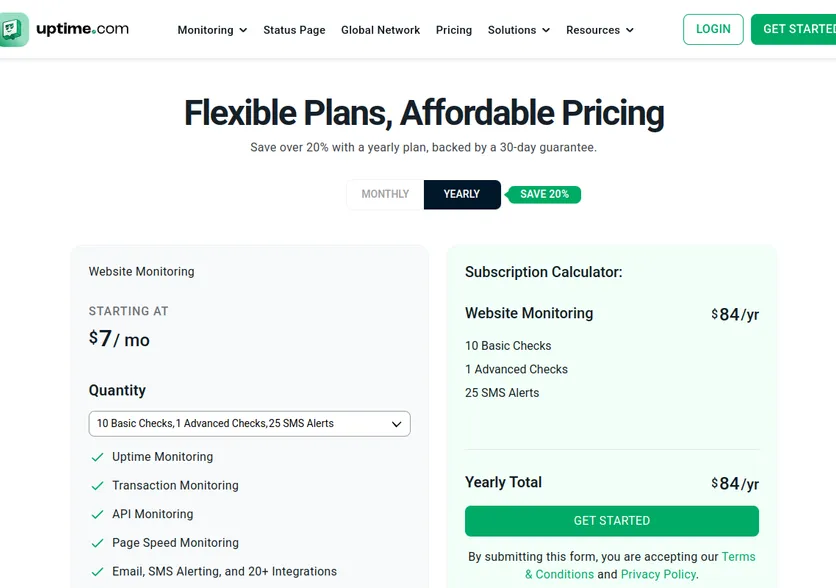
Paid tool Starting price: $9/month · Website Monitoring starts at $9 a month for 10 basic checks and 1 advanced check; status pages cost $19 a month extra
Free plan: No free plan, 14-day free trial
Uptime lets a team size basic and advanced checks separately, which is exactly the flexibility UptimeRobot lacks. This Uptime Website Monitoring plan starts at nine dollars a month for ten basic checks, one advanced check and 25 SMS alerts. It is the cheapest paid step up from UptimeRobot for a team with many simple pages and one checkout flow.
What we like
- Cheapest paid plan on this list
- Basic and advanced checks sized separately
- Transaction and API checks included
Watch out for
- No free plan, trial only
- Status pages cost extra
How to try it
- Open the Uptime pricing page and start the trial
- Add the homepage and the checkout page as checks
- Set the alert channels for the team
2. Site24x7
Best for: Teams that want uptime, RUM and server monitoring in one place
Paid tool Starting price: $9/month · Web Uptime is $10 a month or $9 a month billed yearly for 25 sites; Free Forever covers 50 website monitors
Free plan: Free Forever plan (50 website monitors)
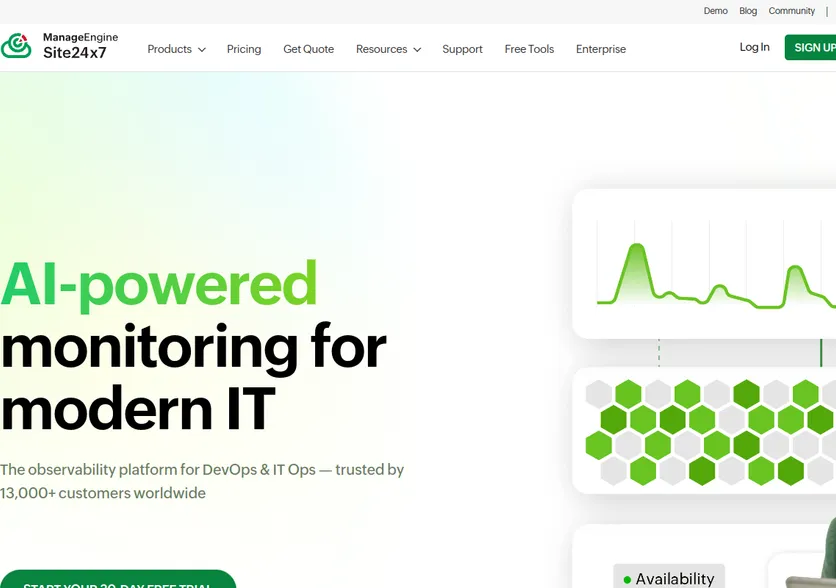
Site24x7 is the closest like for like replacement for a team that outgrows UptimeRobot, because it bundles transaction checks, real user monitoring and page speed in the same plan. This Site24x7 Web Uptime plan costs nine dollars a month on annual billing for 25 sites with one minute checks. It suits a team that wants the whole monitoring stack from one vendor.
What we like
- Fifty free monitors, most generous here
- Uptime, RUM and server checks in one plan
- Checks from more than 130 locations
Watch out for
- Interface feels dated next to rivals
- Advanced features hide in higher tiers
How to try it
- Open the Site24x7 pricing page and start the free plan
- Add the sites to monitor from 130 plus locations
- Turn on real user monitoring for the main pages
3. Pulsetic
Best for: Small teams that want polished status pages included
Paid tool Starting price: $9/month · Solo is $9 a month for 10 monitors at 60 second checks; Team is $19 a month; annual billing gives two months free
Free plan: Free plan (10 monitors, 5-minute checks)
Pulsetic pairs uptime checks with the prettiest status pages on this list, and it adds domain expiry, DNS change and heartbeat monitoring that UptimeRobot charges extra for. This Pulsetic Solo plan costs nine dollars a month for ten monitors at 60 second checks with unlimited status pages. It is the pick when the status page matters as much as the alert.
What we like
- Unlimited status pages on paid plans
- Domain, DNS and cron monitoring included
- AI monitors follow plain English prompts
Watch out for
- Solo covers only ten monitors
- No on call scheduling built in
How to try it
- Open the Pulsetic pricing page and start the free plan
- Add monitors and set the 60 second interval
- Publish a status page on your own domain
4. Oh Dear
Best for: Agencies that want whole site health checks per site
Paid tool Starting price: $17/month · Solo is $17 a month for 2 sites or 15 euros a month; every plan includes every feature
Free plan: No free plan, 10-day free trial
Oh Dear watches a whole site rather than a single URL, with uptime, SSL health, broken links, mixed content, DNS records, domain expiry and cron monitoring in one subscription. This Oh Dear Solo plan costs 17 dollars a month for two sites, and every plan includes every feature. It fits an agency that charges per site and wants one price per client.
What we like
- Every feature on every plan, no tiers
- Broken links and SSL health included
- Simple per site pricing for agencies
Watch out for
- No free plan, trial only
- Price rises with every site added
How to try it
- Open the Oh Dear pricing page and start the trial
- Add the client sites to the Solo plan
- Turn on broken link and Lighthouse checks
5. Pingdom
Best for: Stores that need transaction checks through checkout
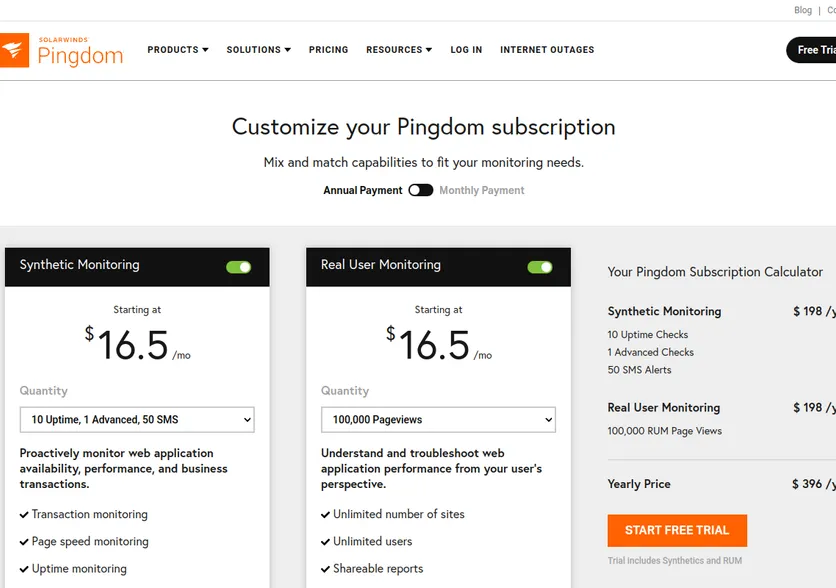
Paid tool Starting price: $18/month · Synthetic Monitoring starts at $18 a month billed monthly or $16.50 a month billed annually, for 10 uptime checks
Free plan: No free plan, 30-day free trial
Pingdom is the veteran of this list, and it pairs synthetic uptime checks with real user monitoring that shows how actual visitors experience the pages. This Pingdom Synthetic Monitoring plan starts at 18 dollars a month for ten uptime checks, one advanced check and 50 SMS alerts. It is the pick when the checkout flow matters more than the homepage.
What we like
- Transaction checks in a real browser
- Checks from more than 100 locations
- Real user monitoring available as an add on
Watch out for
- No free plan at all
- Real user monitoring bills separately
How to try it
- Open the Pingdom pricing page and start the trial
- Add an uptime check for the homepage
- Build a transaction check that walks through checkout
6. Checkly
Best for: Developers who want monitoring as code with Playwright checks
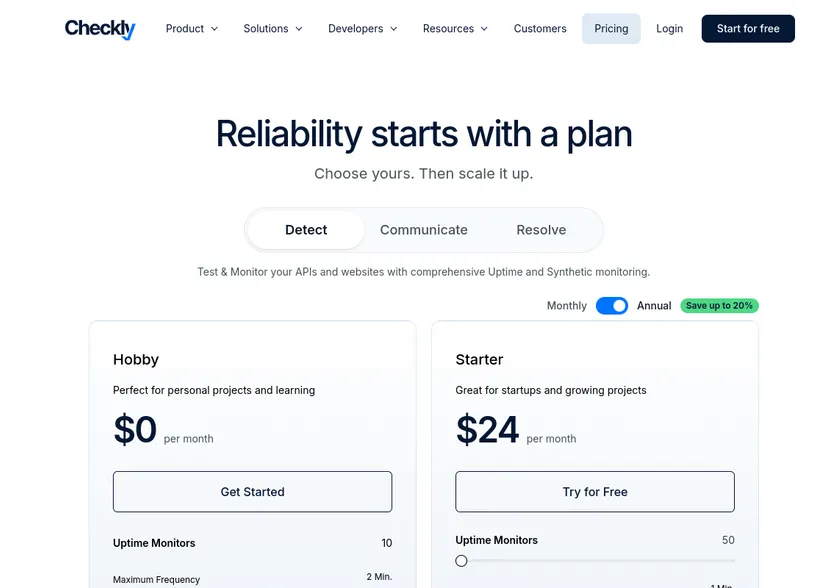
Paid tool Starting price: $24/month · Starter is $24 a month billed annually for 1-minute checks; Team is $64 a month; Hobby is free
Free plan: Free Hobby plan (10 monitors)
Checkly treats monitoring as code, with Playwright browser checks and API checks defined in the repository and deployed from CI. This Checkly Starter plan costs 24 dollars a month on annual billing for one minute checks from many locations. It is the pick for a dev team that reviews monitors in pull requests like any other code.
What we like
- Playwright browser checks in code
- Monitors reviewed in pull requests
- API checks included on every plan
Watch out for
- Billed per run, frequent checks add up
- No on call scheduling built in
How to try it
- Open the Checkly pricing page and start the free plan
- Write the first browser check in Playwright
- Deploy it from CI with the Checkly CLI
7. StatusCake
Best for: Teams that want uptime plus page speed and SSL in one plan
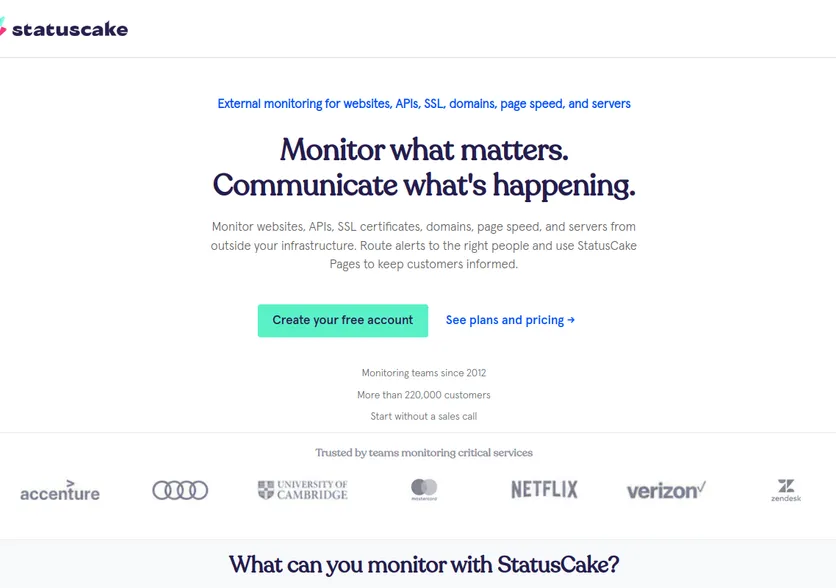
Paid tool Starting price: $24.49/month · Paid plans start at $24.49 a month billed monthly or $20.41 a month billed annually, with uptime, page speed and SSL checks
Free plan: Free plan with basic uptime checks
StatusCake bundles uptime monitoring with page speed checks, SSL monitoring and domain checks, so one plan covers the whole public face of a site. This StatusCake paid plan starts at about 24 dollars a month and adds faster checks plus a status page. It suits a team that wants several monitor types without buying several tools.
What we like
- Uptime, page speed and SSL in one plan
- Free plan covers basic monitoring
- Status pages included on paid plans
Watch out for
- Monthly billing costs more than annual
- Check intervals are slower than rivals
How to try it
- Open the StatusCake pricing page and start the free plan
- Add uptime, page speed and SSL checks
- Set alert contacts for the team
8. Better Stack
Best for: Teams that want monitoring tied to on call response
Paid tool Starting price: $29/month · Responder licence is $29 per responder a month billed annually ($34 billed monthly); free plan covers 10 monitors
Free plan: Free plan (10 monitors, 3-minute checks)
Better Stack connects the alert to the person who fixes it, with on call schedules, incident management, logs and status pages in one platform. This Better Stack responder licence costs 29 dollars a month on annual billing and adds 30 second checks plus unlimited phone and SMS alerts. It is the pick when an outage needs a rota, not just an email.
What we like
- Monitoring plus on call in one tool
- Logs and status pages included
- Free plan covers ten monitors
Watch out for
- Priced per responder, teams pay more
- Status pages cost extra on some plans
How to try it
- Open the Better Stack pricing page and start the free plan
- Add monitors and set the 30 second interval
- Build the on call schedule and escalation policy
Prices above were checked on each vendor’s own website on Nov 26, 2026 and can change — the vendor’s page is the final word. Vendor links are editorial: nobody paid to be listed or ranked here. Vendors who want a featured listing can see how it works on our Get listed page.
How to read the price before you commit
Uptime tools bill by monitor, by check, by responder or by site, and the unit changes everything. Uptime and Pulsetic charge per monitor, Better Stack charges per responder, Oh Dear charges per site, and Checkly charges per run, so the same ten websites can cost nine dollars or ninety depending on the model. Before paying, count the monitors you need, check the interval on the entry plan, and confirm whether status pages and SMS alerts are included or sold separately.
Before you buy
- Count monitors first, because most plans cap how many sites you can watch.
- Check the interval on the entry plan, since five minute checks miss short outages.
- Confirm whether status pages are included or cost extra every month.
- Ask whether SMS and phone alerts are included or billed per alert.
- Test alerts with a real outage before trusting the tool in production, because an alert that never arrives is worse than no monitor at all.
Official websites
Official websites of the products reviewed above. Features and prices were checked against these sites when this guide was written, and they can change, so confirm on the vendor site before you buy.
Frequently asked questions
What is the cheapest UptimeRobot alternative?
Uptime, Site24x7 and Pulsetic all start at $9 a month, which undercuts UptimeRobot paid plans and matches its cheapest tier. Site24x7 is the best free start, with 50 free monitors, while Pulsetic gives 10 free monitors and Uptime has no free plan. The cheapest pick depends on whether the team needs many monitors or fast checks.
Which tool checks fastest?
Better Stack and Checkly check every 30 seconds on paid plans, while Pulsetic Team checks every 30 seconds and Uptime checks every minute on its entry plan. Site24x7 checks every minute on Web Uptime, and StatusCake is slower than the rest. Faster checks cost more, so a shop that loses money every minute down should pay for 30 second checks.
Do I need a status page too?
A status page tells customers the site is down before they complain, and Pulsetic includes unlimited status pages on paid plans while Better Stack sells them from $12 a month and Uptime charges $19 a month extra. Site24x7 and StatusCake include a status page on paid plans. If customer trust matters, pick a tool where the page is included.
What is the difference between uptime and synthetic monitoring?
Uptime monitoring pings a URL and reports whether it answers, which catches a dead server but not a broken checkout. Synthetic monitoring, offered by Pingdom and Checkly, runs a real browser through login, cart and payment steps, so it catches a checkout that loads but never completes. Stores need synthetic checks; a blog usually only needs uptime checks.
Can I keep the free plan and skip paying?
Yes, for a small site. Site24x7 gives 50 free monitors, Pulsetic gives 10, Checkly gives 10 and Better Stack gives 10, all with slower intervals and email or Slack alerts. Free plans miss short outages and lack phone alerts, so a business site should move to a paid plan once downtime costs real money.
Is your site actually up right now? Try free uptime, network and IP tools on Toolsvine right in your browser.
Browse Network & IP Tools tools