On this page
A startup that puts video on its site has two choices: build the whole pipeline, or rent it from a platform that already solved encoding, storage and delivery. The eight tools below are the rental option, from one dollar a month to a full white-label platform. Dacast leads because it is the most complete package for thirty-nine dollars a month, and the rest are ranked on how cheaply and simply they get a startup's video online.
How we researched this
We checked every price on the vendor pricing page on November 29, 2026, and only included tools with a published US dollar list price. Quote-only platforms, including JW Player, Kaltura and Brightcove, publish no prices and were excluded. Prices change, so confirm the current figure on the vendor site before you buy.
Compare the tools
| Name | Best for | Starting price | Free plan | |
|---|---|---|---|---|
 Dacast | Startups that need a white-label video platform fast | $39/month | No free plan; 14-day free trial | Visit |
 api.video | Developers who want video as an API | $12/month | Free sandbox tier | Visit |
 Wowza | Startups that need low-latency live streaming | $25/month | No free plan; free trial | Visit |
 Cloudflare Stream | Startups already on Cloudflare that want cheap video hosting | $5/month | Free plan (usage-based, $5 monthly minimum) | Visit |
 Mux | Developers who want transparent usage-based video infrastructure | $20/month | Free plan (first 100,000 delivered minutes a month free) | Visit |
 Gumlet | Startups that want a cheap hosted player with image optimisation | $10/month | Free plan | Visit |
 Bunny Stream | Startups that want the cheapest possible video delivery | $1/month | No free plan; 14-day free trial | Visit |
 Castr | Startups that stream live to several destinations at once | $16.67/month | No free plan; 7-day free trial | Visit |
The video platform as a service software for startups, compared
1. Dacast
Best for: Startups that need a white-label video platform fast
Paid tool Starting price: $39/month · Thirty-nine dollars a month billed annually on Starter, with two point four terabytes of bandwidth a year and five hundred gigabytes of storage; Event is sixty-three dollars a month and Scale is one hundred and sixty-five dollars a month; one directory listing shows one hundred and eighty-eight dollars for Scale, which conflicts with the vendor figure
Free plan: No free plan; 14-day free trial
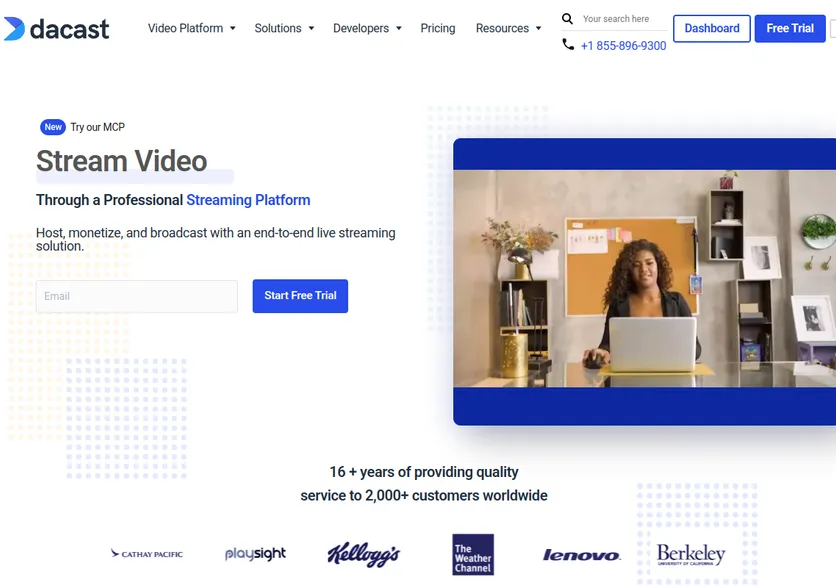
A startup that needs a white-label video platform without building one will find the most complete package here, because this Dacast plan costs thirty-nine dollars a month billed annually on Starter, and it includes hosting, a custom player, live streaming and monetisation. The paywall and ad options let a young company charge for video from day one. There is no free plan, only a fourteen-day trial, so a startup should test the player properly during those two weeks.
What we like
- Hosting, player, live streaming and monetisation in one plan
- Paywall and ads let a startup charge for video from day one
- A fourteen-day trial to test the full platform
Watch out for
- No free plan, only a fourteen-day trial
- Bandwidth caps mean a viral video can cost extra
How to try it
- Sign up for the trial and upload a test video
- Customise the player and embed it on the site
- Set up the paywall and publish the first paid video
2. api.video
Best for: Developers who want video as an API
Paid tool Starting price: $12/month · Twelve dollars a month on the new Standard plan for one thousand plays; forty-nine dollars a month for up to ten thousand plays and ninety-nine dollars a month above that; Premium with four-K delivery starts at thirty-six dollars a month; the old ninety-nine dollar Starter plan is gone
Free plan: Free sandbox tier
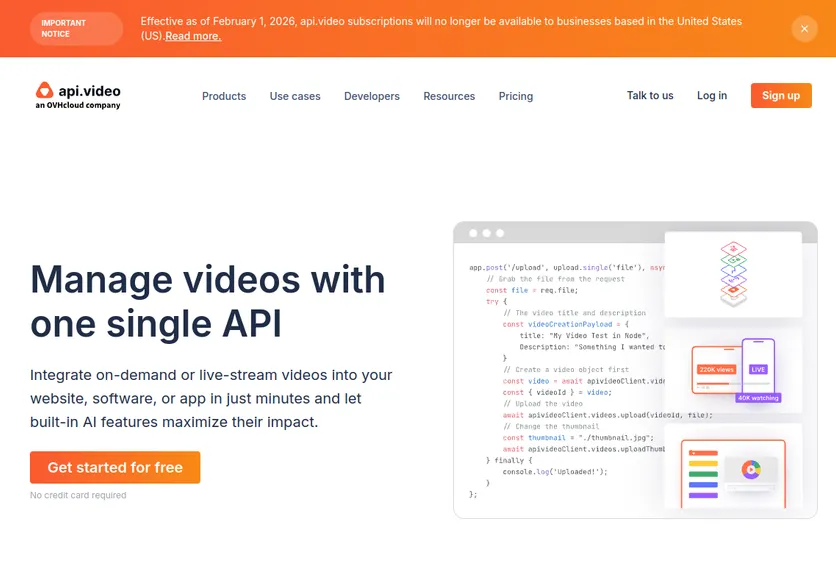
Developers who want video as an API rather than a dashboard will start here, because this api.video plan costs twelve dollars a month on Standard for one thousand plays, and it turns uploads, encoding and playback into simple API calls. The new usage-based pricing means a startup pays for what viewers actually watch, not for a flat tier it never fills. The free sandbox tier lets a developer test the whole API before spending anything.
What we like
- Video as simple API calls, not a dashboard to manage
- Usage-based pricing that scales with actual plays
- A free sandbox tier for testing the API
Watch out for
- No dashboard-first workflow for non-technical teams
- The old ninety-nine dollar Starter plan is gone, so old comparisons mislead
How to try it
- Create an API key from the dashboard
- Upload a video with the API
- Embed the player and track plays
3. Wowza
Best for: Startups that need low-latency live streaming
Paid tool Starting price: $25/month · Twenty-five dollars a month on Wowza Video pay-as-you-go, plus usage; a single month of streaming is one hundred and forty-nine dollars one time and the annual plan is one thousand five hundred and sixty dollars a year; Streaming Engine Basic at one hundred and ninety-five dollars a month is a different product, not this one
Free plan: No free plan; free trial
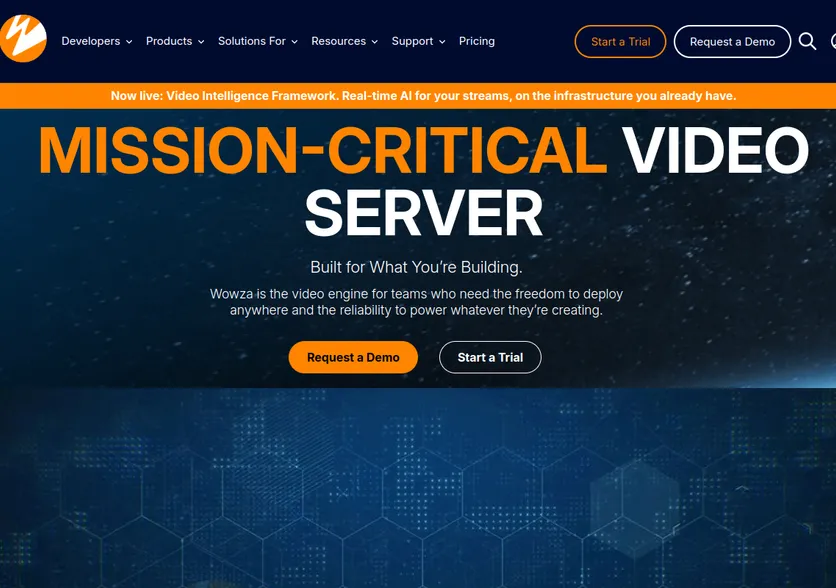
A startup that needs low-latency live streaming will look here first, because this Wowza plan costs twenty-five dollars a month on Wowza Video pay-as-you-go, plus usage, and it is built for live events where a few seconds of delay matters. The platform has powered live streaming for years, so the infrastructure is proven at scale. The pay-as-you-go model means the bill follows actual usage, which is good for quiet months and painful for viral ones.
What we like
- Proven low-latency live streaming infrastructure
- Pay-as-you-go billing that follows actual usage
- A one-month streaming option for single events
Watch out for
- No free plan, only a trial
- Usage-based billing makes the monthly cost hard to predict
How to try it
- Create an account and set up a live stream
- Connect the encoder and start the broadcast
- Embed the player on the site or app
4. Cloudflare Stream
Best for: Startups already on Cloudflare that want cheap video hosting
Paid tool Starting price: $5/month · Five dollars a month minimum, which includes one thousand stored minutes and five thousand delivered minutes; storage is five dollars per one thousand minutes and delivery is one dollar per one thousand minutes; live input is seventy-five cents per one thousand minutes
Free plan: Free plan (usage-based, $5 monthly minimum)
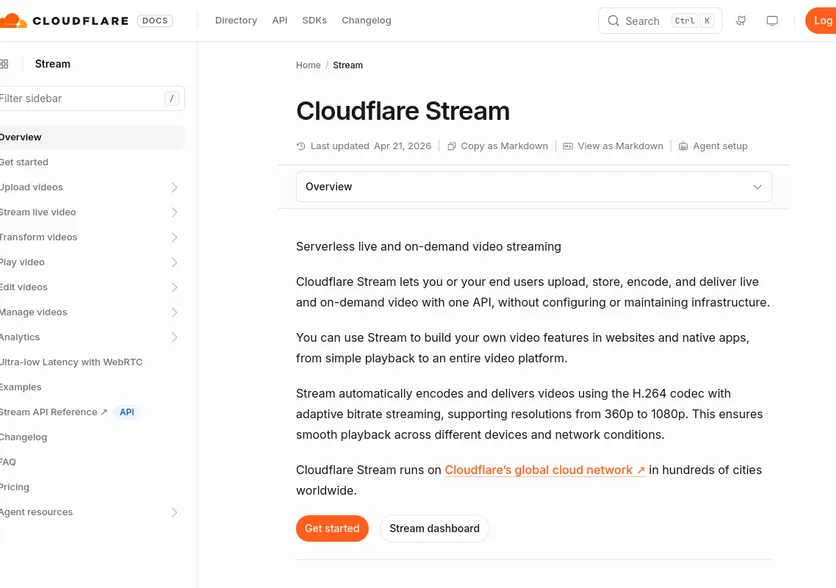
A startup already on Cloudflare gets the cheapest video hosting in this list, because this Cloudflare Stream plan costs five dollars a month minimum, and it covers storage and delivery on the same global network that serves the site. There is no separate player to build, and delivery scales with the audience without a new contract. The metered pricing means a startup should model its expected minutes before committing, since heavy viewing adds up.
What we like
- Cheapest entry price in this list at five dollars a month
- Delivery on Cloudflare's global network
- No separate player to build or maintain
Watch out for
- Metered pricing makes heavy viewing add up
- Fewer monetisation features than Dacast or Castr
How to try it
- Enable Stream from the Cloudflare dashboard
- Upload a video and copy the embed code
- Publish the player on the site and watch the usage
5. Mux
Best for: Developers who want transparent usage-based video infrastructure
Paid tool Starting price: $20/month · Twenty dollars a month on Launch, which buys one hundred dollars of credit; Scale is five hundred dollars a month for one thousand dollars of credit; storage is twenty-four ten-thousandths of a dollar per minute a month and delivery is eight ten-thousandths of a dollar per minute after the free allowance
Free plan: Free plan (first 100,000 delivered minutes a month free)
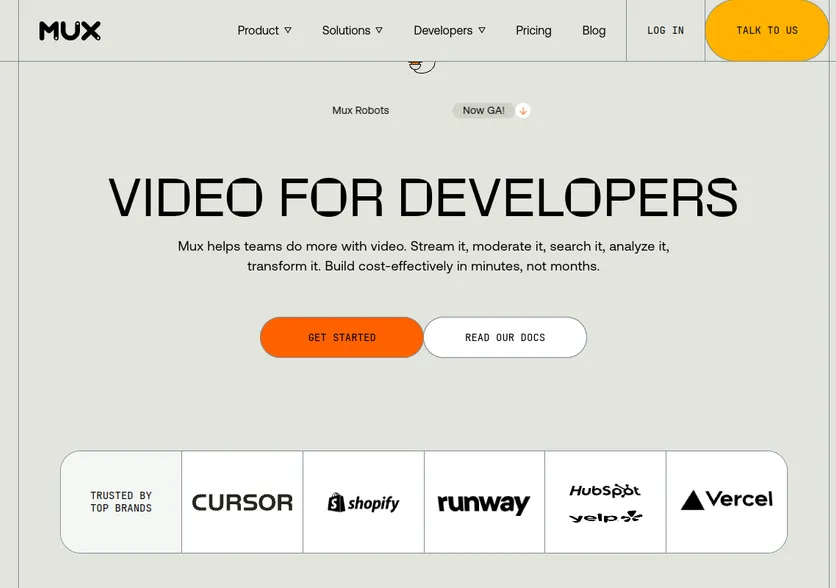
Developers who want video infrastructure with honest usage pricing will like this, because this Mux plan costs twenty dollars a month on Launch for one hundred dollars of credit, and it handles encoding, storage and delivery with real-time analytics. The first one hundred thousand delivered minutes a month are free, which covers a young startup entirely. The credit model is transparent, but it takes a spreadsheet to predict the bill at scale.
What we like
- First one hundred thousand delivered minutes a month free
- Real-time analytics on every video
- Encoding, storage and delivery in one API
Watch out for
- Predicting the bill at scale takes a spreadsheet
- No built-in paywall or monetisation
How to try it
- Create an account and get an API token
- Upload a video through the API
- Embed the player and check the analytics
6. Gumlet
Best for: Startups that want a cheap hosted player with image optimisation
Paid tool Starting price: $10/month · Ten dollars a month billed annually on Creator, with four thousand storage minutes and unlimited streaming; Professional is twenty-four dollars a month and Business is one hundred and twenty dollars a month; one vendor-page screenshot from July shows nine dollars a month billed monthly, which conflicts with the annual figure
Free plan: Free plan
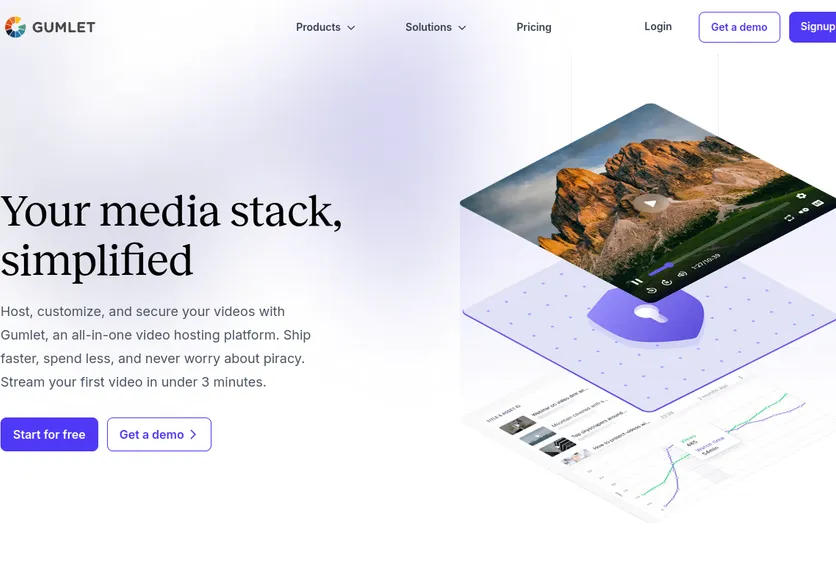
A startup that wants a simple hosted player with image optimisation thrown in will find a bargain here, because this Gumlet plan costs ten dollars a month billed annually on Creator, and it includes four thousand storage minutes with unlimited streaming. The same company also optimises images, so a media-heavy site gets two tools from one vendor. The headline rate rests on the annual billing figure, and the monthly price reads differently in older screenshots.
What we like
- Ten dollars a month with unlimited streaming
- Image optimisation from the same vendor
- A free plan for testing
Watch out for
- The monthly price reads differently in older screenshots
- Smaller ecosystem than Mux or Cloudflare Stream
How to try it
- Sign up and upload a video
- Copy the embed code for the player
- Publish the video and check the analytics
7. Bunny Stream
Best for: Startups that want the cheapest possible video delivery
Paid tool Starting price: $1/month · One dollar a month minimum, plus usage; storage is one cent per gigabyte a month and delivery starts at half a cent per gigabyte on the Volume network; standard encoding is free for H.264 up to one thousand and eighty pixels and premium encoding costs from two and a half to fifteen cents a minute
Free plan: No free plan; 14-day free trial
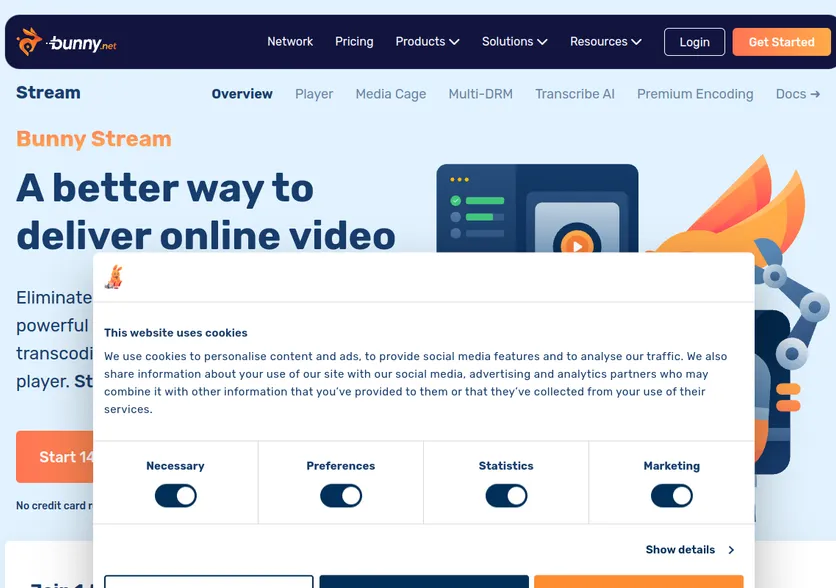
Nobody beats this price for raw video delivery, because this Bunny Stream plan costs one dollar a month minimum plus usage, and it serves video from a global content delivery network at a fraction of the cost of the bigger platforms. Storage is one cent per gigabyte a month, so a startup with a large library pays almost nothing to keep it online. The trade-off is a thinner feature set: no built-in paywall and fewer analytics than Dacast or Mux.
What we like
- One dollar a month minimum plus usage
- Storage at one cent per gigabyte a month
- Global delivery network at a fraction of the big-platform cost
Watch out for
- No built-in paywall or monetisation
- Fewer analytics than Dacast or Mux
How to try it
- Create a Bunny account and set up a Stream library
- Upload videos and copy the embed code
- Publish the player and monitor delivery costs
8. Castr
Best for: Startups that stream live to several destinations at once
Paid tool Starting price: $16.67/month · Sixteen dollars and sixty-seven cents a month billed annually on Starter ($199.99 a year); $19.99 a month month to month; Standard is forty-nine dollars and ninety-nine cents a month and Premium is one hundred and ninety-nine dollars and ninety-nine cents a month
Free plan: No free plan; 7-day free trial
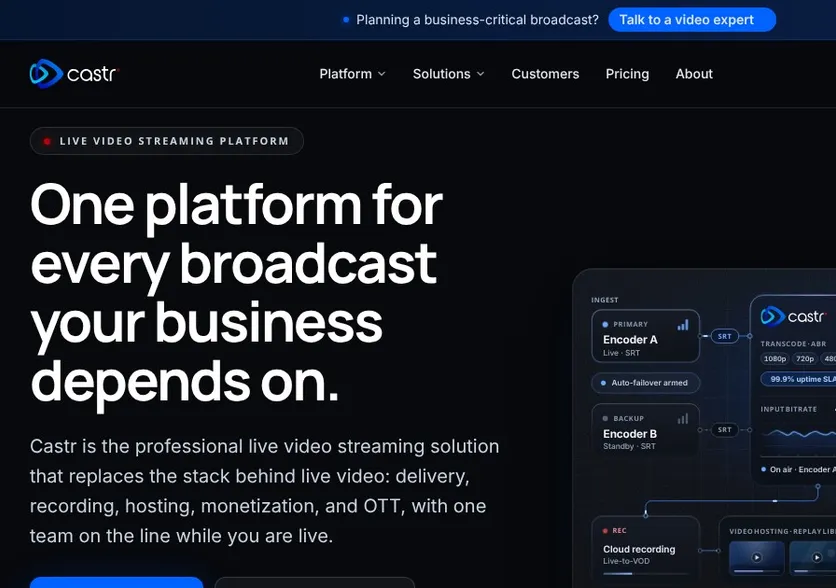
A startup that streams live to several places at once will find the most transparent pricing here, because this Castr plan costs sixteen dollars and sixty-seven cents a month billed annually on Starter, and it covers two concurrent streams, six destinations and two hundred gigabytes of bandwidth a month. Multistreaming, cloud recording and a paywall are all included from the entry tier. The bandwidth cap is the limit to watch: a popular live event can burn through two hundred gigabytes fast.
What we like
- Transparent pricing with no surprise hikes at renewal
- Multistreaming and a paywall from the entry tier
- Seven-day trial with no card required
Watch out for
- Bandwidth capped at two hundred gigabytes a month on Starter
- No free plan, only a seven-day trial
How to try it
- Sign up and connect the streaming destinations
- Set up the live stream and the player
- Go live and watch the analytics
Prices above were checked on each vendor’s own website on Nov 29, 2026 and can change — the vendor’s page is the final word. Vendor links are editorial: nobody paid to be listed or ranked here. Vendors who want a featured listing can see how it works on our Get listed page.
How to pick a video platform that will not bankrupt a startup
Model the real viewing minutes before choosing, because metered pricing looks cheap until a video goes viral. Check the bandwidth and storage caps on the entry plan, since overage charges are where startups get surprised. Test the player on a phone, because most viewers will watch there. Finally, confirm the exit: make sure the videos and the audience data can leave if the startup outgrows the platform. Also check the overage rates in writing, since a single viral video can turn a five-dollar month into a five-hundred-dollar bill on a metered plan. Keep a monthly usage alert switched on from the very first day.
Before you buy
- Model expected viewing minutes before choosing a metered plan
- Check bandwidth and storage caps on the entry tier
- Test the player on a phone, where most viewers will watch
- Confirm videos and audience data can be exported later
- Compare the paywall options if the startup plans to charge
Official websites
Official websites of the products reviewed above. Features and prices were checked against these sites when this guide was written, and they can change, so confirm on the vendor site before you buy.
Frequently asked questions
What is the cheapest video platform as a service for a startup?
Bunny Stream is the cheapest at one dollar a month minimum plus usage, with storage at one cent per gigabyte a month. Cloudflare Stream costs five dollars a month minimum and includes one thousand stored minutes and five thousand delivered minutes. Both are metered, so a startup should model its expected viewing minutes before choosing, since heavy viewing adds up fast.
What is the difference between Dacast and api.video?
Dacast is a complete white-label platform with a dashboard, player, live streaming and monetisation for thirty-nine dollars a month. api.video is a developer-first API that turns uploads, encoding and playback into code calls from twelve dollars a month. A startup with a technical team should pick api.video, while a non-technical team that wants a dashboard should pick Dacast.
Do video platforms charge for bandwidth?
Yes, most of them do, and the bandwidth charge is where the bill grows. Dacast includes two point four terabytes a year on Starter, Castr includes two hundred gigabytes a month, and Cloudflare Stream charges one dollar per one thousand delivered minutes. Always check the included allowance and the overage rate before publishing a video that might go viral.
Can a startup monetise video with these tools?
Dacast and Castr both include a paywall from the entry tier, so a startup can charge for video from day one. Mux, Cloudflare Stream and Bunny Stream have no built-in paywall, so a startup using one of those needs a separate billing system. Compare the paywall features as carefully as the price, since rebuilding billing later is expensive.
Is there a free video platform for startups?
Yes, several tools in this list have a free tier. api.video offers a free sandbox tier for testing the API, Mux gives the first one hundred thousand delivered minutes a month free, and Gumlet has a free plan. Dacast, Wowza, Bunny Stream and Castr offer trials instead of a free plan, so a startup should test the player properly during the trial.
Compare the eight tools above, then start with a free tier or trial on the platform that matches the team skills and the expected viewing minutes before paying for a full year.
Browse Developer Tools tools