On this page
Startups run on speed, and speed dies when work lives in chat threads and nobody knows who owns what. The eight tools below give a young company structure without slowing it down, from the first hires to the first hundred customers. ClickUp leads because it replaces four separate tools for nine dollars per user a month, and the rest are ranked on how much structure they add for the price.
How we researched this
We checked every price on the vendor pricing page on November 29, 2026, and only included tools with a published US dollar list price. The enterprise platforms that sell workflow management by quote publish no prices, so they are not in this list. Prices change, so confirm the current figure on the vendor site before you buy.
Compare the tools
| Name | Best for | Starting price | Free plan | |
|---|---|---|---|---|
 monday.com | Startups that need a clear view of everything | $9/user/month | Free plan (up to 2 seats) | Visit |
 Asana | Startups that run on sprints and deadlines | $10.99/user/month | Free Personal plan (up to 2 users) | Visit |
 ClickUp | Startups that want one workspace for everything | $9/user/month | Free plan (unlimited tasks) | Visit |
 Notion | Startups that plan in docs | $10/user/month | Free plan (unlimited pages) | Visit |
 Airtable | Startups that run on data | $20/user/month | Free plan (1,000 records per base) | Visit |
 Trello | Very early startups that need something today | $5/user/month | Free plan (up to 10 boards) | Visit |
 Jira | Technical startups that ship software | $9.70/user/month | Free plan (up to 10 users) | Visit |
 Smartsheet | Startups that plan in spreadsheets | $9/user/month | No free plan; 30-day free trial | Visit |
The workflow management software for startups, compared
1. monday.com
Best for: Startups that need a clear view of everything
Paid tool Starting price: $9/user/month · Nine dollars per user a month billed annually on Basic ($12 month to month); Standard is $12 and Pro is $19; a three-seat minimum applies and one outlier lists Standard at $14 and Pro at $22
Free plan: Free plan (up to 2 seats)
Startups that need a clear view of everything at once will like this monday.com plan, which costs nine dollars per user a month billed annually and turns each project into a board with owners and dates. Its dashboards show the whole company in one place, which matters when five people are doing ten jobs each. Templates cover hiring, launches and sprints, so a startup can set up in an afternoon.

What we like
- Boards, timelines and dashboards are easy to read at a glance
- Two hundred plus templates cover most team workflows
- Automations and integrations work without code
Watch out for
- Paid plans have a three-seat minimum, so a solo user pays for three
- Seats come in fixed bundles, which can push the bill up
How to try it
- Pick a board template that matches the workflow
- Add the columns, owners and due dates the team needs
- Turn on automations for status changes and reminders
2. Asana
Best for: Startups that run on sprints and deadlines
Paid tool Starting price: $10.99/user/month · Ten dollars and ninety-nine cents per user a month billed annually on Starter ($13.49 month to month); Advanced is $24.99 a user a month billed annually
Free plan: Free Personal plan (up to 2 users)
For a startup that runs on sprints and deadlines, this Asana plan costs ten dollars and ninety-nine cents per user a month billed annually and keeps every project on a timeline with clear owners. Rules automate the handoffs between founders and first hires, so work does not stall while someone is busy fundraising. Goal tracking ties the weekly tasks to the milestones the investors actually ask about.

What we like
- Timeline, board and list views suit different working styles
- Rules automate handoffs, approvals and due-date changes
- Strong goal tracking ties work to team objectives
Watch out for
- Starter has a two-seat minimum, so solo buyers pay double
- Advanced reporting needs the dearer Advanced tier
How to try it
- Create a project and choose the board or timeline view
- Add tasks, owners and dependencies for each step
- Set up rules to move work forward automatically
3. ClickUp
Best for: Startups that want one workspace for everything
Paid tool Starting price: $9/user/month · Nine dollars per user a month billed annually on Core ($12 month to month); Business is $17 a user a month billed annually
Free plan: Free plan (unlimited tasks)
A startup that wants one workspace for everything, from product to hiring, should look at this ClickUp plan, which costs nine dollars per user a month billed annually. Tasks, docs, whiteboards and goals live together, so a small team stops paying for four separate tools. Automations handle the routine moves, which frees the founders to do the work only they can do.

What we like
- Tasks, docs, whiteboards and goals in one workspace
- Automations with fifty-plus actions on paid plans
- Generous free plan for small teams getting started
Watch out for
- The feature list is so wide that setup can take a while
- Some advanced automations need the Business tier
How to try it
- Create a Space and add the Lists the team needs
- Set up statuses, assignees and due dates for each workflow
- Add automations for handoffs and reminders
4. Notion
Best for: Startups that plan in docs
Paid tool Starting price: $10/user/month · Ten dollars per user a month billed annually on Plus ($12 month to month); Business is $20 a user a month billed annually
Free plan: Free plan (unlimited pages)
Startups that plan in docs will get the most from this Notion plan, which costs ten dollars per user a month billed annually and turns a single workspace into a wiki, a task tracker and a roadmap. Templates cover almost every startup process, from fundraising to onboarding, and the free plan is generous enough for a very early team. It is lighter on automation than the dedicated tools here, so fast-moving teams should weigh that.

What we like
- Docs, wikis, tasks and databases in one flexible workspace
- Templates for almost every team process
- Plus is free for students and educators
Watch out for
- Flexibility means teams must design their own structure
- Automations are lighter than a dedicated workflow tool
How to try it
- Create a database for the workflow and add properties
- Set up views for each stage of the process
- Add templates and automations for recurring work
5. Airtable
Best for: Startups that run on data
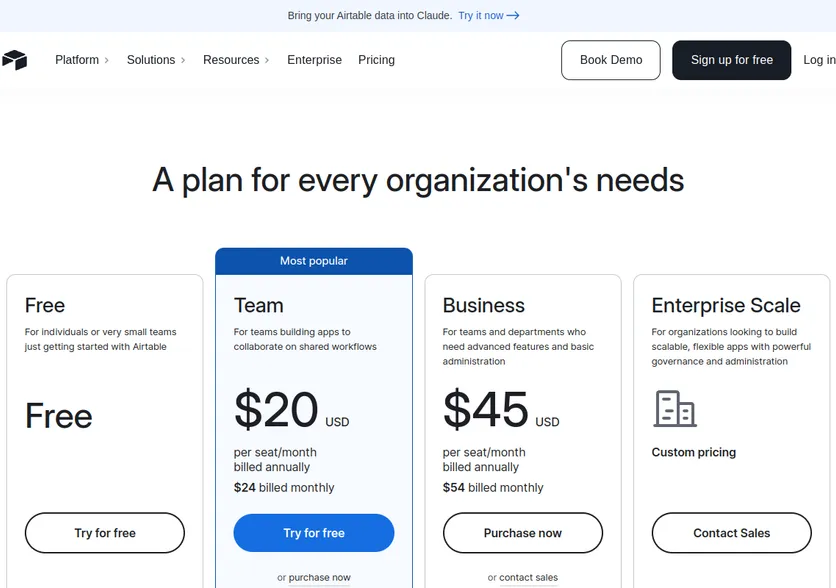
Paid tool Starting price: $20/user/month · Twenty dollars per user a month billed annually on Team ($24 month to month); Business is $45 a user a month billed annually
Free plan: Free plan (1,000 records per base)
For a startup that runs on data, from investor lists to hiring pipelines, this Airtable plan costs twenty dollars per user a month billed annually. Linked records connect candidates to roles and investors to rounds, and the calendar and Kanban views show the same data in different ways. It is the priciest tool here per user, so a cash-tight startup should start on the free plan.
What we like
- Grid, calendar, Kanban and gallery views of the same data
- Fifty thousand records per base and twenty-five thousand automation runs on Team
- Interfaces let teams share a clean front end without code
Watch out for
- Per-user pricing climbs fast as the team grows
- Heavy automation use can hit the monthly run limits
How to try it
- Create a base from a template or your own tables
- Link records and add the views the team needs
- Set up automations to move records between stages
6. Trello
Best for: Very early startups that need something today
Paid tool Starting price: $5/user/month · Five dollars per user a month billed annually on Standard ($6 month to month); Premium is $10 and Enterprise is $17.50 a user a month on annual billing only
Free plan: Free plan (up to 10 boards)
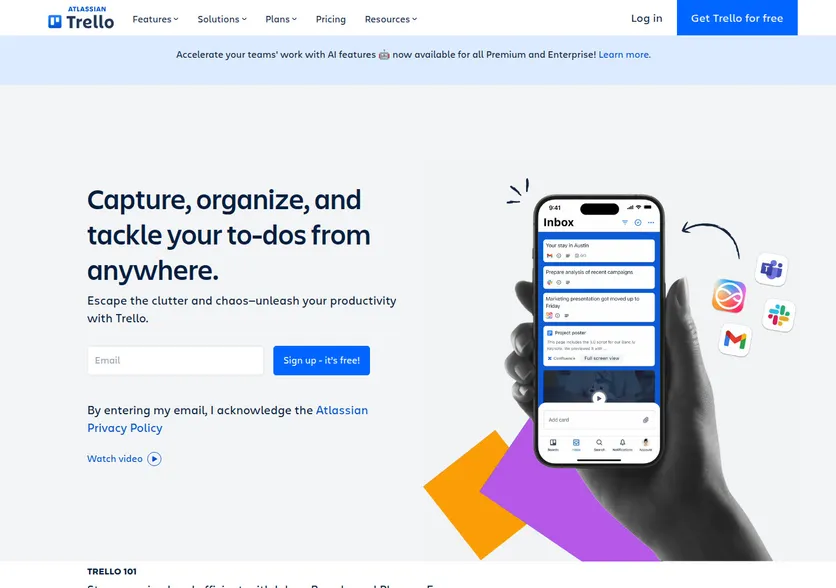
A very early startup that needs something today will like this Trello plan, which costs five dollars per user a month billed annually and tracks work on boards that anyone can learn in minutes. Cards carry the owners, dates and checklists for each task, and Butler rules move them automatically. The free plan covers up to ten boards, which is often enough until the team grows past a dozen people.
What we like
- Boards are the simplest way to track work through stages
- Power-Ups add calendars, automation and integrations
- Free plan covers up to ten collaborators and boards
Watch out for
- Big workflows outgrow boards without careful organisation
- Butler automation limits apply on the cheaper plans
How to try it
- Create a board and add lists for each workflow stage
- Add cards with owners, due dates and checklists
- Turn on Butler rules to move cards automatically
7. Jira
Best for: Technical startups that ship software
Paid tool Starting price: $9.70/user/month · Nine dollars and seventy cents per user a month on Standard; Premium is $19.60; annual tiers run $950 a year for up to 10 users and $9,700 a year for up to 100 on Standard
Free plan: Free plan (up to 10 users)
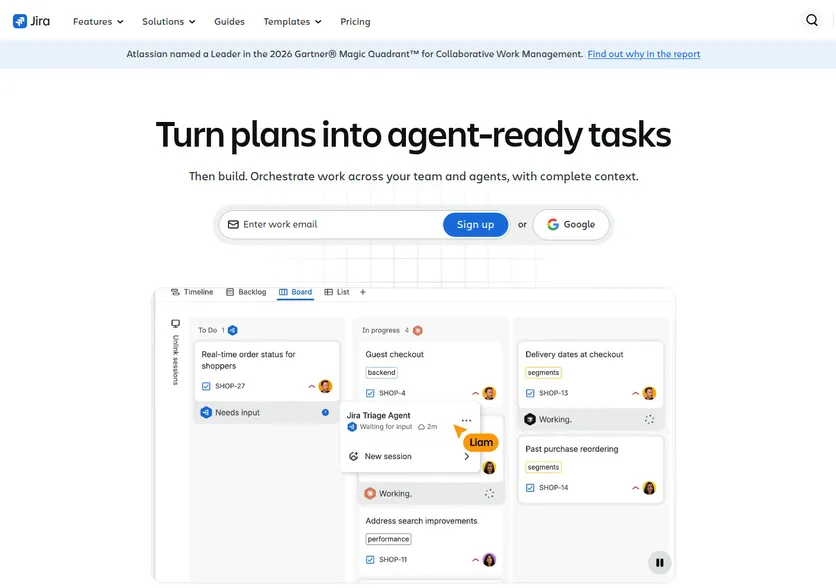
Technical startups that ship software will get the most from this Jira plan, which costs nine dollars and seventy cents per user a month and is built around sprints, backlogs and roadmaps. Automation rules move issues through the pipeline without code, and the reporting shows velocity and burndown at a glance. The free plan covers up to ten users, which suits a founding engineering team.
What we like
- Built for software teams with sprints, backlogs and roadmaps
- Automation rules run across projects without code
- Deep reporting on velocity, burndown and cycle time
Watch out for
- Setup is heavy for teams that do not run sprints
- Premium is nearly double the Standard price per user
How to try it
- Create a project and pick a Scrum or Kanban template
- Add issues, sprints and a backlog for the team
- Set up automation rules for status changes and assignments
8. Smartsheet
Best for: Startups that plan in spreadsheets
Paid tool Starting price: $9/user/month · Nine dollars per user a month billed annually on Pro for 1 to 10 members ($12 month to month); Business is $19 a user a month billed annually with a three-seat minimum
Free plan: No free plan; 30-day free trial
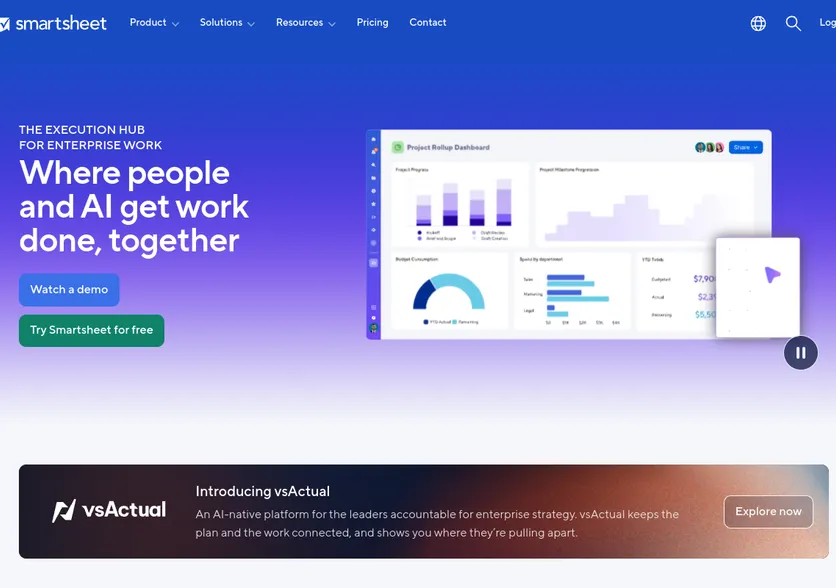
Startups that plan in spreadsheets will feel at home with this Smartsheet plan, which costs nine dollars per user a month billed annually and turns a familiar grid into a project tracker. Forms collect requests from the team, and automated alerts chase owners when a deadline approaches. Pro covers one to ten members, which fits most startups, though there is no free plan.
What we like
- Spreadsheet-style grids that most teams already understand
- Two hundred and fifty automations a month on Pro
- Forms, reports and dashboards included on every paid plan
Watch out for
- Pro covers one to ten members only, so bigger teams pay more
- There is no free plan, only a thirty-day trial
How to try it
- Start a sheet from a template or import a spreadsheet
- Add columns for owners, dates and status
- Set up automated alerts and approval requests
Prices above were checked on each vendor’s own website on Nov 29, 2026 and can change — the vendor’s page is the final word. Vendor links are editorial: nobody paid to be listed or ranked here. Vendors who want a featured listing can see how it works on our Get listed page.
How to give a startup structure without slowing it down
Pick one tool and make it the single place where work lives, because a startup with work in five apps has no idea what is actually happening. Keep the process light at first: one board, one owner per task, one weekly review, and nothing more until the team asks for it. Automate the reminders and the status moves early, since those are the jobs a founder should never do by hand. Review the setup every month and cut anything the team ignores, because a process nobody follows is worse than no process at all.
Before you buy
- Start on the free plan, since most tools here cover a founding team without any payment
- Pick a tool the whole team will use daily, not just the one the founder likes best
- Check that the price stays affordable as the team grows from five people to fifty
- Confirm automations are included, since a startup cannot afford manual handoffs
- Test the tool on a real sprint or launch before moving the whole company onto it
Official websites
Official websites of the products reviewed above. Features and prices were checked against these sites when this guide was written, and they can change, so confirm on the vendor site before you buy.
Frequently asked questions
What is workflow management software for startups?
It is software that gives a young company one place to plan, assign and track its work. Instead of tasks living in chat and email, every job has an owner, a due date and a status the whole team can see. Good tools for startups are cheap to start, quick to set up and flexible enough to change as the company grows.
How much does ClickUp cost for a startup?
ClickUp Core costs nine dollars per user a month billed annually, or twelve dollars month to month, and covers automations, goals and unlimited storage. Business is seventeen dollars a user a month billed annually, adding more automations and advanced features. Many startups never pay at all, since the free plan covers unlimited tasks and members.
Can a startup manage workflows for free?
Yes, with ClickUp, monday.com, Asana, Wrike, Trello, Notion, Jira and Teamwork all offering free plans, though each limits seats, features or automations. Trello and Notion are the simplest free starts, while ClickUp and Jira are the most generous for growing teams. A startup that needs automations or reporting will usually need a paid plan.
Is Jira or ClickUp better for a startup?
Jira is better for a technical startup that ships software, with sprints, backlogs and roadmaps for nine dollars and seventy cents a user a month. ClickUp is better for a startup that wants everything in one place, at nine dollars a user a month with tasks, docs, whiteboards and goals. A non-technical startup should pick ClickUp, while an engineering-led one should pick Jira.
Which tool is best for a startup on a budget?
Trello is the cheapest paid option here, at five dollars a user a month with a free plan that covers most early teams. ClickUp is the best value, since its free plan covers unlimited tasks and the paid plan is only nine dollars a user a month. Notion suits startups that plan in docs, since its free plan covers unlimited pages.
Compare the eight tools above, then start with a free plan or trial on the tool that fits how the startup already works before paying for a full year.
Browse Business Tools tools