On this page
Enterprise API documentation has to do more than render a reference page: it must stay in sync with the spec, pass security review, and serve human developers and AI agents alike. The eight platforms below were checked against vendor pricing on November 27, 2026, and every one of them publishes docs from an OpenAPI description with versioning and access control. Prices run from nineteen dollars per user each month to seven hundred twenty-nine dollars a month, so the right choice depends on team size and governance needs. For most enterprise teams, Postman is the safest pick.
How we researched this
We kept only tools with a published United States dollar list price on the vendor site, and we dropped Bump because its prices are listed in euros with no dollar list price. SwaggerHub, now renamed Swagger Studio, was dropped because SmartBear no longer publishes a self-serve price, and Fern was dropped because its paid tier disappeared after the Postman acquisition, leaving only a free plan and custom enterprise pricing.
Compare the tools
| Name | Best for | Starting price | Free plan | |
|---|---|---|---|---|
 Postman | Enterprise teams that want one platform for API design, testing, documentation, and monitoring | $19/user/month | Free plan for one user with the core API client and documentation features | Visit |
 Stoplight | Organizations standardizing many APIs with shared style guides and governance | $362/month | Free plan for one user with one project and the visual OpenAPI designer | Visit |
 Redocly | Teams that want unlimited seats and Git-based docs without per-user billing | $729/month | No free plan; Pro starts with a thirty-day free trial and no credit card required | Visit |
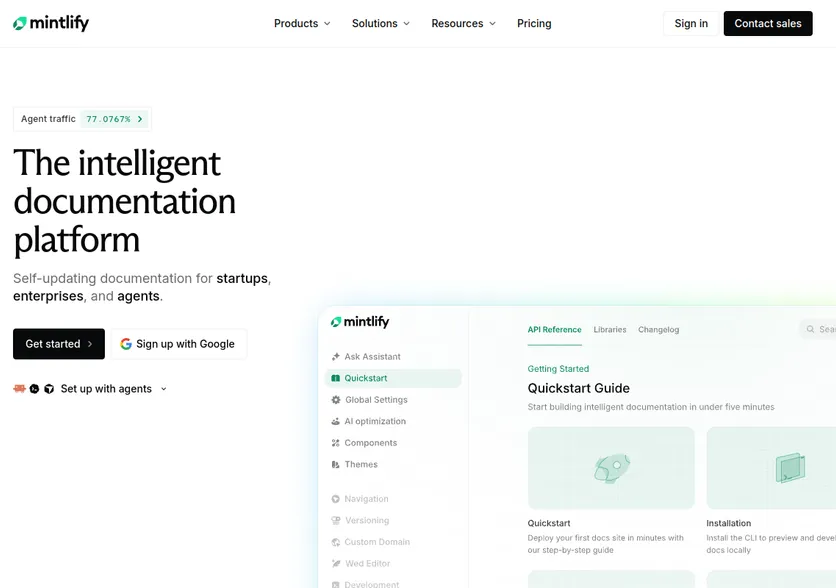
 Mintlify | Product teams that want AI-maintained docs with agent-readable outputs | $450/month | Free plan with five editor seats, a custom domain, and Git sync | Visit |
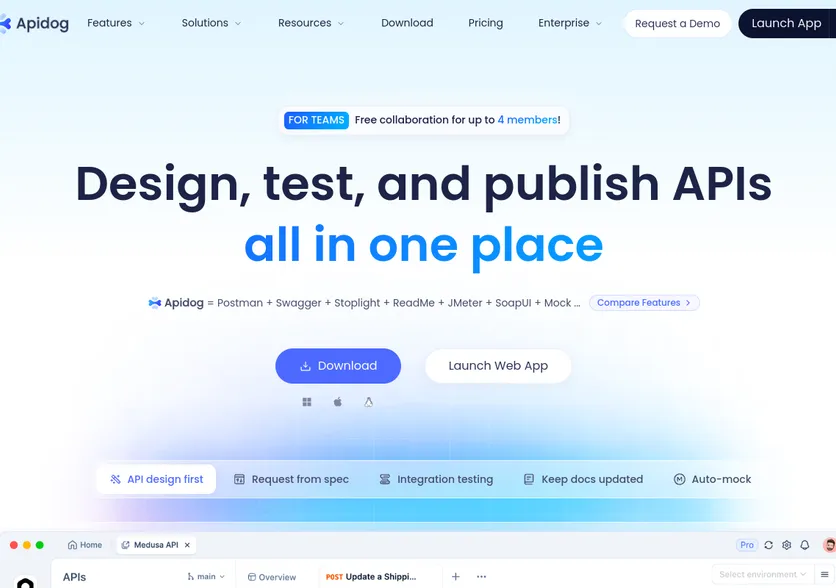
 Apidog | Large teams that need design, mocking, testing, and docs in a single workspace | $27/user/month | Free plan for up to four users with core mocking, testing, and documentation features | Visit |
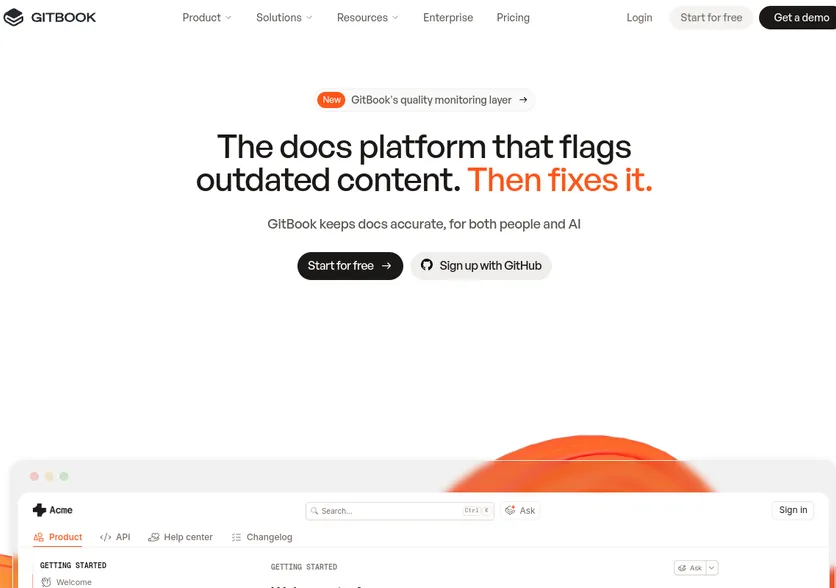
 GitBook | Cross-functional teams mixing engineers, writers, and support staff on one docs site | $249/site/month | Free plan for individuals with Git sync and OpenAPI docs | Visit |
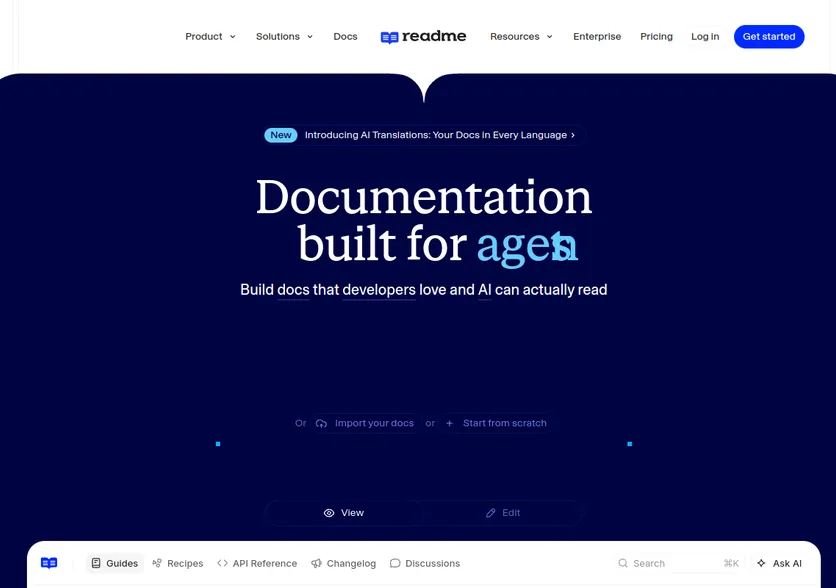
 ReadMe | API-first companies that want usage analytics tied to each developer | $250/month | Starter plan is free with one admin, one project, and a custom domain | Visit |
 Kong Konnect | Teams that want documentation published alongside a managed gateway | $25/month | Free tier after the thirty-day trial, with core gateway and portal features | Visit |
The best API documentation management software for enterprise, compared
1. Postman
Best for: Enterprise teams that want one platform for API design, testing, documentation, and monitoring
Paid tool Starting price: $19/user/month · nineteen dollars per user each month when billed annually on the Team plan; a free plan covers one user
Free plan: Free plan for one user with the core API client and documentation features
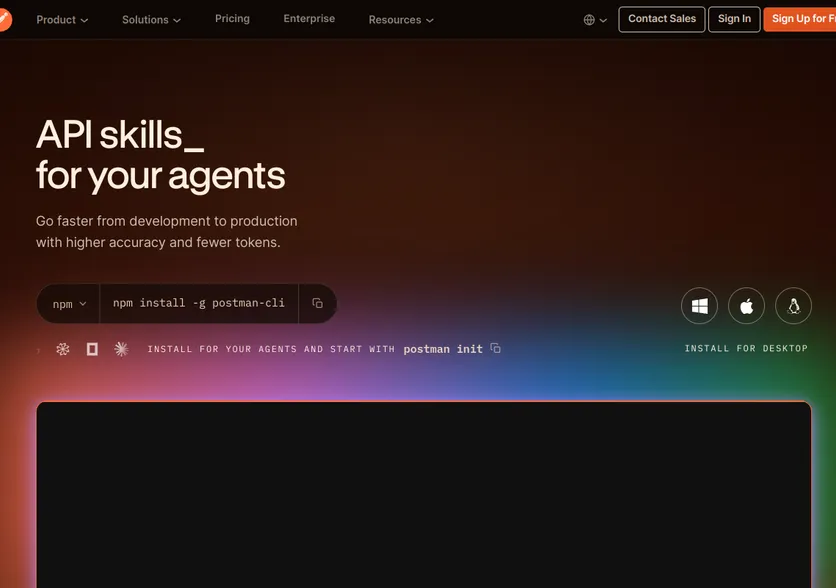
Postman pairs a full API client with published documentation, so the same collection that developers test becomes the reference that customers read. Team workspaces add roles, shared vaults, and governance controls that keep large API programs consistent across departments. The Postman pricing page lists the Team plan for collaborative work, while Solo covers a single power user.
What we like
- One workspace covers design, testing, docs, and monitoring
- Team plan adds roles, vaults, and governance for large programs
- Huge public API network helps developers discover and try APIs
Watch out for
- Per-user pricing climbs fast on large teams
- Advanced security features need the Enterprise plan or add-ons
How to try it
- Create a collection and add requests for each endpoint
- Add descriptions and examples, then publish the collection as documentation
- Invite teammates to the workspace and set roles for reviewers
2. Stoplight
Best for: Organizations standardizing many APIs with shared style guides and governance
Paid tool Starting price: $362/month · three hundred sixty-two dollars a month when billed annually for the Pro Team plan, which includes fifteen users
Free plan: Free plan for one user with one project and the visual OpenAPI designer
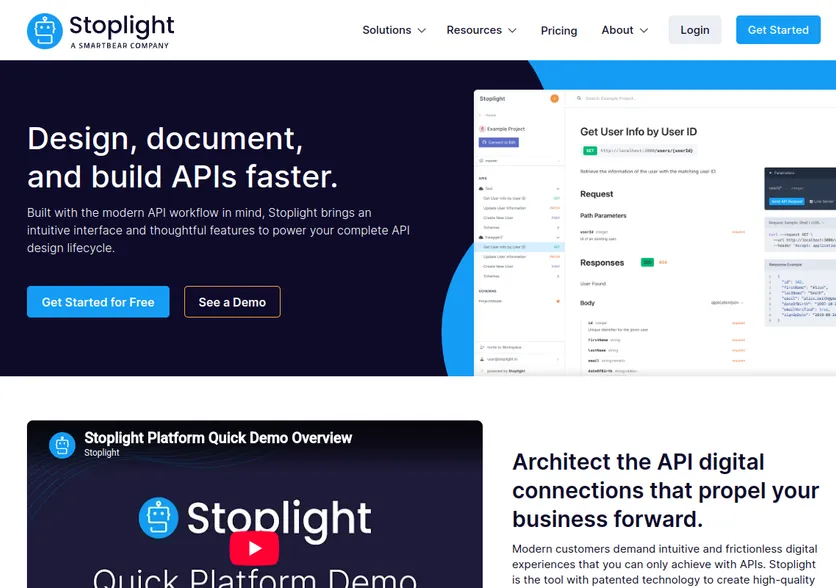
Stoplight starts from a visual OpenAPI designer, so teams shape an API contract before any code exists and publish docs from the same source. Its governance features include shared style guides, workspace groups, and activity logs that keep dozens of APIs consistent. The Stoplight pricing page lists Basic, Startup, and Pro Team plans, with the first users included free.
What we like
- Visual designer makes contract-first API design approachable
- Style guides and linting keep every API consistent
- Instant mock servers let front-end teams build before the backend exists
Watch out for
- Pro Team pricing jumps sharply from the Startup tier
- Enterprise features such as LDAP and SAML need the top tiers
How to try it
- Design the API in the visual editor or import an OpenAPI file
- Generate the interactive docs and preview them in a workspace
- Publish to a custom domain and share the link with consumers
3. Redocly
Best for: Teams that want unlimited seats and Git-based docs without per-user billing
Paid tool Starting price: $729/month · seven hundred twenty-nine dollars a month when billed annually for the Scale plan, with unlimited seats and ten projects
Free plan: No free plan; Pro starts with a thirty-day free trial and no credit card required
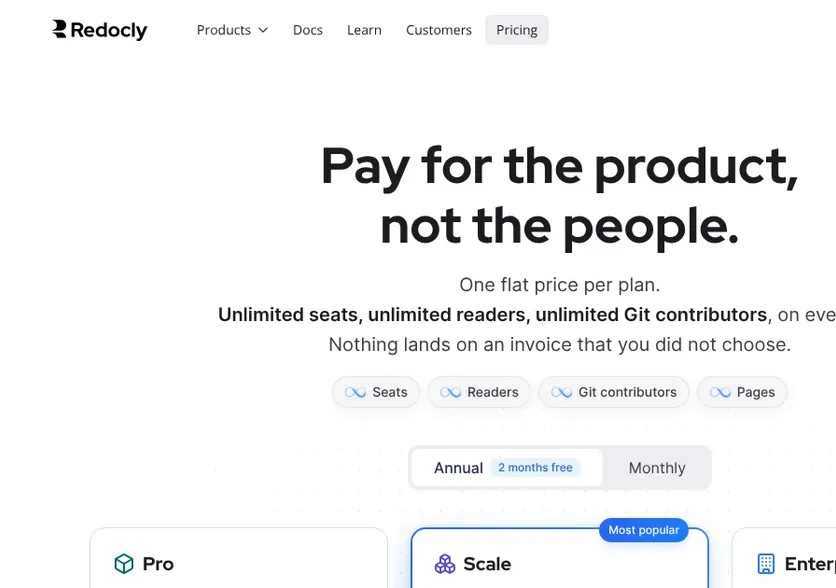
Redocly turns OpenAPI, GraphQL, and AsyncAPI descriptions into polished reference docs with a try-it console, and it never charges per seat. Every plan includes unlimited seats, readers, and pages, so inviting the whole company costs nothing extra. The Redocly pricing page lists Pro and Scale plans, with a thirty-day free trial on Pro.
What we like
- Unlimited seats on every plan, so collaboration is never a billing event
- Built-in mock server and MCP server make docs useful for AI agents
- Git-based workflow gives every pull request its own preview
Watch out for
- No free tier, so small teams pay from day one
- Single sign-on and API catalog need the Scale plan
How to try it
- Connect a Git repository containing the API description
- Choose a theme and publish the docs to a custom domain
- Invite the team and enable the AI assistant for readers
4. Mintlify
Best for: Product teams that want AI-maintained docs with agent-readable outputs
Paid tool Starting price: $450/month · four hundred fifty dollars a month when billed annually for the Pro plan, with unlimited editor seats and ten thousand AI credits
Free plan: Free plan with five editor seats, a custom domain, and Git sync
Mintlify focuses on documentation that stays current on its own, with a writing agent that opens pull requests when code changes. It generates agent-readable outputs automatically, which helps AI tools answer questions straight from the docs. The Mintlify pricing page lists Free, Starter, Pro, and Enterprise plans, with Pro adding unlimited editors and an AI assistant.
What we like
- Writing agent updates docs automatically when code changes
- Agent-readable outputs make docs useful for AI tools
- Unlimited editor seats on Pro remove seat-counting friction
Watch out for
- Pro pricing is steep for teams with only one or two docs sites
- AI credit overages can add cost once the assistant is used heavily
How to try it
- Connect a Git repository or start in the web editor
- Import the OpenAPI spec and let the agent draft the reference
- Publish to a custom domain and enable the AI assistant
5. Apidog
Best for: Large teams that need design, mocking, testing, and docs in a single workspace
Paid tool Starting price: $27/user/month · twenty-seven dollars per user each month when billed annually for the Enterprise plan, with a fourteen-day free trial
Free plan: Free plan for up to four users with core mocking, testing, and documentation features
Apidog covers the whole API lifecycle in one workspace, from design and mocking to testing and published documentation. Its Enterprise tier adds single sign-on and compliance controls for large organizations that need them. The Apidog pricing page lists Free, Basic, Professional, and Enterprise plans, with a fourteen-day free trial.
What we like
- Full lifecycle coverage in one workspace at a low per-seat price
- Free plan covers a team of four with unlimited runs and mocks
- Real-time co-editing keeps specs and docs in sync
Watch out for
- Every seat is billed on paid plans, including occasional contributors
- Smaller ecosystem than Postman for integrations and community collections
How to try it
- Import an OpenAPI spec or design the API in the visual editor
- Generate mock servers and write tests against the spec
- Publish the documentation and share it with consumers
6. GitBook
Best for: Cross-functional teams mixing engineers, writers, and support staff on one docs site
Paid tool Starting price: $249/site/month · two hundred forty-nine dollars per site each month when billed annually for the Ultimate plan, plus twelve dollars per user each month
Free plan: Free plan for individuals with Git sync and OpenAPI docs
GitBook combines a visual editor with Git sync, so technical and non-technical contributors can work on the same docs without stepping on each other. Its Ultimate tier adds authenticated access, adaptive content, and an AI assistant with analytics. The GitBook pricing page lists Free, Essential, Ultimate, and Enterprise plans, with a fourteen-day free trial on paid plans.
What we like
- Visual editor welcomes non-technical contributors
- Two-way Git sync keeps docs in version control
- AI features are included on paid plans with no separate add-on
Watch out for
- Per-site plus per-user pricing adds up with many sites
- Authenticated access needs the Ultimate tier or higher
How to try it
- Create a space and connect a GitHub or GitLab repository
- Import the OpenAPI spec to generate the API reference
- Invite the team and publish to a custom domain
7. ReadMe
Best for: API-first companies that want usage analytics tied to each developer
Paid tool Starting price: $250/month · two hundred fifty dollars a month when billed annually for the Pro plan, covering five admins with twenty dollars for each additional admin
Free plan: Starter plan is free with one admin, one project, and a custom domain
ReadMe ties documentation to live API usage, showing which developers called which endpoint and whether the docs actually get read. Its Pro tier adds branching, reviews, and an AI linter that checks every change before it merges. The ReadMe pricing page lists Starter, Pro, and Enterprise plans, with Pro covering five admins.
What we like
- Per-developer usage metrics show who actually uses the API
- Branching and reviews bring a proper editorial workflow to docs
- AI linter catches style and quality problems before merge
Watch out for
- Pro covers only one project, so multi-product teams need Enterprise
- Full Ask AI customization costs extra as a monthly add-on
How to try it
- Connect a repository and sync the API spec
- Write guides in Markdown and open a branch for review
- Publish the hub to a custom domain and track developer usage
8. Kong Konnect
Best for: Teams that want documentation published alongside a managed gateway
Paid tool Starting price: $25/month · from twenty-five dollars a month plus usage for the Konnect Plus plan, billed monthly, with a thirty-day free trial
Free plan: Free tier after the thirty-day trial, with core gateway and portal features
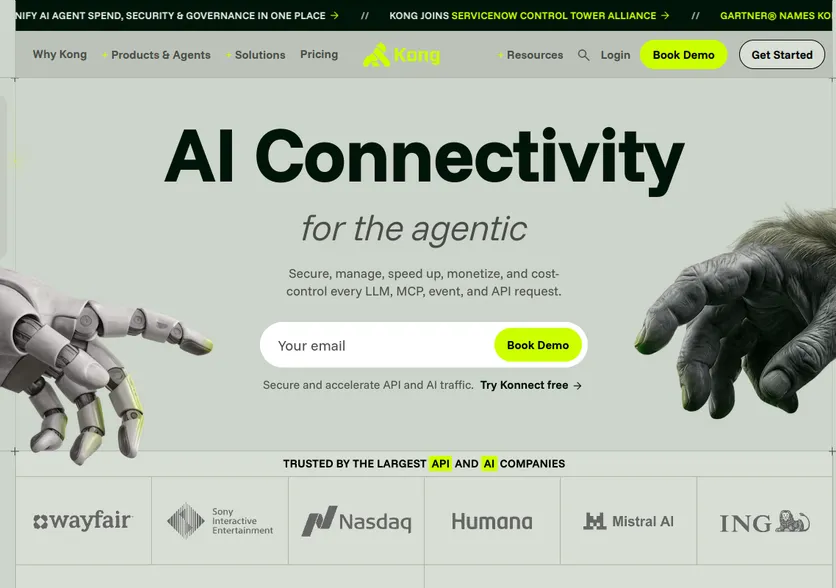
Kong Konnect pairs a managed API gateway with a developer portal, so the docs live next to the traffic controls that govern them. Teams can publish APIs, set rate limits, and meter usage from one control plane. The Kong pricing page lists the pay-as-you-go Plus plan from twenty-five dollars a month, with a thirty-day free trial.
What we like
- Docs sit beside the gateway that enforces access and limits
- Pay-as-you-go pricing starts low for small API programs
- Usage metering supports monetized APIs out of the box
Watch out for
- Usage-based billing makes the monthly total hard to predict
- Documentation features are lighter than dedicated docs platforms
How to try it
- Create an account and set up a control plane
- Publish an API and generate the developer portal
- Set rate limits and invite developers to the portal
Prices above were checked on each vendor’s own website on Nov 27, 2026 and can change — the vendor’s page is the final word. Vendor links are editorial: nobody paid to be listed or ranked here. Vendors who want a featured listing can see how it works on our Get listed page.
What enterprise API documentation actually costs
Start with the per-seat math, because that is where enterprise bills explode. Postman at nineteen dollars per user each month looks cheap for a team of ten, yet a team of two hundred pays nearly four thousand dollars a month before add-ons. Redocly and Stoplight charge flat monthly rates instead, which makes budgeting predictable once the team grows past a dozen people.
Next, match the governance tier to your compliance needs. Single sign-on, audit logs, and role-based access sit on the higher plans of nearly every tool here, so a regulated team should price the Scale or Pro Team tier, not the entry tier. Finally, test the AI features on a real spec before signing, since assistant quality varies widely and every vendor includes it free during trial.
Before you buy
- Count every seat before you sign, because per-user plans like Postman and Apidog scale with headcount
- Check whether single sign-on and audit logs need the top tier on your shortlist
- Confirm the project limit, since ReadMe Pro covers one project and Redocly Pro covers three
- Test the AI assistant and mock server on your own spec during the free trial
- Ask whether annual billing locks you in, and what the monthly-billed price would be
Official websites
Official websites of the products reviewed above. Features and prices were checked against these sites when this guide was written, and they can change, so confirm on the vendor site before you buy.
Frequently asked questions
What is the cheapest enterprise API documentation tool?
Postman Team is the cheapest entry point here at nineteen dollars per user each month when billed annually, and Apidog Enterprise is close behind at twenty-seven dollars per user each month. Both charge per seat, so a small team pays very little while a large team pays far more. Flat-rate tools such as Redocly and Stoplight cost more up front but stay predictable as headcount grows.
Do any of these tools charge per seat?
Yes, and the split matters for budgeting. Postman, Apidog, and GitBook all charge per user, so costs rise with every hire. Redocly, Mintlify, Stoplight, and ReadMe charge flat monthly rates instead, which keeps the bill steady as the team grows. Kong Konnect bills from twenty-five dollars a month plus metered usage, so the total follows traffic rather than headcount.
Which tool is best for regulated industries?
Stoplight Pro Team and Redocly Scale are the strongest fits, because both add single sign-on, role-based access, audit logs, and activity tracking. GitBook Ultimate adds authenticated access and granular permissions for private docs. Whichever tool you shortlist, confirm that the governance features you need sit on the tier you plan to buy, since entry tiers often leave them out.
Can AI agents read docs published on these platforms?
Yes, and that is now a core feature rather than an add-on. Redocly and Mintlify both serve published docs through an MCP server and generate agent-readable outputs, while ReadMe and GitBook add AI assistants that answer reader questions from the content. Before buying, test the assistant on your own spec, because answer quality varies more than the marketing suggests.
Is there a free plan for enterprise teams?
Most tools here offer a free tier, but none of them covers enterprise needs. Postman, Stoplight, Mintlify, GitBook, and ReadMe all have free plans with tight limits on users, projects, or features. Enterprise governance such as single sign-on and audit logs always sits on a paid tier, so treat the free plan as a trial and budget for the tier that holds the controls you need.
Need everyday developer help too? Try Toolsvine's free developer tools right in your browser.
Browse Developer Tools tools