On this page
Event planners do not file bugs the way software teams do, because the feedback comes from clients, vendors and attendees looking at a live event website. The seven tools below run from three dollars per user a month to nearly ten dollars, and every price was checked on the vendor site on November 27, 2026. Visual feedback tools let anyone pin a note on the page, while trackers organise the fixes behind the scenes. BugHerd is our first pick — clients pin feedback straight onto the live event site, with no account and no learning curve.
How we researched this
We started with the bug trackers and visual feedback tools event teams actually use, then read each price on the vendor pricing page on November 27, 2026 and noted the trial each plan carries. We judged them for an event planner who needs client feedback on a live website turned into tracked fixes before the event date. We dropped quote-only tools and developer-only trackers with no guest reporting, because an event team needs clients to report problems without a seat.
Compare the tools
| Name | Best for | Starting price | Free plan | |
|---|---|---|---|---|
 Jira | Enterprises that need a tracker with roles, permissions and audit trails | $9.70/user/month | Free plan for up to 10 users | Visit |
 ClickUp | Teams that want bugs, docs and chat in one workspace | $9/user/month | Free Forever plan with unlimited tasks and members | Visit |
 Asana | Teams where non-developers report and follow bugs | $10.99/user/month | Personal plan free for up to 10 users | Visit |
 Monday Dev | Software teams that want visual sprint boards | $9/seat/month | No free plan; free trial available | Visit |
 BugHerd | Teams whose clients report bugs on a live website | $39/month | No free plan; 14-day free trial | Visit |
 Marker.io | Web teams that need annotated bug reports in their tracker | $39/month | No free plan; 15-day free trial | Visit |
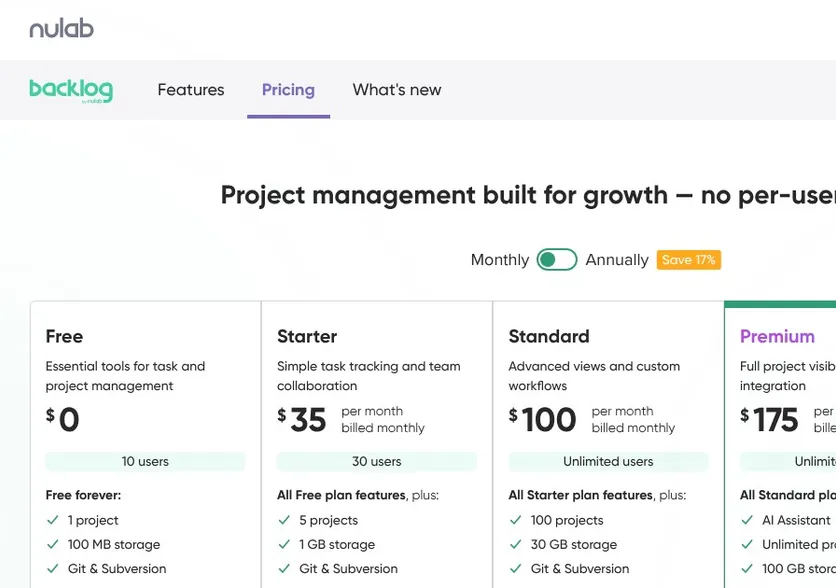
 Backlog | Teams that prefer a flat monthly price over per-user billing | $35/month | Free plan for one project and up to 10 users | Visit |
The bug tracking software for event planners, compared
1. Jira
Best for: Enterprises that need a tracker with roles, permissions and audit trails
Paid tool Starting price: $9.70/user/month · Standard plan at nine dollars and seventy cents per user per month for the first one hundred users on monthly billing; an annual tier costs nine hundred fifty dollars a year for up to ten users
Free plan: Free plan for up to 10 users
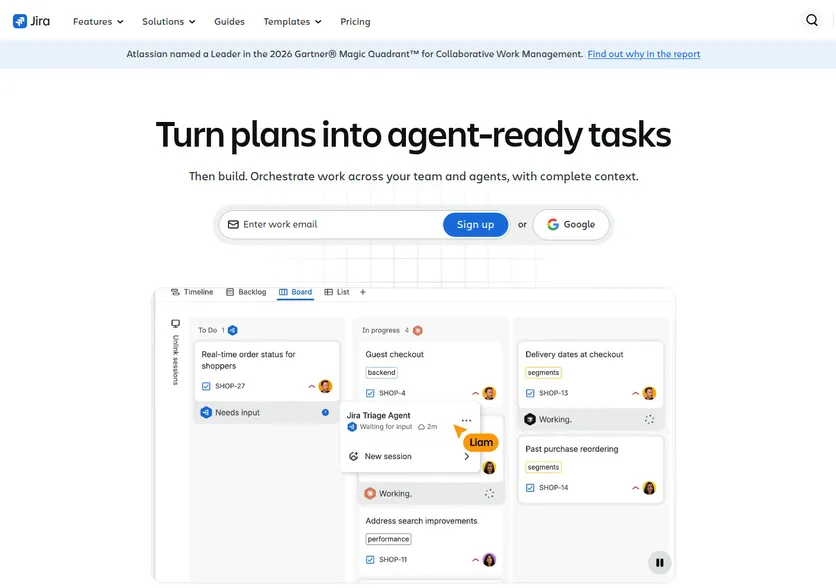
For an event planner juggling venue sites and registration pages, Jira keeps every website bug in one board the whole team can see. This Jira Standard plan costs nine dollars and seventy cents per user per month for the first one hundred users on monthly billing, with an annual tier available. An enterprise team gets roles, permissions and audit controls that keep large bug backlogs orderly, and the automation rules clear routine triage without a developer writing code.
What we like
- Issue tracking built for software teams at any scale
- Roadmaps, boards and automation in one workspace
- Thousands of integrations in the Atlassian marketplace
Watch out for
- Per-user prices fall as headcount grows, so small teams pay the highest rate
- Enterprise controls and support need the higher tiers
How to try it
- Open the Jira pricing page and pick the Standard plan
- Create a project and set up the board for your team
- Import existing issues and turn on the automation rules
2. ClickUp
Best for: Teams that want bugs, docs and chat in one workspace
Paid tool Starting price: $9/user/month · Core plan, $9 a user a month billed annually ($12 billed monthly); Business $17 a user a month billed annually
Free plan: Free Forever plan with unlimited tasks and members
ClickUp suits an event planning team that needs bug tracking, task lists and docs in one place during a busy season. This ClickUp Core plan lists at twelve dollars per user per month on annual billing, and the lower figure on the page today is a promotion. One workspace can hold the bug list, the docs and the chat about each fix, which suits teams that would rather pay for one tool than juggle three.

What we like
- Tasks, docs, chat and goals in one workspace
- Unlimited storage and custom fields on the paid plan
- Generous free plan for trying the full workspace
Watch out for
- The feature list is deep, so new teams need time to set it up
- AI features cost extra on top of the plan price
How to try it
- Open the ClickUp pricing page and compare Core with Business
- Build a Space for the team and add the first lists
- Turn on time tracking and the integrations the team already uses
3. Asana
Best for: Teams where non-developers report and follow bugs
Paid tool Starting price: $10.99/user/month · Starter plan at ten dollars and ninety-nine cents per user per month on annual billing, or thirteen dollars and forty-nine cents billed monthly
Free plan: Personal plan free for up to 10 users
Asana helps an event team turn bug reports from clients and vendors into assigned tasks with clear deadlines. This Asana plan costs ten dollars and ninety-nine cents per user per month on annual billing. The timeline view turns a bug backlog into a plan anyone can read, which helps when the people reporting bugs are not developers.

What we like
- Clean timelines and boards that non-developers understand fast
- Dashboards and forms that keep status visible
- Strong mobile apps for checking work away from a desk
Watch out for
- Portfolios and workload views need the Advanced plan
- Automation rules are capped on Starter
How to try it
- Open the Asana pricing page and start the Starter trial
- Create a project from a template that matches the work
- Add due dates and assign the first tasks to the team
4. Monday Dev
Best for: Software teams that want visual sprint boards
Paid tool Starting price: $9/seat/month · Basic plan at nine dollars per seat per month on annual billing, or twelve dollars billed monthly; paid plans start at three seats
Free plan: No free plan; free trial available
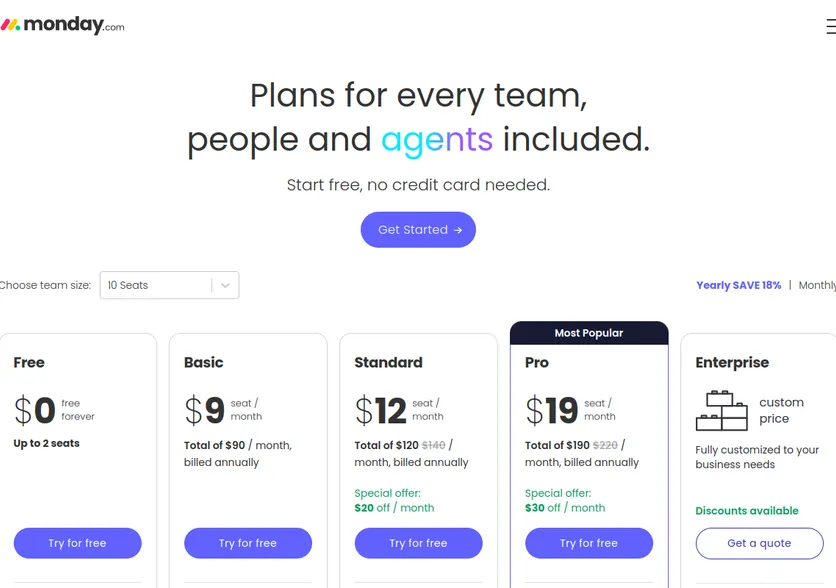
Monday Dev gives an event planning team a visual board for website fixes that anyone can read at a glance. This Monday Dev plan costs nine dollars per seat per month on annual billing. The board view makes sprint status visible to the whole company, and free viewers mean managers can follow progress without buying a seat.
What we like
- Visual boards that make sprint status obvious at a glance
- Sprint planning and dashboards built for product teams
- Free viewers so stakeholders can follow progress without a seat
Watch out for
- Paid plans start at three seats, so a solo user still pays for three
- Automations and integrations start on the Standard plan
How to try it
- Open the Monday Dev pricing page and pick a plan
- Choose a sprint template and add the backlog items
- Invite the team and set up the dashboard for the sprint
5. BugHerd
Best for: Teams whose clients report bugs on a live website
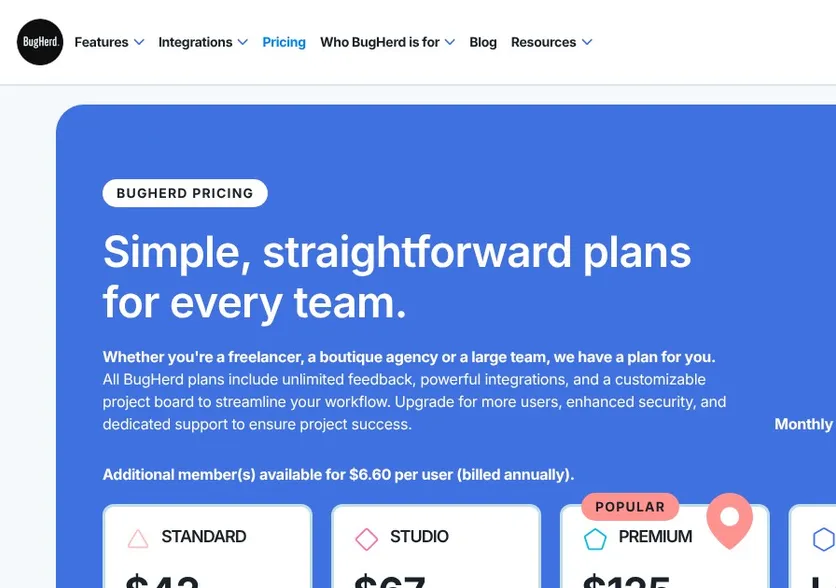
Paid tool Starting price: $39/month · Standard plan at thirty-nine dollars a month for five team members; some third-party listings show forty-two dollars a month on annual billing, so confirm the figure on the vendor page before buying
Free plan: No free plan; 14-day free trial
BugHerd is built for exactly this job, because clients pin feedback straight onto the live event website. This BugHerd plan costs thirty-nine dollars a month on annual billing. Because clients pin notes on the live site, the feedback arrives with the exact spot attached, and the developer never has to ask which page it was.
What we like
- Clients pin feedback straight onto the live website
- Guests report bugs without an account or a seat
- Kanban board and tracker integrations keep feedback moving
Watch out for
- Team size caps push growing teams up the tiers
- No free plan, so every user of the tool is paid
How to try it
- Open the BugHerd pricing page and start the trial
- Add the feedback widget to the website or staging link
- Invite the team and connect the tracker the developers use
6. Marker.io
Best for: Web teams that need annotated bug reports in their tracker
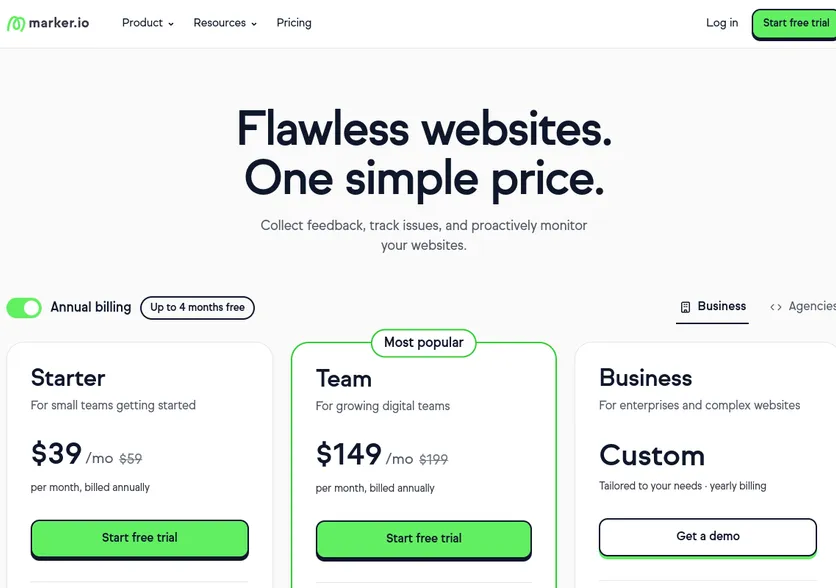
Paid tool Starting price: $39/month · Starter plan at thirty-nine dollars a month on annual billing for three users, or fifty-nine dollars billed monthly; extra users cost four dollars each on annual billing
Free plan: No free plan; 15-day free trial
Marker turns a client comment on an event page into a tracked issue with a screenshot attached. This Marker plan costs thirty-nine dollars a month on annual billing. Each report carries a screenshot, the browser details and the console log, so the developer starts fixing instead of asking for more information.
What we like
- Annotated screenshots land straight in Jira or Linear
- Reporters need no account, so clients report freely
- Console logs and environment details ride along with each report
Watch out for
- Session replay and two-way sync need the Team plan
- Page-view caps on Starter can bite busy sites
How to try it
- Open the Marker.io pricing page and start the trial
- Install the widget on the site or staging environment
- Connect the issue tracker and send the first test report
7. Backlog
Best for: Teams that prefer a flat monthly price over per-user billing
Paid tool Starting price: $35/month · Starter plan at thirty-five dollars a month flat, not per user; Standard costs one hundred dollars a month and Premium one hundred seventy-five dollars a month
Free plan: Free plan for one project and up to 10 users
Backlog gives an event team a flat-priced tracker, so adding seasonal staff does not raise the bill. This Backlog plan costs thirty-five dollars a month on annual billing. The flat monthly price is the selling point for a team of thirty, because the bill stays the same whether ten people or thirty log bugs.
What we like
- Flat monthly price, so adding people does not raise the bill
- Issue tracking plus Git hosting and wikis in one tool
- Gantt charts on the higher plans for release planning
Watch out for
- Plans are sold in fixed user bands, so odd team sizes waste seats
- No per-user price means a tiny team pays the same as a bigger one
How to try it
- Open the Backlog site and start the free trial
- Create a project and add the team as users
- Set up the issue types and the board for the first release
Prices above were checked on each vendor’s own website on Nov 27, 2026 and can change — the vendor’s page is the final word. Vendor links are editorial: nobody paid to be listed or ranked here. Vendors who want a featured listing can see how it works on our Get listed page.
What event planners pay for bug tracking in 2026
Event bug tracking is two jobs, and the bill is easy to misread if you price only one of them. The feedback tool collects the note from the client or attendee, while the tracker organises the fix and assigns it to a developer, so most event teams need one of each or a tracker with guest reporting built in. A flat-priced tracker can cost less than a per-user one during a busy season, when seasonal staff join for a few weeks. Add both tools together before you compare totals.
Start with the feedback widget on the staging site and invite a client to pin notes on it before the launch. Compare how fast the notes become tracked issues, how clear the board looks to the planner, and whether guests can report without an account. Pick the tool whose feedback turns into fixes fastest, because a cheap tracker that clients cannot use costs more than a dear one they actually report in.
Before you buy
- Check whether guests can report without an account, because clients will not create one to flag a typo.
- Count seasonal staff in the seat total, because event teams grow fast before a launch.
- Confirm the feedback widget works on the live site and the staging link.
- Test the tracker integration, because a report that stays in the feedback tool never gets fixed.
- Separate the trial from the launch, because a tool that works on a quiet site may fail under event-day traffic.
Official websites
Official websites of the products reviewed above. Features and prices were checked against these sites when this guide was written, and they can change, so confirm on the vendor site before you buy.
Frequently asked questions
Which bug tracking software is best for event planners in 2026?
BugHerd is the best overall pick for event planners, because clients pin feedback straight onto the live event website with no account. Marker.io is the best choice when developers need console logs and tracker sync with every report. ClickUp is the best budget pick, with tasks, docs and chat in one workspace for a busy season.
How much does bug tracking software cost for event planners?
Tools in this list run from three dollars per user a month to nine dollars and seventy cents, with visual feedback tools from thirty-nine dollars a month flat. A small event team usually pays for one feedback tool plus one tracker, so budget for both. Flat-priced trackers suit seasonal teams, because the bill stays the same when temporary staff join.
Do event planners need a bug tracker or a feedback tool?
Most need both, or one tool that covers both jobs. A feedback tool collects the note from the client on the live page, while a tracker organises the fix and assigns it. BugHerd and Marker.io cover the feedback side and push issues into a tracker, while Jira, ClickUp and Asana cover the tracking side once the report exists.
Can clients report bugs without an account?
Yes, on the visual feedback tools in this list. BugHerd and Marker.io both let guests pin notes on a live page without signing in, which is why they suit event work. The trackers themselves need a paid seat for team members, so keep the client reporting in the feedback tool and the fixing in the tracker.
Is there a free bug tracking tool for event planners?
There is no free visual feedback tool with a permanent free plan in this list, but the trackers have free tiers. ClickUp has a free plan with unlimited members, Jira is free for up to ten users, and Asana has a free personal plan. Use a free tracker for the fix list and a trial of BugHerd or Marker.io for the feedback side.
Need everyday help too? Try Toolsvine's free developer tools right in your browser.
Browse Developer Tools tools