On this page
A gym does not need an enterprise tracker, because the team is small and the bugs live in a booking app, a class schedule and a member website. The seven tools below run from three dollars per user a month to thirty-nine dollars a month flat, and every price was checked on the vendor site on November 27, 2026. Visual feedback tools let members and staff flag a broken page where they see it, while trackers organise the fixes. ClickUp is our first pick — tasks, docs and chat in one workspace for a small gym team.
How we researched this
We started with the bug trackers and feedback tools a small gym team can actually run, then read each price on the vendor pricing page on November 27, 2026 and noted the free plan or trial each one carries. We judged them for a gym that needs member feedback on a booking page turned into fixes without an IT department. We dropped quote-only enterprise tools and developer-only trackers, because a gym needs tools the owner can set up in an afternoon.
Compare the tools
| Name | Best for | Starting price | Free plan | |
|---|---|---|---|---|
 ClickUp | Teams that want bugs, docs and chat in one workspace | $9/user/month | Free Forever plan with unlimited tasks and members | Visit |
 Asana | Teams where non-developers report and follow bugs | $10.99/user/month | Personal plan free for up to 10 users | Visit |
 Monday Dev | Software teams that want visual sprint boards | $9/seat/month | No free plan; free trial available | Visit |
 BugHerd | Teams whose clients report bugs on a live website | $39/month | No free plan; 14-day free trial | Visit |
 Marker.io | Web teams that need annotated bug reports in their tracker | $39/month | No free plan; 15-day free trial | Visit |
 Backlog | Teams that prefer a flat monthly price over per-user billing | $35/month | Free plan for one project and up to 10 users | Visit |
| BugSnag | Teams that need a stability score for every release | $20/month | Free plan for one user with 7,500 events a month | Visit |
The bug tracking software for gyms, compared
1. ClickUp
Best for: Teams that want bugs, docs and chat in one workspace
Paid tool Starting price: $9/user/month · Core plan, $9 a user a month billed annually ($12 billed monthly); Business $17 a user a month billed annually
Free plan: Free Forever plan with unlimited tasks and members
For a gym that runs a booking app and a member website, ClickUp keeps every bug and fix in one workspace. This ClickUp Core plan lists at twelve dollars per user per month on annual billing, and the lower figure on the page today is a promotion. One workspace can hold the bug list, the docs and the chat about each fix, which suits teams that would rather pay for one tool than juggle three.

What we like
- Tasks, docs, chat and goals in one workspace
- Unlimited storage and custom fields on the paid plan
- Generous free plan for trying the full workspace
Watch out for
- The feature list is deep, so new teams need time to set it up
- AI features cost extra on top of the plan price
How to try it
- Open the ClickUp pricing page and compare Core with Business
- Build a Space for the team and add the first lists
- Turn on time tracking and the integrations the team already uses
2. Asana
Best for: Teams where non-developers report and follow bugs
Paid tool Starting price: $10.99/user/month · Starter plan at ten dollars and ninety-nine cents per user per month on annual billing, or thirteen dollars and forty-nine cents billed monthly
Free plan: Personal plan free for up to 10 users
Asana helps a small gym team turn member complaints about the app into tasks with owners and due dates. This Asana plan costs ten dollars and ninety-nine cents per user per month on annual billing. The timeline view turns a bug backlog into a plan anyone can read, which helps when the people reporting bugs are not developers.

What we like
- Clean timelines and boards that non-developers understand fast
- Dashboards and forms that keep status visible
- Strong mobile apps for checking work away from a desk
Watch out for
- Portfolios and workload views need the Advanced plan
- Automation rules are capped on Starter
How to try it
- Open the Asana pricing page and start the Starter trial
- Create a project from a template that matches the work
- Add due dates and assign the first tasks to the team
3. Monday Dev
Best for: Software teams that want visual sprint boards
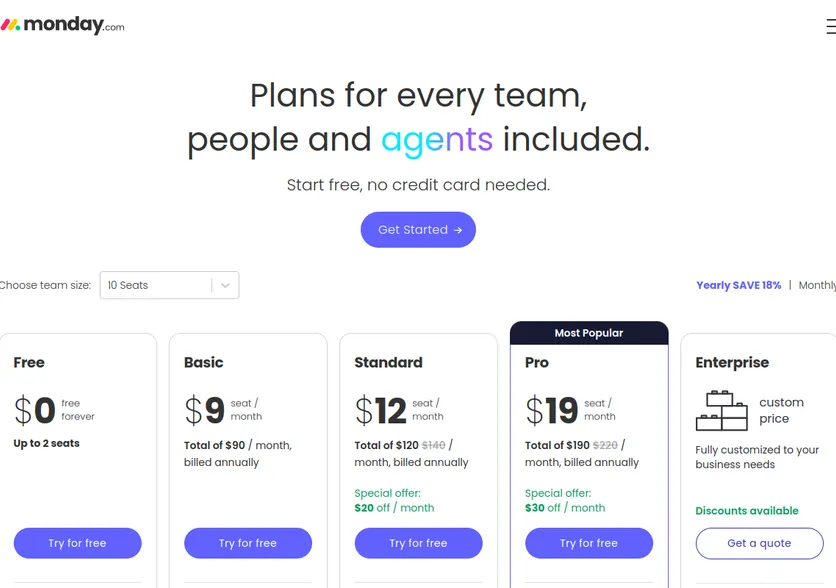
Paid tool Starting price: $9/seat/month · Basic plan at nine dollars per seat per month on annual billing, or twelve dollars billed monthly; paid plans start at three seats
Free plan: No free plan; free trial available
Monday Dev gives a gym a clear board for app and website fixes that the owner can check in a minute. This Monday Dev plan costs nine dollars per seat per month on annual billing. The board view makes sprint status visible to the whole company, and free viewers mean managers can follow progress without buying a seat.
What we like
- Visual boards that make sprint status obvious at a glance
- Sprint planning and dashboards built for product teams
- Free viewers so stakeholders can follow progress without a seat
Watch out for
- Paid plans start at three seats, so a solo user still pays for three
- Automations and integrations start on the Standard plan
How to try it
- Open the Monday Dev pricing page and pick a plan
- Choose a sprint template and add the backlog items
- Invite the team and set up the dashboard for the sprint
4. BugHerd
Best for: Teams whose clients report bugs on a live website
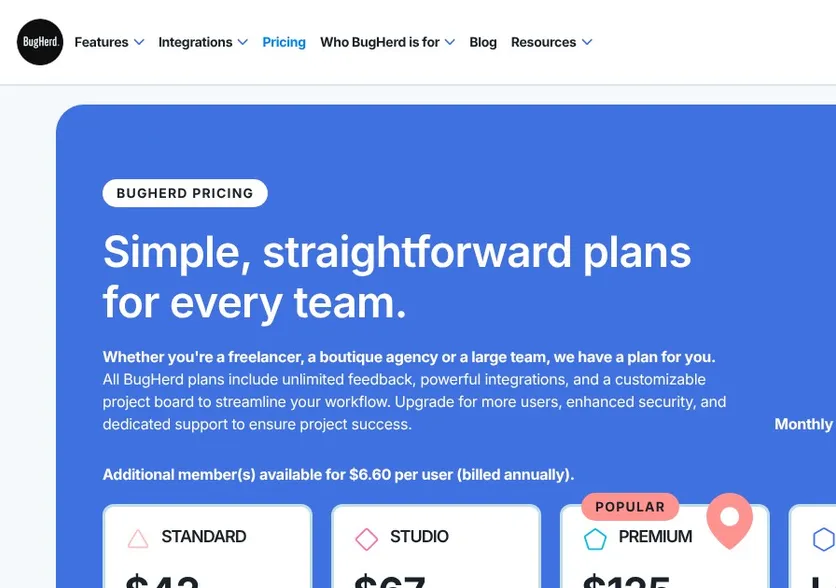
Paid tool Starting price: $39/month · Standard plan at thirty-nine dollars a month for five team members; some third-party listings show forty-two dollars a month on annual billing, so confirm the figure on the vendor page before buying
Free plan: No free plan; 14-day free trial
BugHerd lets gym members and staff pin feedback onto the live class booking page, exactly where the problem is. This BugHerd plan costs thirty-nine dollars a month on annual billing. Because clients pin notes on the live site, the feedback arrives with the exact spot attached, and the developer never has to ask which page it was.
What we like
- Clients pin feedback straight onto the live website
- Guests report bugs without an account or a seat
- Kanban board and tracker integrations keep feedback moving
Watch out for
- Team size caps push growing teams up the tiers
- No free plan, so every user of the tool is paid
How to try it
- Open the BugHerd pricing page and start the trial
- Add the feedback widget to the website or staging link
- Invite the team and connect the tracker the developers use
5. Marker.io
Best for: Web teams that need annotated bug reports in their tracker
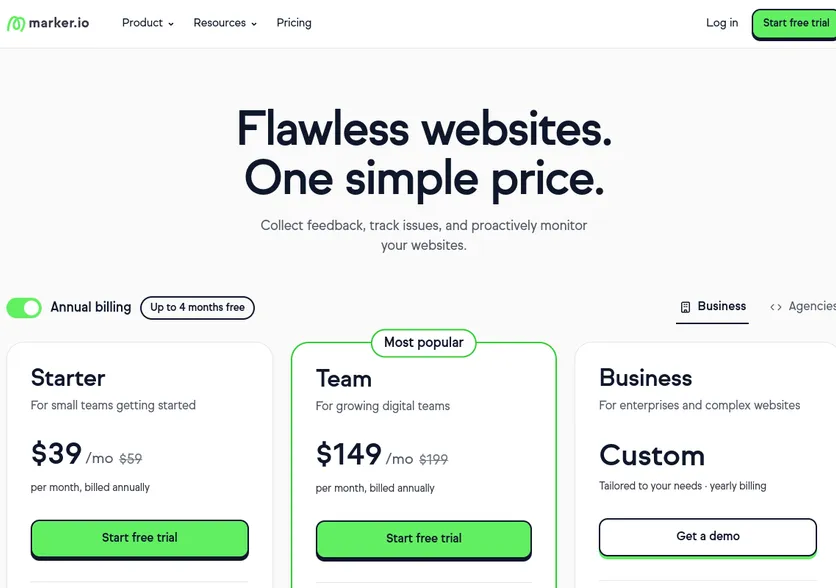
Paid tool Starting price: $39/month · Starter plan at thirty-nine dollars a month on annual billing for three users, or fifty-nine dollars billed monthly; extra users cost four dollars each on annual billing
Free plan: No free plan; 15-day free trial
Marker turns a screenshot of a broken booking page into a tracked issue for the developer. This Marker plan costs thirty-nine dollars a month on annual billing. Each report carries a screenshot, the browser details and the console log, so the developer starts fixing instead of asking for more information.
What we like
- Annotated screenshots land straight in Jira or Linear
- Reporters need no account, so clients report freely
- Console logs and environment details ride along with each report
Watch out for
- Session replay and two-way sync need the Team plan
- Page-view caps on Starter can bite busy sites
How to try it
- Open the Marker.io pricing page and start the trial
- Install the widget on the site or staging environment
- Connect the issue tracker and send the first test report
6. Backlog
Best for: Teams that prefer a flat monthly price over per-user billing
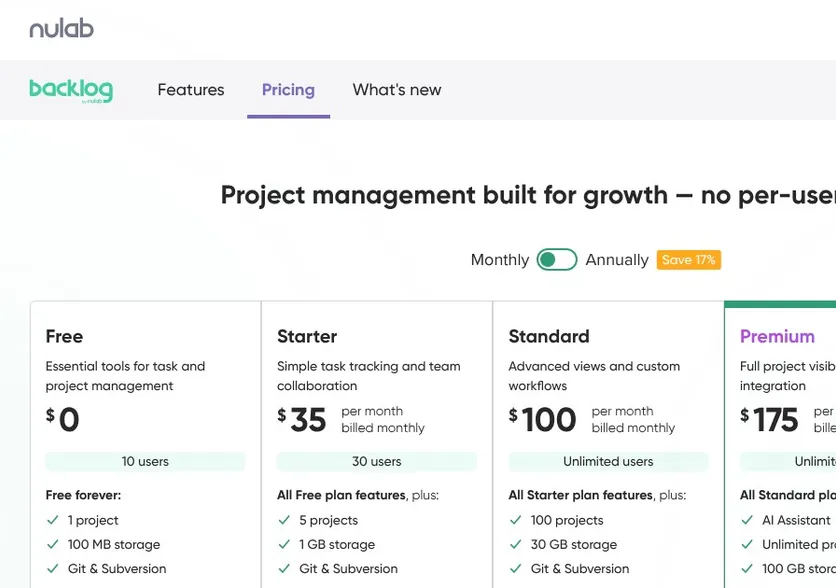
Paid tool Starting price: $35/month · Starter plan at thirty-five dollars a month flat, not per user; Standard costs one hundred dollars a month and Premium one hundred seventy-five dollars a month
Free plan: Free plan for one project and up to 10 users
Backlog suits a gym with a small dev team because the flat price covers everyone who needs a seat. This Backlog plan costs thirty-five dollars a month on annual billing. The flat monthly price is the selling point for a team of thirty, because the bill stays the same whether ten people or thirty log bugs.
What we like
- Flat monthly price, so adding people does not raise the bill
- Issue tracking plus Git hosting and wikis in one tool
- Gantt charts on the higher plans for release planning
Watch out for
- Plans are sold in fixed user bands, so odd team sizes waste seats
- No per-user price means a tiny team pays the same as a bigger one
How to try it
- Open the Backlog site and start the free trial
- Create a project and add the team as users
- Set up the issue types and the board for the first release
7. BugSnag
Best for: Teams that need a stability score for every release
Paid tool Starting price: $20/month · Select plan from twenty dollars a month on annual billing for fifty thousand events, or twenty-three dollars billed monthly; Preferred starts at thirty-three dollars a month on annual billing
Free plan: Free plan for one user with 7,500 events a month
BugSnag watches the gym app in production and flags the crashes members hit before they complain. This BugSnag plan costs twenty dollars a month on annual billing. The stability score gives a release a clear pass mark, so a team knows when to stop shipping features and fix bugs.
What we like
- Stability scores show whether a release is safe to ship
- Unlimited users on the paid plans
- Release tracking ties errors to the exact deploy
Watch out for
- Event quotas refill daily, so bursts can pause capture
- On-premises deployment needs Enterprise
How to try it
- Open the BugSnag pricing page and start the trial
- Add the notifier to the app and release a test build
- Watch the stability score after the next deploy
Prices above were checked on each vendor’s own website on Nov 27, 2026 and can change — the vendor’s page is the final word. Vendor links are editorial: nobody paid to be listed or ranked here. Vendors who want a featured listing can see how it works on our Get listed page.
What gyms pay for bug tracking in 2026
Gym bug tracking is two jobs, and the bill is easy to misread if you price only one of them. The feedback tool collects the note from the member or the front desk, while the tracker organises the fix and assigns it, so most gyms need one of each or a tracker with guest reporting built in. A flat-priced tracker can cost less than a per-user one when the whole staff needs a seat, while a per-user tracker stays cheap for a team of three. Add both tools together before you compare totals.
Start with the feedback widget on the booking page and invite a staff member to pin notes on it during a busy week. Compare how fast the notes become tracked issues, how clear the board looks to the owner, and whether members can report without an account. Pick the tool whose feedback turns into fixes fastest, because a cheap tracker that members cannot use costs more than a dear one they actually report in.
Before you buy
- Check whether members can report without an account, because nobody creates one to flag a broken page.
- Count every staff seat, because a per-user price grows with each trainer and receptionist.
- Confirm the feedback widget works on the booking page members actually use.
- Test the tracker integration, because a report that stays in the feedback tool never gets fixed.
- Separate the trial from the launch, because a tool that works on a quiet site may fail on a busy Monday.
Official websites
Official websites of the products reviewed above. Features and prices were checked against these sites when this guide was written, and they can change, so confirm on the vendor site before you buy.
Frequently asked questions
Which bug tracking software is best for gyms in 2026?
ClickUp is the best overall pick for gyms, with tasks, docs and chat in one workspace for a small team. Marker.io is the best choice when a developer needs annotated reports with console logs. BugHerd is the best pick for member feedback, because staff and members pin notes straight onto the live booking page.
How much does bug tracking software cost for a gym?
Tools in this list run from three dollars per user a month to thirty-nine dollars a month flat, with a flat-priced tracker from thirty-five dollars a month. A small gym usually pays for one feedback tool plus one tracker, so budget for both. Per-user tools suit a team of three, while flat pricing suits a gym where the whole staff needs a seat.
Do gyms need a bug tracker or a feedback tool?
Most need both, or one tool that covers both jobs. A feedback tool collects the note from the member on the booking page, while a tracker organises the fix and assigns it. BugHerd and Marker.io cover the feedback side and push issues into a tracker, while ClickUp, Asana and Monday Dev cover the tracking side once the report exists.
Can gym members report bugs without an account?
Yes, on the visual feedback tools in this list. BugHerd and Marker.io both let guests pin notes on a live page without signing in, which is why they suit gyms. The trackers themselves need a paid seat for staff, so keep the member reporting in the feedback tool and the fixing in the tracker.
Is there a free bug tracking tool for gyms?
Yes, for the tracking side. ClickUp has a free plan with unlimited members, Asana has a free personal plan, and Backlog has a free plan for one project. The visual feedback tools have trials rather than free plans, so use a trial of BugHerd or Marker.io to test member reporting before you pay.
Need everyday help too? Try Toolsvine's free developer tools right in your browser.
Browse Developer Tools tools