On this page
Consistent performance means a database that answers just as fast at peak traffic as it does at midnight, and the tools below range from about five dollars a month to four hundred dollars a month. The eight options cover MySQL, Postgres, document and distributed SQL, and every price was checked on the vendor site on November 26, 2026. Six of them offer a free tier, so you can run a real workload before you spend anything. PlanetScale is our first pick — serverless MySQL with steady latency and safe schema changes.
How we researched this
We started with the database tools teams actually buy for steady performance, then read each price on the vendor pricing page on November 26, 2026 and noted the free plan or trial each one carries. We judged them for a team that needs low, predictable latency under real traffic, and we kept only tools with a published price. We left out Fauna, because the hosted service wound down in 2025 and the vendor site no longer serves.
Compare the tools
| Name | Best for | Starting price | Free plan | |
|---|---|---|---|---|
 PlanetScale | MySQL teams that want branching, non-blocking schema changes and steady latency | $29/month | Free Hobby plan, 1 database and 5 GB | Visit |
 Neon | Postgres teams that want serverless scaling with branching and instant restores | $15/month | Free tier included | Visit |
 Supabase | Teams that want Postgres plus auth, storage and realtime in one platform | $25/month | Free tier, 500 MB and 2 projects | Visit |
 MongoDB Atlas | Teams that want a flexible document database with global clusters | $56.94/month | Free M0 cluster | Visit |
 CockroachDB | Teams that need distributed SQL with strong consistency across regions | $0.092 per vCPU-hour | No free plan; 30-day trial with $400 credit | Visit |
 SingleStore | Teams that need fast analytics and transactions on the same database | $0.99/hour | Free Shared workspace for non-production use | Visit |
 TiDB Cloud | Teams that need MySQL-compatible HTAP with strong consistency | $400/month | Free Starter tier within limits | Visit |
 Turso | Developers who want a fast edge database with a very low entry price | $4.99/month | Free tier, 100 databases and 5 GB | Visit |
The database software for consistent performance, compared
1. PlanetScale
Best for: MySQL teams that want branching, non-blocking schema changes and steady latency
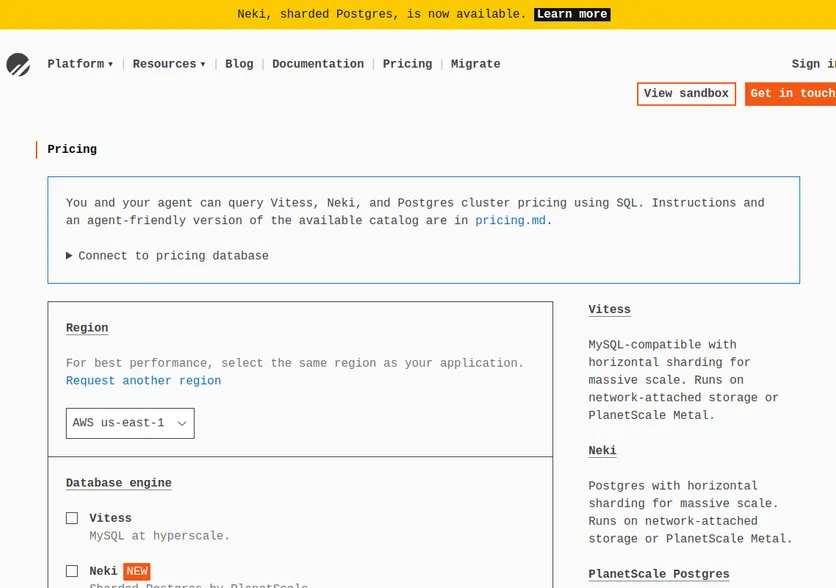
Paid tool Starting price: $29/month · MySQL Scaler plan, $29 a month for 1 production database; Team $39 a user a month; Hobby free
Free plan: Free Hobby plan, 1 database and 5 GB
PlanetScale is a MySQL-compatible serverless database that treats schema changes like code, with branching and deploy requests that keep production fast. This PlanetScale Scaler plan costs twenty-nine dollars a month for one production database with branching and automated backups. A team that deploys schema changes often will like the safety, because a bad migration can be reverted without downtime or a midnight rollback.
What we like
- Non-blocking schema changes with branching
- Steady latency under load
- Automated backups included
Watch out for
- One production database on the entry plan
- Postgres offering starts separately at five dollars a month
How to try it
- Open the PlanetScale pricing page and claim the free plan
- Create a database and open a branch for a schema change
- Merge the branch with a deploy request and watch it apply
2. Neon
Best for: Postgres teams that want serverless scaling with branching and instant restores
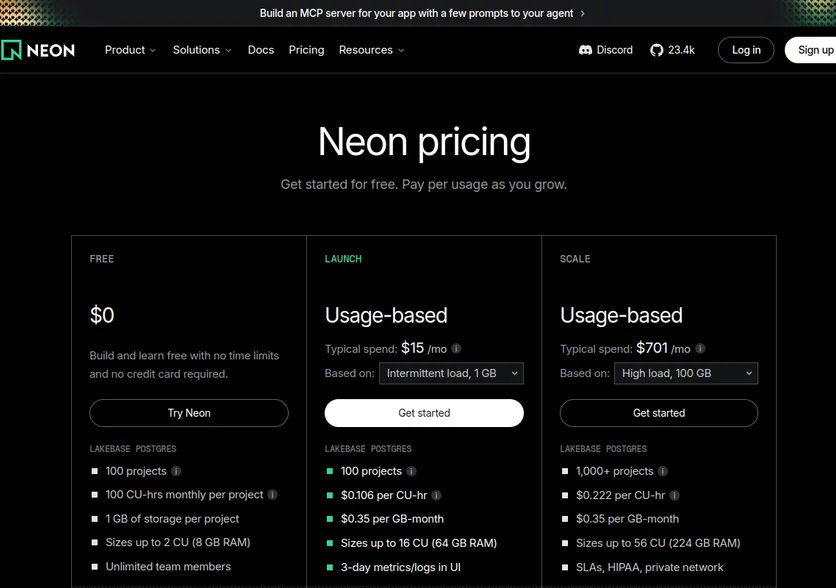
Paid tool Starting price: $15/month · Launch plan, usage-based with a typical spend of $15 a month ($0.106 per CU-hour, $0.35 per GB-month); Scale typical $701 a month; free tier included
Free plan: Free tier included
Neon is a serverless Postgres database that scales compute to zero when idle and back up when traffic arrives, so a team pays only for what it uses. This Neon Launch plan is usage-based, with a typical spend of fifteen dollars a month. A team that runs many environments will like the branching, because every pull request can get its own copy of the database in seconds.
What we like
- Scales to zero when idle, saving money
- Database branching for every pull request
- Instant point-in-time restore
Watch out for
- Launch is usage-based, so the bill varies with compute and storage
- A database that never idles costs more than the typical spend
How to try it
- Open the Neon pricing page and claim the free tier
- Create a Postgres database and connect your app
- Open a branch for a feature and test against real data
3. Supabase
Best for: Teams that want Postgres plus auth, storage and realtime in one platform
Paid tool Starting price: $25/month · Pro plan, from $25 a month per organisation; Team from $599 a month; free tier included
Free plan: Free tier, 500 MB and 2 projects
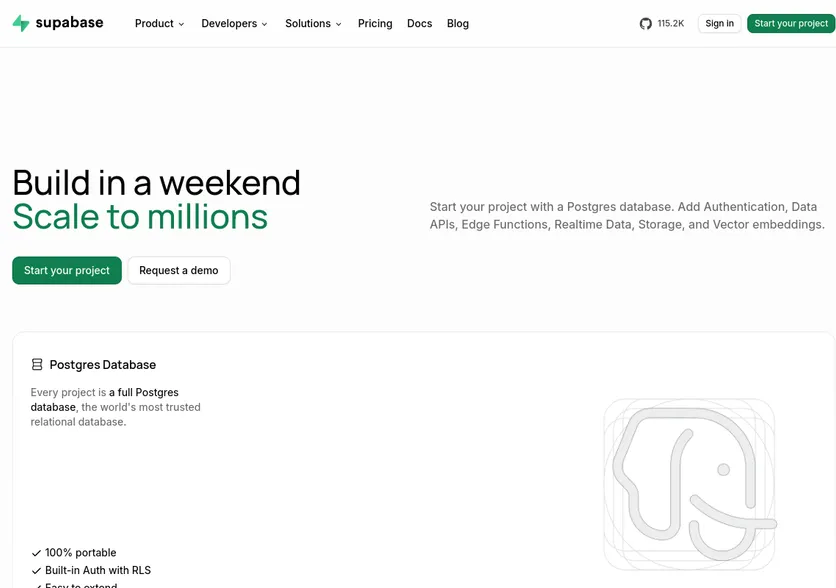
Supabase is an open source Firebase alternative that pairs managed Postgres with auth, storage and realtime, so a team can ship a full backend from one dashboard. This Supabase Pro plan starts at twenty-five dollars a month per organisation and includes eight gigabytes of disk, two hundred and fifty gigabytes of egress and one hundred thousand monthly active users. A team building a web app will like the speed, because auth and file storage arrive already wired to the database.
What we like
- Postgres plus auth, storage and realtime in one place
- Open source, self-hosting stays an option
- Generous free tier for starting a project
Watch out for
- Free projects pause after a week idle
- Egress overage is billed on top
How to try it
- Open the Supabase pricing page and claim the free plan
- Create a project and add a table
- Turn on auth and connect your app to the API
4. MongoDB Atlas
Best for: Teams that want a flexible document database with global clusters
Paid tool Starting price: $56.94/month · Dedicated M10 cluster, listed at just under $57 a month; storage, backups and transfer billed on top; Flex from $8 a month; M0 free
Free plan: Free M0 cluster
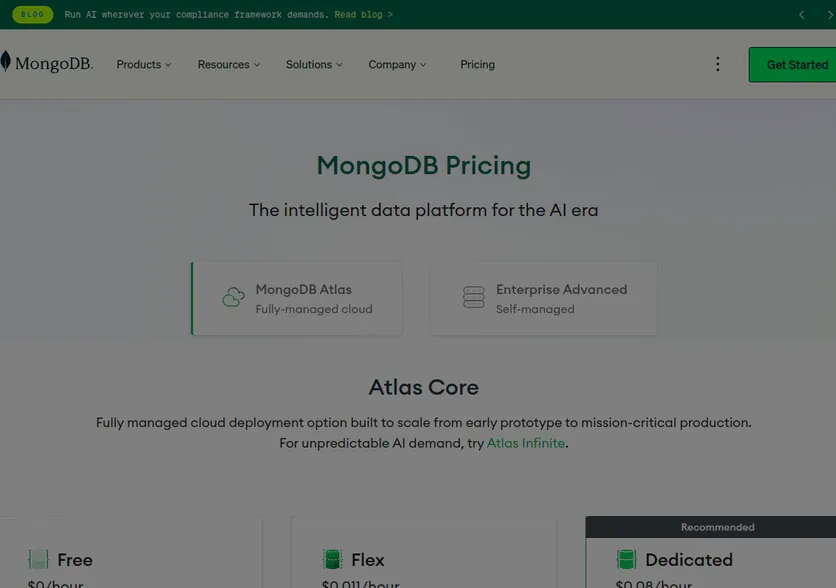
MongoDB Atlas is the managed cloud version of the most popular document database, running dedicated clusters across every major cloud. This MongoDB Atlas Dedicated M10 cluster costs just under fifty-seven dollars a month for two gigabytes of RAM, two virtual CPUs and ten to one hundred and twenty-eight gigabytes of storage. A team with flexible, changing data will like the document model, because fields can be added without a migration or a schema rewrite.
What we like
- Flexible document model, no migrations needed
- Runs on every major cloud
- Free cluster covers real testing
Watch out for
- Real monthly bills run higher with storage and backups
- Document model suits some workloads poorly
How to try it
- Open the MongoDB Atlas pricing page and claim the free cluster
- Create an M10 dedicated cluster in your region
- Connect your app and insert your first document
5. CockroachDB
Best for: Teams that need distributed SQL with strong consistency across regions
Paid tool Starting price: $0.092 per vCPU-hour · Standard plan, about $203 a month for a 2-vCPU cluster with 100 GB per the vendor example; Mission Critical $0.162 per vCPU-hour; storage billed on top
Free plan: No free plan; 30-day trial with $400 credit
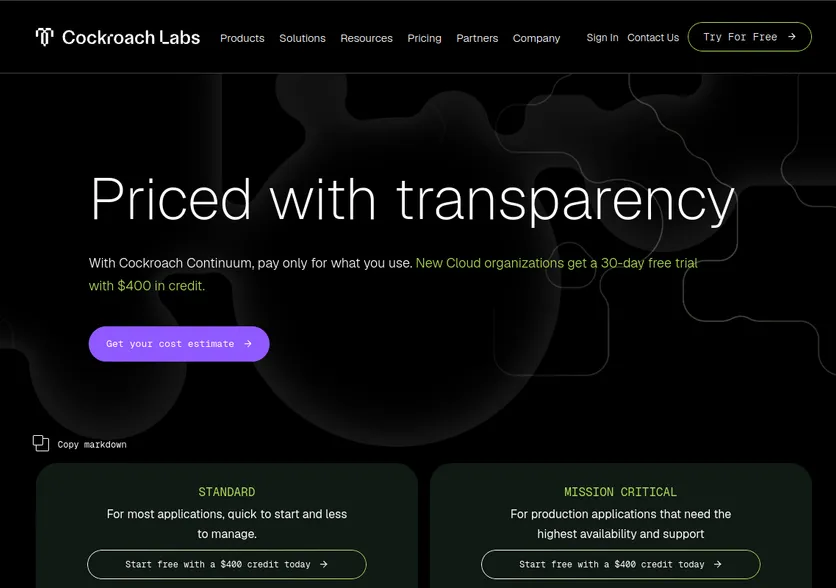
CockroachDB is a distributed SQL database that spreads data across regions while keeping strong consistency, so an app stays fast and available everywhere. This CockroachDB Standard plan costs about nine cents per virtual CPU-hour, which works out to about two hundred and three dollars a month for a two-CPU cluster with one hundred gigabytes, per the vendor example. A team running a global service will like the resilience, because a whole region can fail without the database going down.
What we like
- Strong consistency across regions
- Survives a whole region failing
- Postgres-compatible SQL
Watch out for
- No free plan for new organisations
- Costs climb fast with more CPUs
How to try it
- Open the CockroachDB pricing page and start the trial
- Create a cluster in your primary region
- Connect your app and test a multi-region query
6. SingleStore
Best for: Teams that need fast analytics and transactions on the same database
Paid tool Starting price: $0.99/hour · Helios Standard plan, from $0.99 an hour for the smallest workspace; Enterprise $1.49 an hour; storage billed per GB on top; $500 in free credits to start
Free plan: Free Shared workspace for non-production use
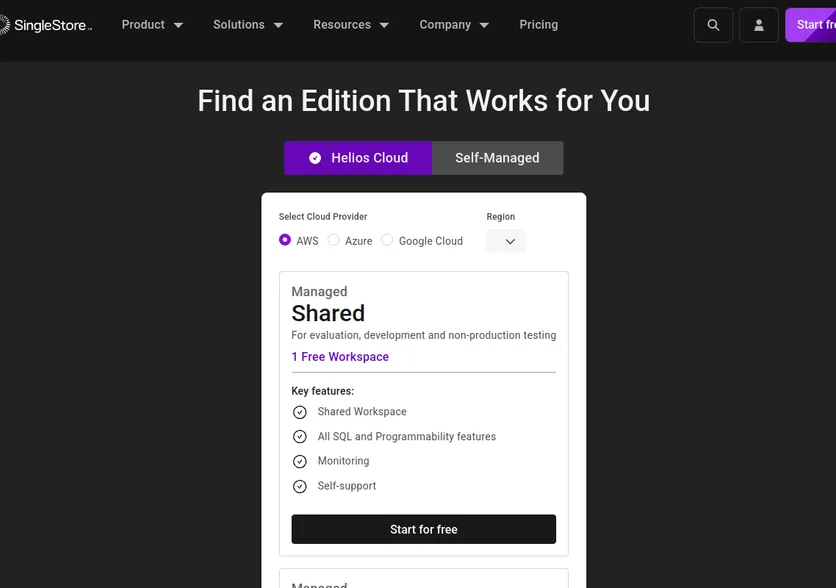
SingleStore is a distributed database that runs transactions and analytics together, so a team can query fresh data without moving it to a separate warehouse. This SingleStore Helios Standard plan starts at ninety-nine cents an hour for the smallest workspace with two virtual CPUs and sixteen gigabytes of memory. A team that needs real-time dashboards on live data will like the speed, because analytical queries run against the same rows the app just wrote.
What we like
- Transactions and analytics on one database
- Very fast analytical queries
- Free workspace for trying it out
Watch out for
- Hourly billing adds up around the clock
- Smaller community than Postgres or MySQL
How to try it
- Open the SingleStore pricing page and claim the free workspace
- Create a Standard workspace and load a table
- Run an analytical query against live transaction data
7. TiDB Cloud
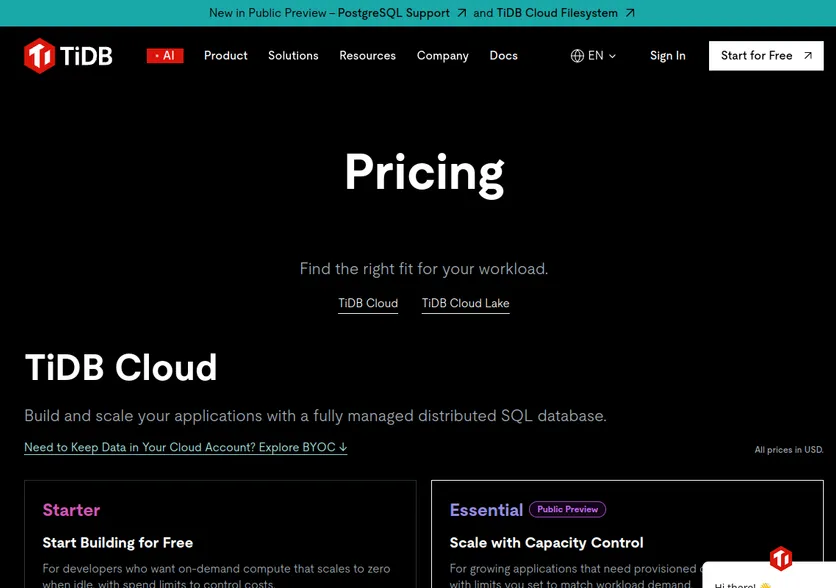
Best for: Teams that need MySQL-compatible HTAP with strong consistency
Paid tool Starting price: $400/month · Essential plan, from $400 a month; Premium from $1,800 and Dedicated from $1,376 a month; Starter free within limits
Free plan: Free Starter tier within limits
TiDB Cloud is a MySQL-compatible distributed database that runs transactions and analytics together, with strong consistency across the cluster. This TiDB Cloud Essential plan starts at four hundred dollars a month and covers the core serverless cluster with row and columnar storage. A team with a heavy MySQL workload will like the compatibility, because existing apps connect without rewriting queries.
What we like
- MySQL-compatible, no query rewrites
- Transactions and analytics together
- Strong consistency across the cluster
Watch out for
- Highest entry price in this comparison
- Essential plan is still in public preview
How to try it
- Open the TiDB Cloud pricing page and claim the free tier
- Create a cluster and connect your MySQL app
- Run an analytical query against the columnar store
8. Turso
Best for: Developers who want a fast edge database with a very low entry price
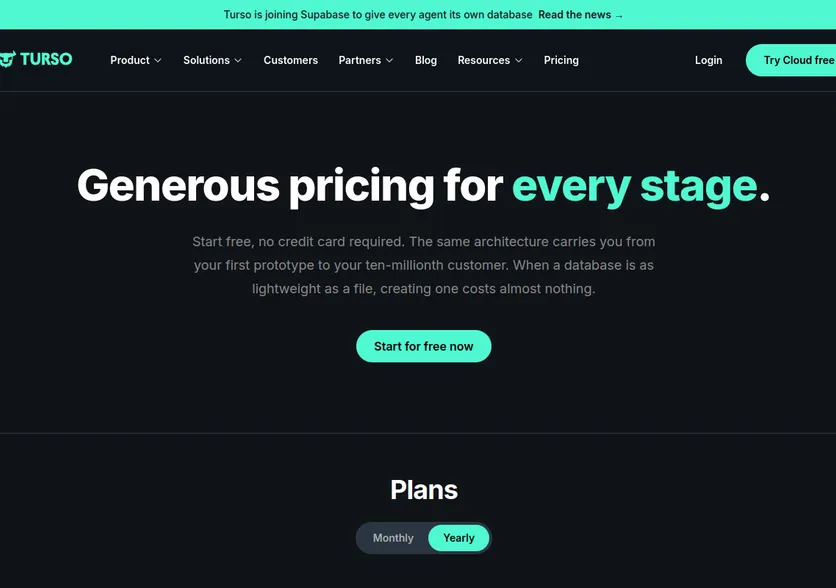
Paid tool Starting price: $4.99/month · Developer plan, $4.99 a month billed yearly or $5.99 billed monthly; Scaler $24.92 a month billed yearly; free tier included; Supabase announced an acquisition in October 2026 with pricing unchanged
Free plan: Free tier, 100 databases and 5 GB
Turso is a SQLite-compatible edge database that replicates data close to users, so reads stay fast no matter where the app runs. This Turso Developer plan costs four dollars and ninety-nine cents a month billed yearly and covers nine gigabytes, two and a half billion reads and twenty-five million writes. A developer building a global app will like the edge replication, because a user in another country reads from a nearby copy instead of a faraway server.
What we like
- Cheapest paid plan in this comparison
- Edge replicas keep reads fast worldwide
- SQLite-compatible, easy to learn
Watch out for
- SQLite model suits some workloads poorly
- Acquisition news may change the roadmap
How to try it
- Open the Turso pricing page and claim the free tier
- Create a database and connect your app
- Add a replica close to your users and test the latency
Prices above were checked on each vendor’s own website on Nov 26, 2026 and can change — the vendor’s page is the final word. Vendor links are editorial: nobody paid to be listed or ranked here. Vendors who want a featured listing can see how it works on our Get listed page.
What database software costs in 2026
Database pricing splits in two, because some tools charge a flat monthly fee and others charge by the hour or by usage. PlanetScale costs twenty-nine dollars a month flat and Neon is usage-based with a typical spend of fifteen dollars a month, while CockroachDB charges about nine cents per virtual CPU-hour and SingleStore ninety-nine cents an hour. The headline plan each vendor shows on its own pricing page is the number in the table above, checked on November 26, 2026.
Start with the free tier on two tools and run your real queries against each one, including the slowest report and the busiest write pattern. Compare latency at peak load, how the bill grows with storage, and whether scaling happens automatically. Pick the database that stays fast when traffic spikes, because a cheap plan that slows under load costs more in lost users.
Before you buy
- Check the latency promise, because a database that slows under load fails the whole point of this list.
- Count the included compute and storage, because overage charges decide the real monthly bill.
- Confirm the scaling model, because serverless scaling and fixed clusters bill very differently.
- Test with your real query pattern, because a database tuned for reads can struggle with writes.
- Compare annual and monthly billing, because some tools here cut the price by about a fifth on annual plans.
Official websites
Official websites of the products reviewed above. Features and prices were checked against these sites when this guide was written, and they can change, so confirm on the vendor site before you buy.
Frequently asked questions
Which database software is best for consistent performance in 2026?
PlanetScale is the best overall pick for consistent performance, because its serverless MySQL keeps latency steady with branching and non-blocking schema changes from twenty-nine dollars a month. Neon is the best serverless Postgres pick, scaling to zero when idle with a typical spend of fifteen dollars a month. Supabase is the best full-backend pick, pairing Postgres with auth and storage from twenty-five dollars a month.
How much does database software cost?
Entry prices here run from four dollars and ninety-nine cents a month for Turso to four hundred dollars a month for TiDB Cloud, with most tools between nineteen and fifty-seven dollars a month. Usage-based tools add charges for storage, compute and transfer, so the headline price is only the start. Always estimate your real workload first, because a busy database can cost several times the entry price.
Is there free database software?
PlanetScale, Neon, Supabase, MongoDB Atlas, TiDB Cloud and Turso all offer a free tier, and SingleStore offers a free shared workspace. CockroachDB offers no free plan for new organisations, only a thirty-day trial with four hundred dollars of credit. A free tier is enough to build and test a real app before you pay.
How do I choose a database for consistent performance?
Start with your query pattern, because a database tuned for reads can struggle with writes and the reverse. Then check the scaling model, since serverless scaling suits spiky traffic while fixed clusters suit steady loads. Run your real queries in a trial, measure latency under load, and pick the database that stays fast when traffic spikes.
Can I test these databases before paying?
Yes, most tools here offer branching or a free tier that covers testing: PlanetScale and Neon both branch a database in seconds, and Supabase, Turso and MongoDB Atlas offer free tiers. A trial with your real data is the only honest test, because demo workloads hide the slow queries that matter.
Need everyday developer help too? Try Toolsvine's free developer tools right in your browser.
Browse Developer Tools tools