On this page
A startup developer portal has to be cheap, fast to set up and useful from day one, because there is no platform team to run it. The eight tools below run from nine dollars per user a month to one hundred fifty dollars a month, and every price was checked on the vendor site on November 26, 2026. Six of the eight have a free plan, so compare the free tier limits rather than the headline price alone. Atlassian Compass is our first pick — the cheapest paid catalog a startup can buy.
How we researched this
We started with the developer portals startups actually buy, then read each price on the vendor pricing page on November 26, 2026 and noted the free plan or trial each plan carries. We judged them for a small team that needs a catalog or API docs without a platform engineer, and we kept only tools with a published price. We dropped Cortex and OpsLevel because neither publishes a price on its own site, and Roadie because it closed portal sales to new customers.
Compare the tools
| Name | Best for | Starting price | Free plan | |
|---|---|---|---|---|
 Atlassian Compass | Startups that want the cheapest paid component catalog, period | $7.67/user/month | Free plan for up to 3 full users, with unlimited basic users | Visit |
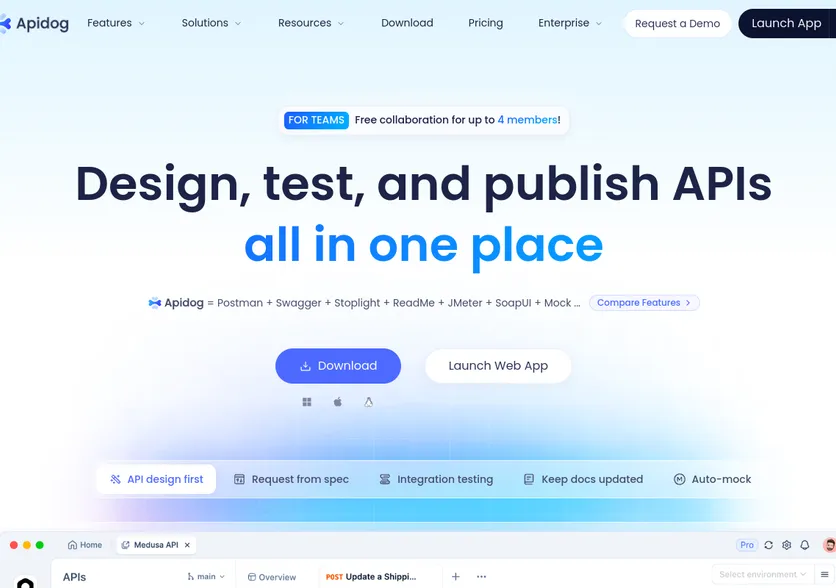
 Apidog | Startups that want API design, testing and docs in one cheap per-seat plan | $9/user/month | Free plan available | Visit |
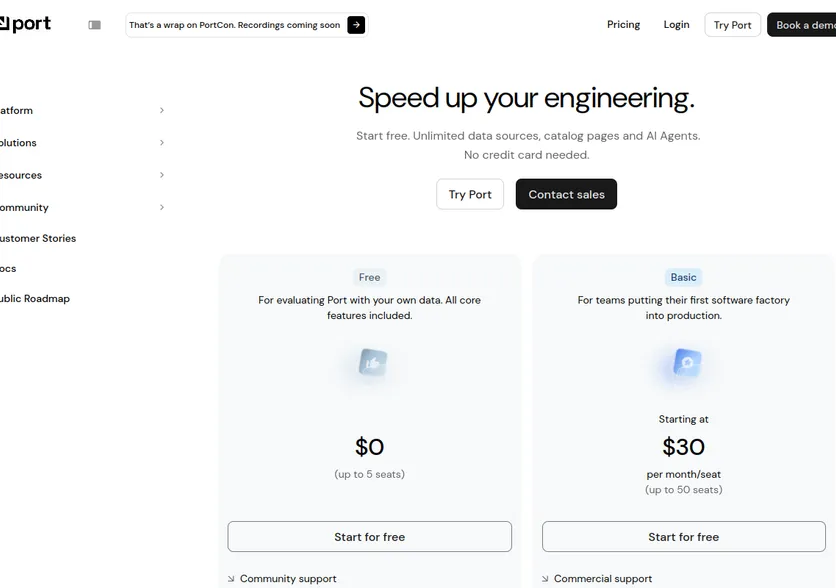
 Port | Startups that want a no-code internal portal with a free plan for five seats | $30/seat/month | Free plan for up to 5 seats | Visit |
 Postman | Startups already building and testing APIs in Postman | $19/user/month | Free plan for 1 user | Visit |
 SwaggerHub | Startups standardizing on OpenAPI with a free tier to learn on | $22.80/user/month | Free plan for 1 user and 3 APIs | Visit |
 Stoplight | Startups that design the API before writing code | $44/month | Free plan for 1 user and 1 project | Visit |
 Bump.sh | Startups that want API docs rebuilt automatically from the spec | $50/month | No free plan; 14-day free trial | Visit |
 Scalar | Engineering-led startups that want to own the docs layer | $150/month | Free plan available | Visit |
The developer portal software for startups, compared
1. Atlassian Compass
Best for: Startups that want the cheapest paid component catalog, period
Paid tool Starting price: $7.67/user/month · Standard plan $7.67 per user a month, Premium $23.96 a user a month (monthly billing only); free for up to 3 full users
Free plan: Free plan for up to 3 full users, with unlimited basic users
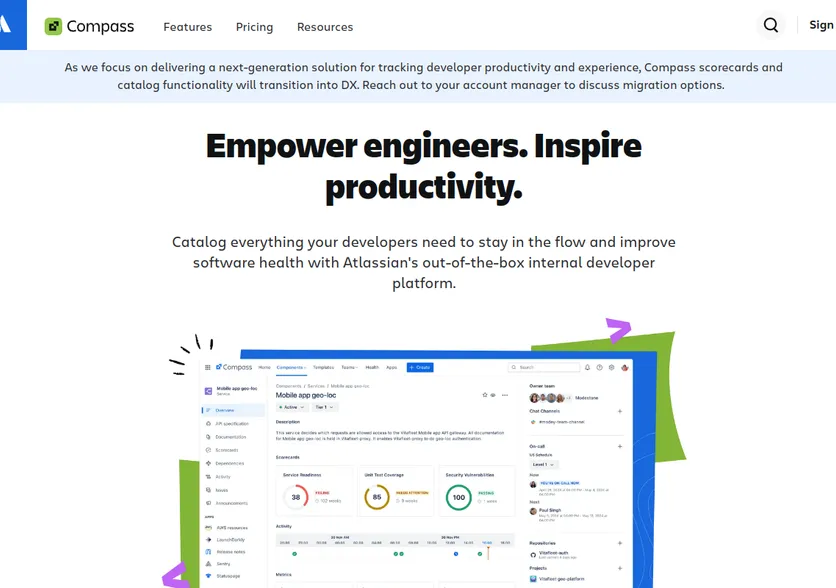
Compass gives a startup a real component catalog for about eight dollars per user a month, which is less than a lunch per developer. This Compass Standard plan tracks services, owners and health, and it plugs straight into Jira and Confluence when the team already uses them. A startup that wants to stop asking who owns which service in chat gets a catalog, a health score and a free plan for three full users.
What we like
- Cheapest paid catalog in this comparison
- Free plan covers three full users
- Health scores show which services need work
Watch out for
- Limited value outside the Atlassian ecosystem
- Compass scorecards and catalog functionality are moving into Atlassian's DX product — confirm migration options before committing
How to try it
- Open the Compass page and start with the free plan
- Add your services and assign an owner to each
- Check the health score before your next planning meeting
2. Apidog
Best for: Startups that want API design, testing and docs in one cheap per-seat plan
Paid tool Starting price: $9/user/month · Basic plan at $9 a user a month; higher tiers add collaboration and governance features
Free plan: Free plan available
Apidog combines API design, testing, mocking and documentation in one workspace, so a small team stops juggling four tools for one API. This Apidog Basic plan costs nine dollars per user a month, which is the cheapest per-seat price in this list. A startup with two developers pays eighteen dollars a month for the whole API workflow, from design to published docs.
What we like
- Cheapest per-seat price in this comparison
- Design, testing, mocking and docs in one tool
- Free plan for getting started
Watch out for
- Smaller ecosystem than Postman or SwaggerHub
- Higher tiers climb fast for larger teams
How to try it
- Open the Apidog pricing page and start with the free plan
- Design your first API and generate a mock server
- Publish the docs and share them with your first customer
3. Port
Best for: Startups that want a no-code internal portal with a free plan for five seats
Paid tool Starting price: $30/seat/month · Basic plan from $30 per seat a month billed annually, for up to 50 seats; Standard $48 a seat a month adds single sign-on
Free plan: Free plan for up to 5 seats
Port lets a startup stand up a real internal developer portal this week, with no-code blueprints for services, scorecards and self-service actions. This Port Basic plan costs thirty dollars per seat a month billed annually for up to fifty seats, and the free plan covers five seats with no time limit. A five-person startup can run the whole portal free, then pay only when the team outgrows it.
What we like
- Free plan covers a five-person startup completely
- No-code blueprints, no platform engineer needed
- Self-service actions cut the ticket queue
Watch out for
- Thirty dollars a seat adds up once the team grows
- Building blueprints takes weeks to do well
How to try it
- Open the Port pricing page and start with the free plan
- Model your first service as a blueprint
- Add one self-service action, like spinning up a preview environment
4. Postman
Best for: Startups already building and testing APIs in Postman
Paid tool Starting price: $19/user/month · Team plan at $19 per user a month billed annually; Solo $9 a month for one person, and Enterprise by quote
Free plan: Free plan for 1 user
Postman is where most developers already build and test APIs, and its portal features turn those collections into published documentation. This Postman Team plan costs nineteen dollars per user a month billed annually, with a Solo plan at nine dollars a month for one person. A startup that lives in Postman gets its docs, testing and collaboration in the tool the team already opens every day.
What we like
- The team already knows the tool
- API testing and docs in one place
- Solo plan at nine dollars a month for one person
Watch out for
- Team collaboration starts at nineteen dollars, not free
- Enterprise features need a quote
How to try it
- Open the Postman pricing page and start with the free plan
- Build a collection for your API and add tests
- Publish the docs from the collection when you are ready
5. SwaggerHub
Best for: Startups standardizing on OpenAPI with a free tier to learn on
Paid tool Starting price: $22.80/user/month · Individual plan at about $23 per user a month billed annually, or $30 billed monthly; Team about $34 a user a month, and the Portal Pro add-on costs extra
Free plan: Free plan for 1 user and 3 APIs
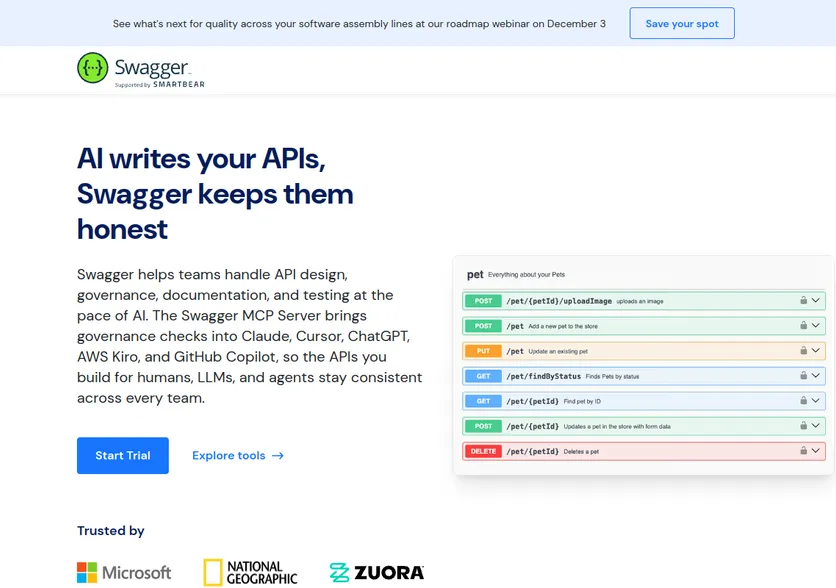
SwaggerHub gives a startup the industry-standard OpenAPI toolchain, with a visual editor, reusable components and code generation for clients and servers. This SwaggerHub Individual plan costs about twenty-three dollars per user a month billed annually, and the free plan covers one user and three APIs. SmartBear now sells it as API Hub, so a startup betting on OpenAPI gets the incumbent platform at a price a small team can carry.
What we like
- The incumbent OpenAPI toolchain
- Free plan for learning and small projects
- Code generation for clients and servers
Watch out for
- The portal itself is a paid add-on per user
- Rebrand to API Hub creates roadmap uncertainty
How to try it
- Open the SwaggerHub pricing page and start with the free plan
- Design your API in the visual editor
- Generate a client library and share it with your first customer
6. Stoplight
Best for: Startups that design the API before writing code
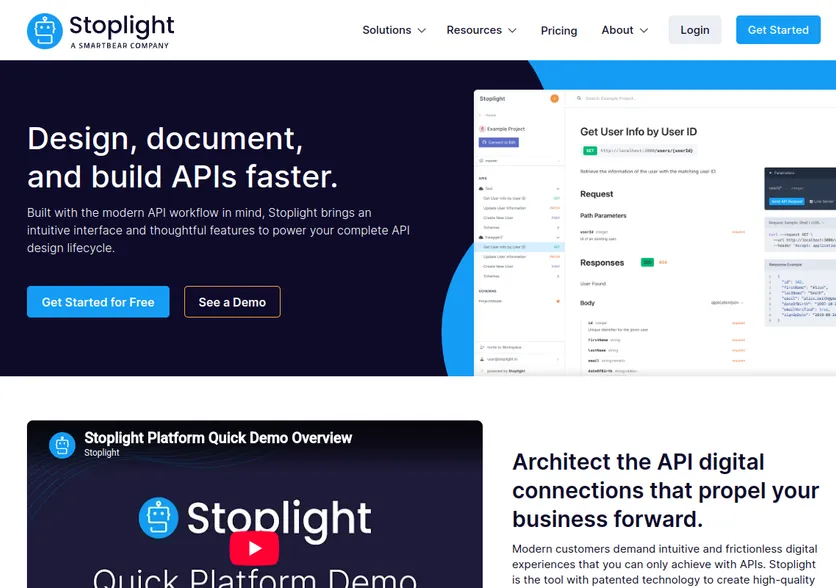
Paid tool Starting price: $44/month · Basic plan at $44 a month billed annually for 3 users, with extra users at $11 each; Startup $113 a month covers 8 users
Free plan: Free plan for 1 user and 1 project
Stoplight gives a startup a visual API designer, style guides and instant mock servers, so the team can agree on the contract before building anything. This Stoplight Basic plan costs forty-four dollars a month billed annually for three users, with extra users at eleven dollars each. A three-person startup pays forty-four dollars a month for design, mocks and hosted docs in one place.
What we like
- Visual designer with instant mock servers
- Style guides keep every API consistent
- Forty-four dollars covers three users
Watch out for
- Private projects need the Startup plan
- Single sign-on needs the Pro Team plan
How to try it
- Open the Stoplight pricing page and start with the free plan
- Design your API and share the mock server with the team
- Publish the hosted docs when the API is ready
7. Bump.sh
Best for: Startups that want API docs rebuilt automatically from the spec
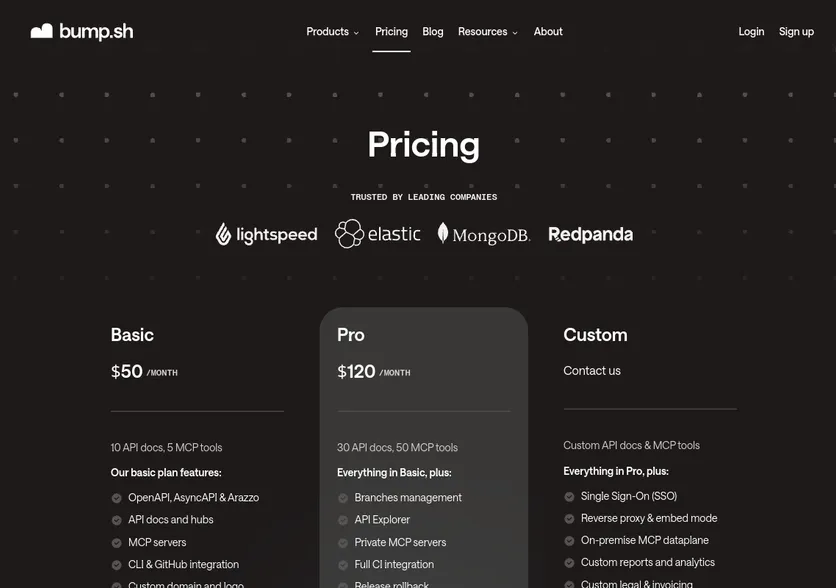
Paid tool Starting price: $50/month · Basic plan at $50 a month for 10 API docs and 3 internal users; Pro $120 a month covers 30 API docs
Free plan: No free plan; 14-day free trial
Bump.sh watches a startup's OpenAPI or AsyncAPI spec and rebuilds the reference docs on every change, with a changelog and breaking-change detection. This Bump Basic plan costs fifty dollars a month for ten API docs, three internal users and twenty external guests. A startup with one clean spec gets documentation that maintains itself, plus an MCP server so AI agents can read the API too.
What we like
- Docs rebuild automatically on every spec change
- Breaking-change detection before release
- MCP server for AI agents included
Watch out for
- No SDK generation
- No free plan, so the trial is the only test
How to try it
- Open the Bump pricing page and start the 14-day trial
- Push your OpenAPI file through the CLI or a GitHub Action
- Check the changelog on the next spec change
8. Scalar
Best for: Engineering-led startups that want to own the docs layer
Paid tool Starting price: $150/month · Pro plan at $150 a month; free plan available for getting started
Free plan: Free plan available
Scalar is an engineering-led docs platform for teams that want to own the documentation layer, with an API reference that developers actually enjoy reading. This Scalar Pro plan costs one hundred fifty dollars a month and adds the features a growing team needs on top of the free tier. A startup that treats docs as part of the product gets a polished portal without the four hundred fifty dollar price of the bigger Git-based tools.
What we like
- Polished reference developers enjoy reading
- Engineering-led, docs-as-code friendly
- Cheaper than the big Git-based portals
Watch out for
- Localization across many languages lags rivals
- Smaller feature set than Mintlify or ReadMe
How to try it
- Open the Scalar pricing page and start with the free plan
- Import your OpenAPI spec and publish the reference
- Upgrade to Pro when the team needs more capacity
Prices above were checked on each vendor’s own website on Nov 26, 2026 and can change — the vendor’s page is the final word. Vendor links are editorial: nobody paid to be listed or ranked here. Vendors who want a featured listing can see how it works on our Get listed page.
What developer portal software costs a startup in 2026
Most startups pay per seat, so the headline price is only part of the budget, and this list runs from nine dollars per user a month to one hundred fifty dollars a month. The cheapest plans are not always the cheapest deal, because a one-project free tier forces an upgrade sooner than a generous one, and per-project tools charge again for every API. The headline plan each vendor shows on its own pricing page is the number in the table above, checked on November 26, 2026.
Start with the free plan on two tools and run one real workflow through each, from finding a service to reading an endpoint. Compare how fast a developer gets an answer, how the bill moves when the team doubles, and whether the free tier covers your first API. Pick the portal your developers actually open, because a catalog nobody visits is money wasted.
Before you buy
- Start with the free plan, because every tool here except Bump lets a startup begin at zero cost.
- Count the seats first, because per-seat pricing doubles the bill the moment a second developer joins.
- Check whether the portal covers internal services or external API users, because the two jobs need different tools.
- Confirm the free tier limits, because a one-project cap forces the upgrade sooner than the headline price suggests.
- Compare annual and monthly billing, because most tools here cut the monthly rate by about a fifth on annual plans.
Official websites
Official websites of the products reviewed above. Features and prices were checked against these sites when this guide was written, and they can change, so confirm on the vendor site before you buy.
Frequently asked questions
Which developer portal software is best for startups in 2026?
Atlassian Compass, at about eight dollars per user a month, is the safest default for an internal catalog because it is the cheapest paid option and has a free plan for three full users. Apidog is the cheapest per-seat API tool at nine dollars per user a month, and Port is the best internal portal with a free plan for five seats.
How much does developer portal software cost for a startup?
Paid plans in this list run from nine dollars per user a month for Apidog to one hundred fifty dollars a month for Scalar. Most startups pay between nine and fifty dollars a month, and six of the eight tools here have a free plan, so a small team can often start at zero cost.
Is there a free developer portal for startups?
Yes, Port, Compass, Apidog, Postman, SwaggerHub, Stoplight and Scalar all have a free plan, and Bump offers a fourteen-day trial. A free plan is enough to model your first services and publish one API before you commit to a paid tier.
Should a startup pick an internal portal or an API docs portal?
Use Port or Compass when the portal is for your own engineers, with a service catalog and self-service actions. Use Apidog, Postman, SwaggerHub, Stoplight, Bump or Scalar when the portal is for external developers reading your API docs and trying your endpoints.
What should a startup check before picking a developer portal?
Check the free tier limits first, because a one-project cap forces the upgrade sooner than the headline price suggests. Then count the seats, because per-seat pricing doubles the bill as the team grows, and test the portal with a real developer before you buy.
Need more free developer help? Try Toolsvine's free developer tools right in your browser.
Browse Developer Tools tools