On this page
Next.js is the default React framework, but it is not the only way to ship a React app, and its per seat pricing pushes many teams to look elsewhere. Railway is the pick that keeps small apps cheapest, with usage billing from five dollars a month and no seat fees at all. This guide compares seven Next.js alternatives, meaning the platforms teams run React apps on instead, from five dollar a month hosts to a 25 dollar a month workspace, with live 2026 prices and free plans, so you can pick by team size and traffic instead of by habit.
How we researched this
We checked the pricing page of every vendor on this list on November 26, 2026, and kept only platforms that publish a real dollar price. Each platform had to deploy a React app from Git with preview environments, and we compared entry prices, free plans and whether the bill follows seats, usage or a flat workspace fee.
Compare the tools
| Name | Best for | Starting price | Free plan | |
|---|---|---|---|---|
| Railway | Solo developers who want usage billing with no seat fees | $5/month | Free plan with $1 of monthly credit | Visit |
| Cloudflare Workers | High traffic static sites and edge apps on a fixed budget | $5/month | Free plan with 100,000 requests a day | Visit |
| DigitalOcean App Platform | Teams that want fixed container sizes and managed databases | $5/month | Free static sites, up to 3 apps | Visit |
| Heroku | Developers who want the classic git push deploy workflow | $5/month | No free tier | Visit |
| Netlify | Jamstack teams that want flat pricing with unlimited members | $20/month | Free plan with 300 credits a month | Visit |
| Vercel | Next.js teams that want the tightest framework integration | $20/month | Free Hobby plan for personal projects | Visit |
| Render | Full stack apps that need frontend, backend and database on one host | $25/month | Free web service, sleeps after 15 idle minutes | Visit |
The Next.js alternatives, compared
1. Railway
Best for: Solo developers who want usage billing with no seat fees
Paid tool Starting price: $5/month · Hobby is $5 a month including $5 of usage; Pro is $20 a month per workspace
Free plan: Free plan with $1 of monthly credit
Railway is the simplest way to run a full stack React app with a database, because it deploys from GitHub and bills by the resources the app actually uses. This Railway Hobby plan costs five dollars a month including five dollars of usage, and there is no charge per seat. It is the cheapest honest start for a side project that needs a real backend.
What we like
- Usage billing with no per seat fees
- One click databases for Postgres and Redis
- Deploys from GitHub in minutes
Watch out for
- Usage can spike on a busy month
- No static only free tier for large sites
How to try it
- Open the Railway pricing page and create a project
- Connect the GitHub repo and pick a database template
- Deploy and watch the usage meter for the first week
2. Cloudflare Workers
Best for: High traffic static sites and edge apps on a fixed budget
Paid tool Starting price: $5/month · Workers Paid is $5 a month minimum, including 10 million requests and 30 million CPU milliseconds
Free plan: Free plan with 100,000 requests a day
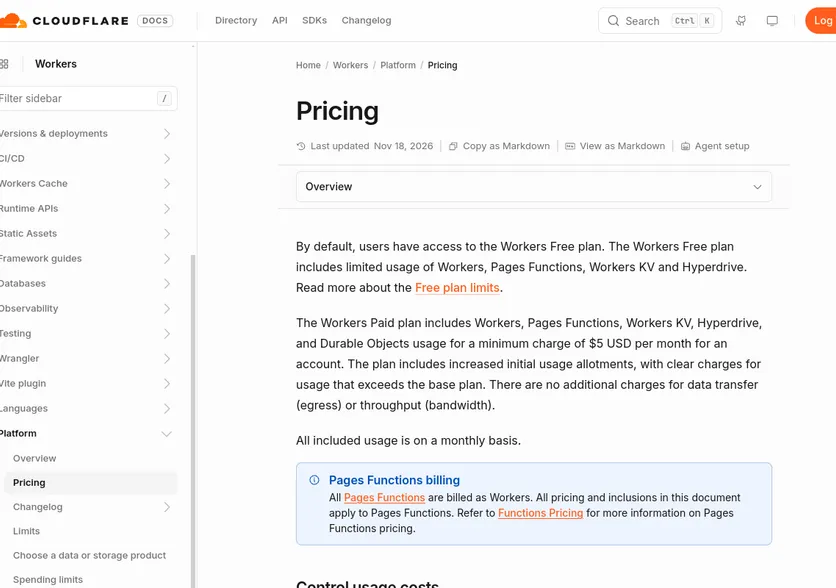
Cloudflare Workers runs code at the edge in more than 300 cities, and its static hosting through Pages costs nothing for most sites. This Cloudflare Workers Paid plan costs five dollars a month and includes ten million requests, with no charge for bandwidth on static assets. It is the pick when traffic is high and the budget is not.
What we like
- Five dollars covers ten million requests
- No egress charge on static assets
- Global edge network with fast cold starts
Watch out for
- Not a Node.js runtime, some packages fail
- Dynamic work bills by CPU time
How to try it
- Open the Cloudflare Workers pricing page and read the limits
- Deploy the React app to Pages from Git
- Add Workers for dynamic routes only where needed
3. DigitalOcean App Platform
Best for: Teams that want fixed container sizes and managed databases
Paid tool Starting price: $5/month · Basic containers start at $5 a month; a dev database adds $7 a month
Free plan: Free static sites, up to 3 apps
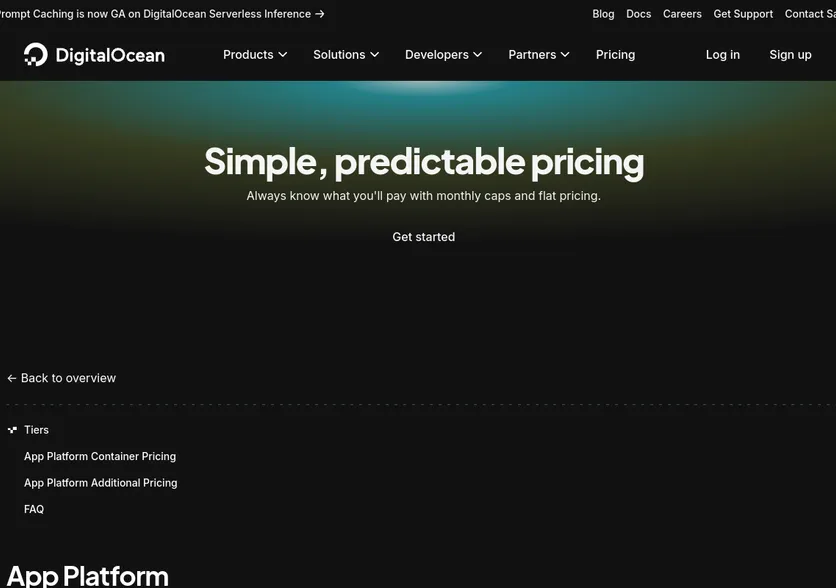
DigitalOcean App Platform turns a Git repo into a running app with a fixed monthly container price and no surprise usage bill. This DigitalOcean App Platform container starts at five dollars a month, and a small dev database adds seven dollars a month. It suits a team that already runs DigitalOcean and wants predictable pricing.
What we like
- Fixed container prices, no usage surprises
- Managed MySQL, Postgres and Redis available
- Three free static sites on every account
Watch out for
- No free container for dynamic apps
- Scaling means jumping to a bigger container
How to try it
- Open the DigitalOcean App Platform pricing page
- Connect the repo and pick the five dollar container size
- Add a dev database and deploy the app
4. Heroku
Best for: Developers who want the classic git push deploy workflow
Paid tool Starting price: $5/month · Eco dynos cost $5 a month for 1,000 shared hours; Basic dynos are $7 a month
Free plan: No free tier
Heroku invented the git push deploy, and it still offers the smoothest path from a repo to a live app for a small team. This Heroku Eco dyno costs five dollars a month for a thousand shared hours, and the cheapest Postgres plan adds five dollars a month. It fits a team that values a boring, well documented platform over the lowest possible bill.
What we like
- The smoothest git push deploy workflow
- Huge add on marketplace for every service
- Review apps spin up per pull request
Watch out for
- Eco dynos sleep after 30 minutes idle
- No free tier since November 2022
How to try it
- Open the Heroku pricing page and pick the Eco dyno
- Push the repo with git push heroku main
- Add the Essential Postgres plan for the database
5. Netlify
Best for: Jamstack teams that want flat pricing with unlimited members
Paid tool Starting price: $20/month · Pro is $20 a month flat with unlimited members and 3,000 credits a month; Personal is $9 a month
Free plan: Free plan with 300 credits a month
Netlify moved to flat workspace pricing, so a growing team pays one price no matter how many members deploy. This Netlify Pro plan costs 20 dollars a month with unlimited members and three thousand credits for builds, bandwidth and functions. It is the direct swap for a team that left Vercel because seat pricing punished growth.
What we like
- Flat 20 dollars with unlimited members
- Deploy previews on every pull request
- Forms, identity and Postgres built in
Watch out for
- Usage bills in credits that need learning
- Bandwidth overages add up fast
How to try it
- Open the Netlify pricing page and start the free plan
- Connect the repo and set the build command
- Watch the credit meter for the first month
6. Vercel
Best for: Next.js teams that want the tightest framework integration
Paid tool Starting price: $20/month · Pro is $20 per user a month and includes $20 of usage credit; Hobby is free for personal projects only
Free plan: Free Hobby plan for personal projects
Vercel builds the Next JS framework itself, so nobody integrates it more tightly, with preview comments, image optimisation and edge functions in one place. This Vercel Pro plan costs 20 dollars per user a month and includes 20 dollars of usage credit, while viewer seats are free. It is the right choice when the team is all in on Next.js and wants zero friction.
What we like
- Best Next.js integration anywhere
- Preview deployments on every pull request
- Twenty dollars of usage credit included
Watch out for
- Per seat pricing punishes large teams
- Hobby is personal use only, no client work
How to try it
- Open the Vercel pricing page and check the seat maths
- Import the repo and deploy the first preview
- Invite viewers for free and pay only for developers
7. Render
Best for: Full stack apps that need frontend, backend and database on one host
Paid tool Starting price: $25/month · Pro workspace is $25 a month flat with unlimited seats; compute starts at $7 a month per service
Free plan: Free web service, sleeps after 15 idle minutes
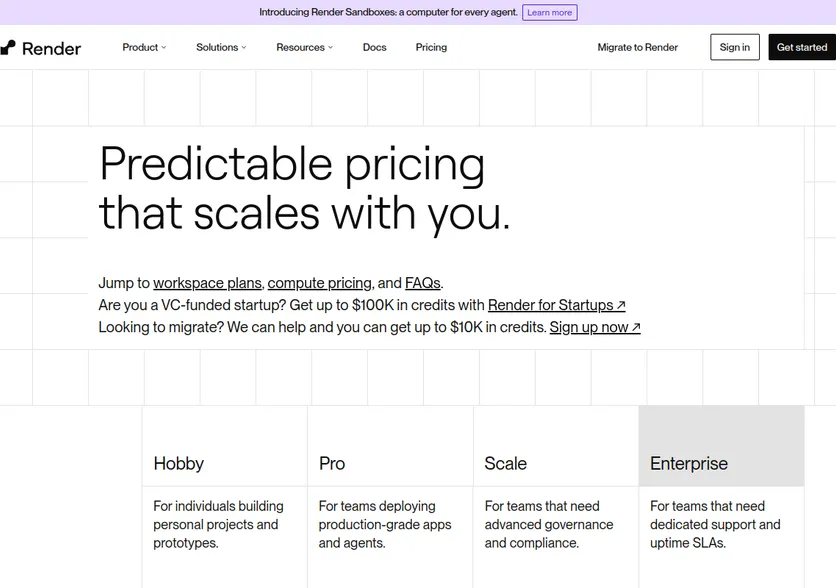
Render replaced per seat pricing with a flat workspace fee, so a whole team shares one 25 dollar a month plan and pays only for the compute each service uses. This Render Pro workspace costs 25 dollars a month, and a small web service adds about seven dollars a month. It fits a full stack app that needs a database next to the frontend.
What we like
- Flat workspace price with unlimited seats
- Managed Postgres from six dollars a month
- Autoscaling and preview environments included
Watch out for
- Free services sleep after 15 minutes idle
- Compute bills on top of the workspace fee
How to try it
- Open the Render pricing page and create a workspace
- Add the web service and a managed Postgres database
- Set the Pro workspace and deploy from Git
Prices above were checked on each vendor’s own website on Nov 26, 2026 and can change — the vendor’s page is the final word. Vendor links are editorial: nobody paid to be listed or ranked here. Vendors who want a featured listing can see how it works on our Get listed page.
How to read the price before you commit
Hosting bills split three ways, and the headline price rarely tells the whole story. Vercel charges per developer seat, so five developers cost a hundred dollars before any usage, while Netlify and Render charge a flat workspace fee with unlimited seats. Railway, Cloudflare and DigitalOcean charge for resources, so a quiet app costs almost nothing and a busy one costs more. Before choosing, count your developers, estimate your traffic, and run the free plan for a week to see the real monthly number before any card is charged.
Before you buy
- Count developer seats first, because per seat pricing multiplies with team size across the whole year.
- Check whether the free plan allows commercial use or personal projects only.
- Estimate traffic and database needs before trusting a five dollar headline price.
- Confirm preview environments are included or billed as extra services.
- Watch the first month usage meter daily so a spike never surprises you.
Official websites
Official websites of the products reviewed above. Features and prices were checked against these sites when this guide was written, and they can change, so confirm on the vendor site before you buy.
Frequently asked questions
What is the cheapest Next.js alternative?
Railway, Cloudflare Workers, DigitalOcean App Platform and Heroku all start at $5 a month, and Cloudflare Pages hosts static sites free. The cheapest pick depends on the app: Railway wins for a full stack app with a database, Cloudflare wins for a high traffic static site, and DigitalOcean wins for a team that wants a fixed container price.
Is Vercel the only host for Next.js apps?
No. Next.js apps run on Netlify, Cloudflare Pages, Railway, Render and DigitalOcean too, and many teams move to escape Vercel per seat pricing. Vercel still integrates Next.js most tightly, with preview comments and image optimisation built in. The trade off is cost: five developers pay $100 a month on Vercel against $20 flat on Netlify.
Do these platforms offer free plans?
Most do. Vercel Hobby is free for personal projects, Netlify Free includes 300 credits a month, Cloudflare Pages is free for static sites, Railway gives $1 of monthly credit, and Render offers a free web service that sleeps after 15 idle minutes. Heroku is the exception, with no free tier since November 2022.
Which platform is best for a full stack React app?
Railway and Render are the strongest full stack picks here, because both pair the frontend with a managed database on the same host. Railway bills by usage from $5 a month, while Render charges a $25 flat workspace fee plus about $7 per service. DigitalOcean App Platform is the fixed price alternative at $5 a container plus $7 for a dev database.
Why do some platforms charge per seat and others per workspace?
Per seat pricing, used by Vercel, ties the bill to team size, which is simple for a solo developer and expensive for a team of ten. Flat workspace pricing, used by Netlify and Render, charges one fee no matter how many members join. Usage pricing, used by Railway and Cloudflare, ties the bill to traffic and compute instead of people.
Shipping React apps by hand? Try free code, JSON and developer tools on Toolsvine right in your browser.
Browse Developer Tools tools