On this page
When a service goes down at 3 a.m., the alerting tool decides how fast a human responds, and Opsgenie was the default answer for years. Atlassian's shutdown of Opsgenie has pushed SRE and DevOps teams to find a new on-call home. The eight tools below were checked on their own pricing pages on November 26, 2026, and each one covers alerting, schedules and incident response in its own way. PagerDuty is our first pick — the best-known on-call platform here, with the deepest integrations and a free plan to start.
How we researched this
We started with the on-call and incident response tools that SRE and DevOps teams actually buy, then read each price on the vendor pricing page on November 26, 2026. We judged them on alerting, schedules, integrations and whether the price fits a five-person team or a whole engineering org. We kept only tools with a published dollar price and dropped any tool whose price we could not verify on its own site.
Compare the tools
| Name | Best for | Starting price | Free plan | |
|---|---|---|---|---|
 PagerDuty | Engineering orgs that want the safest default for alerting | $21/user/month | Free plan | Visit |
 Squadcast | DevOps teams that want a modern Opsgenie replacement | $15/user/month | 14-day free trial | Visit |
 Zenduty | Small SRE teams that need on-call on a tight budget | $6/user/month | 14-day free trial | Visit |
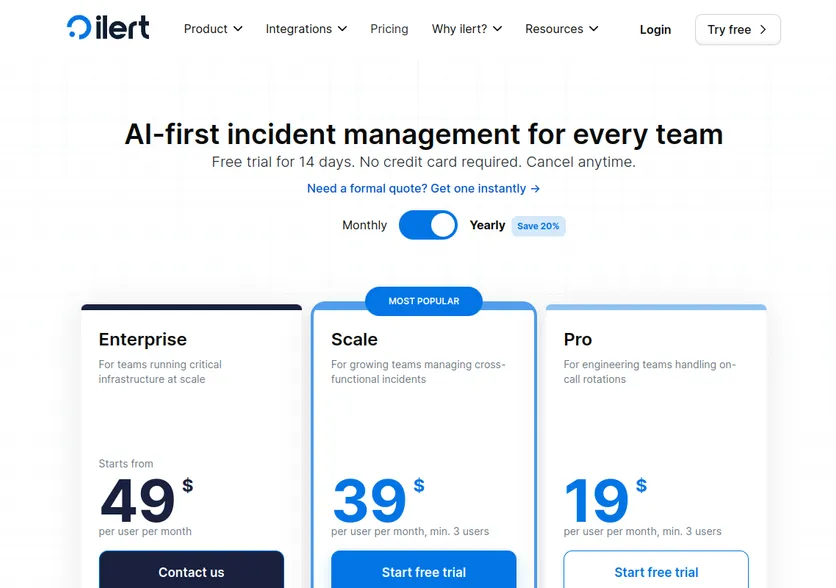
 ilert | Teams that run their own monitoring and want fast routing | $19/user/month | Free plan up to 5 users; 14-day free trial | Visit |
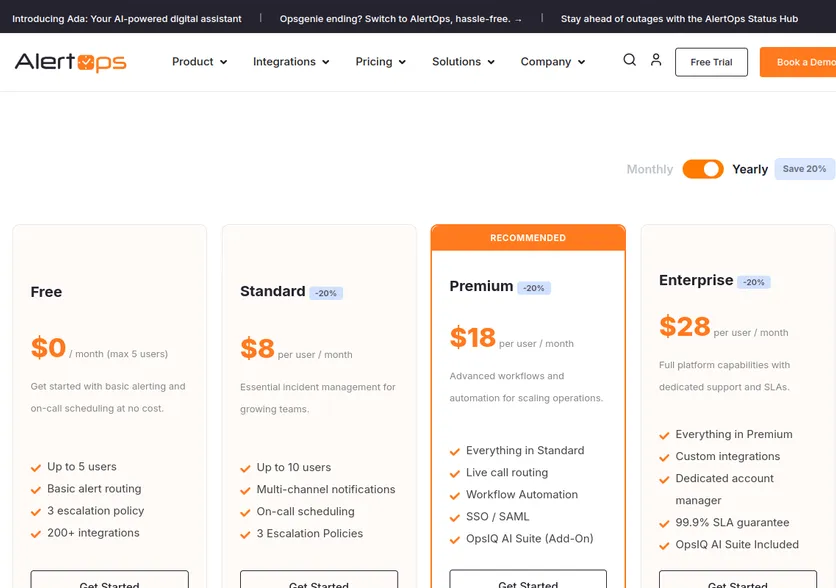
 AlertOps | Small teams that want alerting without complexity | $10/user/month | Free plan up to 5 users | Visit |
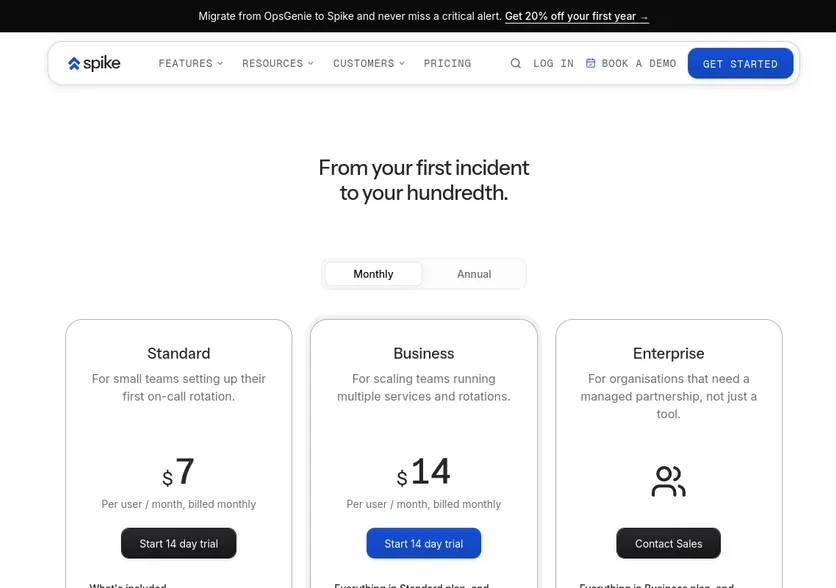
 Spike.sh | Teams moving off Opsgenie that want a familiar switch | $7/user/month | 14-day free trial | Visit |
 SIGNL4 | Teams that want reliable mobile-first alerting | $9/user/month | Free Starter plan up to 5 users | Visit |
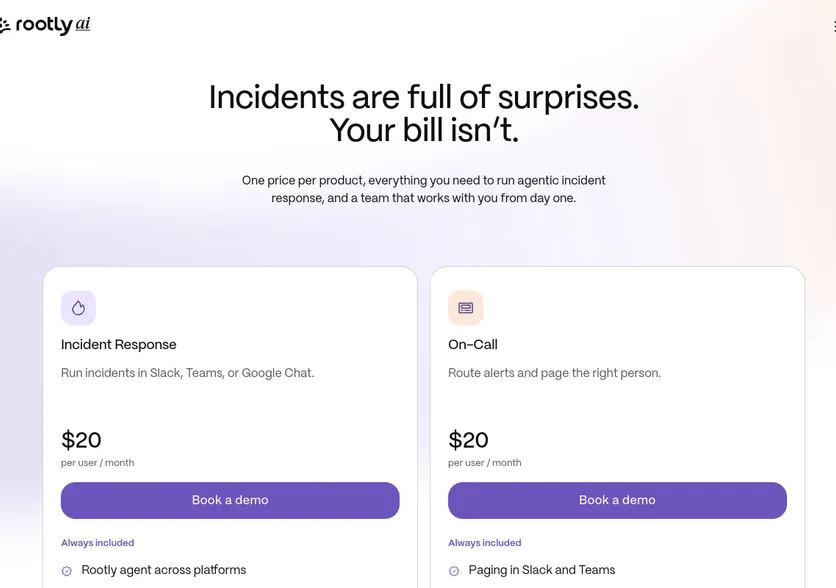
 Rootly | Growing orgs that want on-call today and incidents tomorrow | $20/user/month | No free plan listed on the pricing page | Visit |
The Opsgenie alternatives, compared
1. PagerDuty
Best for: Engineering orgs that want the safest default for alerting
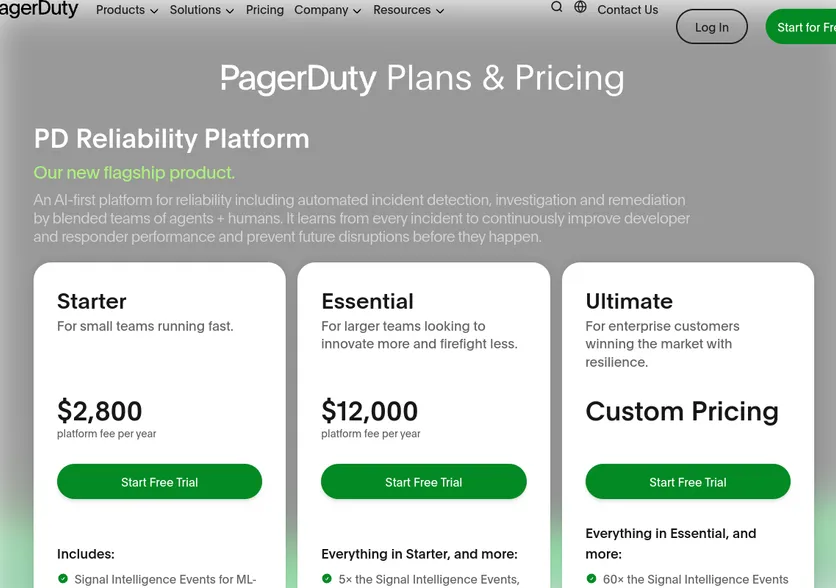
Paid tool Starting price: $21/user/month · Incident Management Professional plan; free plan available; PagerDuty Reliability Platform is from $2,800 a year
Free plan: Free plan
PagerDuty is the on-call platform most engineers already know, with deep integrations into monitoring, chat and ticketing tools. This PagerDuty plan costs $21 per user a month for Incident Management Professional and adds a free plan for small teams. It suits an engineering org that wants the safest default for alerting, with the largest integration library in the business.
What we like
- Largest integration library in the business
- Free plan to start small
- Incident Management Professional at $21 a user a month
Watch out for
- Reliability Platform starts at $2,800 a year
- Professional is the mid tier, so advanced features cost more
How to try it
- Open the PagerDuty pricing page and start with the free plan
- Connect your monitoring tools and build a schedule
- Test an alert end to end before the first real page
2. Squadcast
Best for: DevOps teams that want a modern Opsgenie replacement
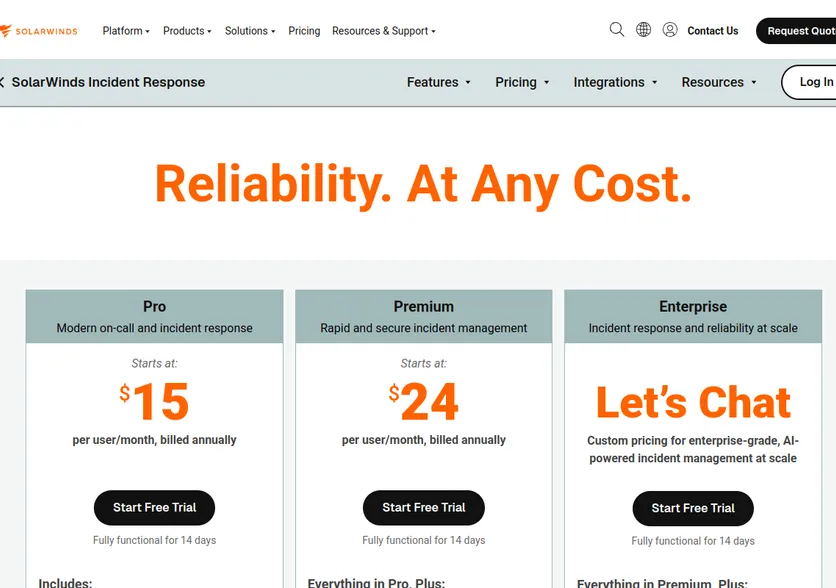
Paid tool Starting price: $15/user/month · Pro plan, annual billing; now SolarWinds Incident Response; Premium is $24 a user a month; 14-day trial
Free plan: 14-day free trial
Squadcast is now part of SolarWinds, and it pairs on-call schedules with incident response in one clean interface. This Squadcast plan costs $15 per user a month for Pro on annual billing and covers schedules, alerting and status pages. It fits a DevOps team that wants a modern Opsgenie replacement without a big contract.
What we like
- Clean modern interface for schedules and incidents
- Pro at $15 a user a month on annual billing
- 14-day trial to test before paying
Watch out for
- Premium at $24 a user a month is a big jump
- Now SolarWinds, so the brand and roadmap changed
How to try it
- Open the Squadcast pricing page and start the 14-day trial
- Import your on-call schedule from Opsgenie
- Set up a status page and test the alert flow
3. Zenduty
Best for: Small SRE teams that need on-call on a tight budget
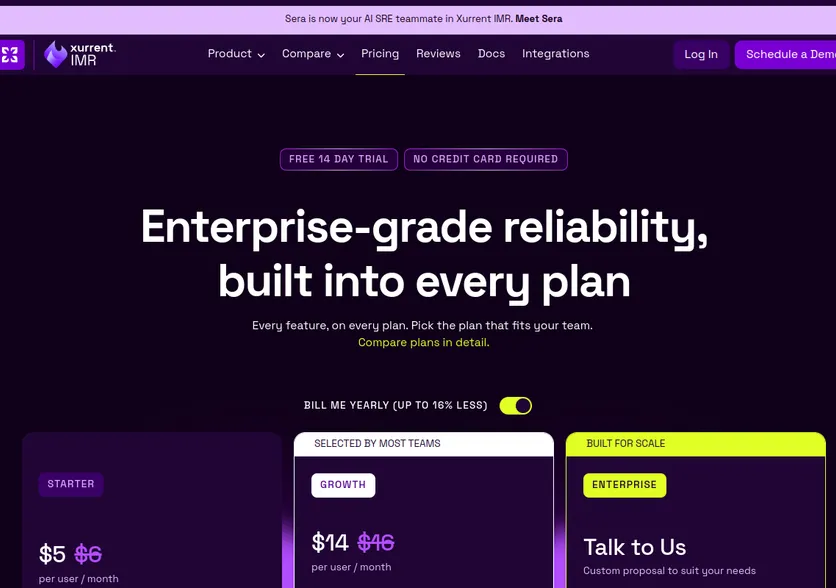
Paid tool Starting price: $6/user/month · Starter plan, yearly billing; now Xurrent IMR; Growth is $16 a user a month; 14-day free trial
Free plan: 14-day free trial
Zenduty is the cheapest paid on-call tool on this list, and it now runs under the Xurrent IMR brand. This Zenduty plan costs $6 per user a month for Starter on yearly billing and covers schedules, alerting and incident timelines. It suits a small SRE team that needs real on-call coverage on a tight budget.
What we like
- Cheapest paid plan here at $6 a user a month
- 14-day free trial to test before paying
- Growth at $16 a user a month adds room
Watch out for
- Now Xurrent IMR, so the brand changed
- Growth at $16 a user a month is nearly triple Starter
How to try it
- Open the Zenduty pricing page and start the 14-day trial
- Build a rotation for your on-call team
- Test an alert and check the incident timeline
4. ilert
Best for: Teams that run their own monitoring and want fast routing
Paid tool Starting price: $19/user/month · Pro plan, annual billing, three user minimum; Scale is from $49 a user a month; free plan up to 5 users; 14-day trial
Free plan: Free plan up to 5 users; 14-day free trial
ilert connects alerting to the tools engineers already live in, with strong integrations for Prometheus, Grafana and chat. This ilert plan costs $19 per user a month for Pro on annual billing, with a three-user minimum, and adds a free plan for up to five users. It fits a team that runs its own monitoring and wants alerts routed fast.
What we like
- Strong integrations for Prometheus and Grafana
- Free plan up to five users
- Pro at $19 a user a month with a three-user minimum
Watch out for
- Pro needs a three-user minimum
- Scale starts at $49 a user a month
How to try it
- Open the ilert pricing page and start with the free plan
- Connect Prometheus or Grafana as an alert source
- Set up a Pro schedule when the team grows past five users
5. AlertOps
Best for: Small teams that want alerting without complexity
Paid tool Starting price: $10/user/month · Standard plan; Premium is $22 and Enterprise is $34 a user a month; free plan up to 5 users; annual billing saves up to 20%
Free plan: Free plan up to 5 users
AlertOps keeps on-call simple, with schedules, escalations and alert routing at a flat per-user price. This AlertOps plan costs $10 per user a month for Standard and adds a free plan for up to five users. It suits a small team that wants alerting without the complexity of a full incident platform.
What we like
- Simple $10 a user a month Standard plan
- Free plan up to five users
- Annual billing saves up to 20%
Watch out for
- Premium at $22 and Enterprise at $34 add up fast
- Smaller brand with fewer integrations than PagerDuty
How to try it
- Open the AlertOps pricing page and start with the free plan
- Build a schedule and an escalation policy
- Send a test alert and confirm the routing works
6. Spike.sh
Best for: Teams moving off Opsgenie that want a familiar switch
Paid tool Starting price: $7/user/month · Standard plan, monthly billing; Business is $14 a user a month; 20% off the first year for Opsgenie switchers; 14-day trial
Free plan: 14-day free trial
Spike is the on-call tool that courts Opsgenie switchers directly, with a discount for teams that migrate. This Spike plan costs $7 per user a month for Standard on monthly billing and covers schedules, alerting and incident timelines. It fits a team moving off Opsgenie that wants the switch to feel familiar.
What we like
- 20% off the first year for Opsgenie switchers
- Low $7 a user a month Standard price
- 14-day trial to test before paying
Watch out for
- Business at $14 a user a month is double Standard
- Smaller team behind the product, so check support
How to try it
- Open the Spike.sh pricing page and start the 14-day trial
- Import your Opsgenie schedule and claim the switcher discount
- Run one full on-call rotation before you commit
7. SIGNL4
Best for: Teams that want reliable mobile-first alerting
Paid tool Starting price: $9/user/month · Notify and Connect plan; Optimize is $15 and Maximize is $25 a user a month on annual billing; Starter is free up to 5 users; USD pricing for US, Canada and the Americas
Free plan: Free Starter plan up to 5 users
SIGNL4 turns phone alerts into a mobile-first on-call workflow, with push notifications that cut through the noise. This SIGNL4 plan costs $9 per user a month for Notify and Connect and adds a free Starter plan for up to five users. It suits a team that wants reliable mobile alerting with US dollar pricing.

What we like
- Mobile-first alerting that cuts through noise
- Free Starter plan up to five users
- US dollar pricing for US, Canada and the Americas
Watch out for
- Optimize at $15 and Maximize at $25 cost more
- Annual billing only for the higher tiers
How to try it
- Open the SIGNL4 pricing page and start with the free Starter plan
- Install the mobile app for up to five users
- Send a test alert and check the push notification
8. Rootly
Best for: Growing orgs that want on-call today and incidents tomorrow
Paid tool Starting price: $20/user/month · On-Call plan; Incident Response is also $20 a user a month; startup program offers up to 50% off
Free plan: No free plan listed on the pricing page
Rootly is the incident response platform that starts with on-call and grows into full incident management. This Rootly plan costs $20 per user a month for On-Call, with Incident Response at the same price, and adds a startup program with up to 50% off. It fits a growing engineering org that wants on-call today and full incident response tomorrow.
What we like
- On-Call and Incident Response both $20 a user a month
- Startup program offers up to 50% off
- Grows from on-call into full incident management
Watch out for
- No free plan listed on the pricing page
- Startup discount ends, so budget the full price
How to try it
- Open the Rootly pricing page and start the On-Call plan
- Set up schedules and an incident response runbook
- Ask about the startup program if your team qualifies
Prices above were checked on each vendor’s own website on Nov 26, 2026 and can change — the vendor’s page is the final word. Vendor links are editorial: nobody paid to be listed or ranked here. Vendors who want a featured listing can see how it works on our Get listed page.
What Opsgenie alternatives cost in 2026
On-call tools on this list run from $6 a user a month to $21 a user a month, and the price mostly reflects integration depth and incident features. The cheapest tools cover schedules and alerting, while the top tier adds full incident response and automation. Before you buy, count your on-call responders, list the monitoring tools you already run, and check whether the plan charges per responder or per user. A $6 plan looks cheap until the whole engineering org needs a seat, so price the full team first.
Before you buy
- Count your on-call responders first, because per-user pricing scales with the whole team.
- List the monitoring tools you already run, because integrations decide how fast alerts route.
- Check whether the price is per responder or per user, since the two models bill very differently.
- Test an alert end to end on the trial, because a missed page costs more than any monthly fee.
- Ask about the minimums: ilert Pro needs three users, and Spike.sh offers 20% off for switchers.
Official websites
Official websites of the products reviewed above. Features and prices were checked against these sites when this guide was written, and they can change, so confirm on the vendor site before you buy.
Frequently asked questions
What is the best Opsgenie alternative for SREs in 2026?
PagerDuty is our first pick because it is the best-known on-call platform, with the deepest integrations and a free plan to start. Zenduty is the cheapest paid plan at $6 a user a month for small teams. Spike.sh is the best pick for teams moving off Opsgenie, with 20% off the first year for switchers.
How much do Opsgenie alternatives cost?
Prices here run from $6 a user a month for Zenduty Starter to $21 a user a month for PagerDuty Professional. Most tools sit between $7 and $20 a user a month at the entry tier, including Spike.sh, AlertOps and Rootly. Free plans cover up to five users on ilert, AlertOps and SIGNL4, so small teams can start free.
Why is everyone leaving Opsgenie?
Atlassian shut down Opsgenie, so every team that relied on it must move. The tools on this list cover the same jobs: on-call schedules, alerting and incident response. Spike.sh offers a discount for Opsgenie switchers, and most tools import schedules, so the move takes days rather than weeks.
Do I need a separate incident response tool too?
It depends on the size of your team. On-call tools like PagerDuty, Rootly and Squadcast cover incident response as well as alerting. Small teams can run on one tool, while larger orgs may add a dedicated incident platform later. Start with on-call coverage, then add incident management when the team outgrows the basics.
Can I try an on-call tool before paying?
PagerDuty, ilert, AlertOps and SIGNL4 all offer free plans for small teams. Squadcast, Zenduty and Spike.sh offer 14-day free trials. Start any trial with a real on-call rotation and a test alert, because a tool that misses a page costs far more than the monthly fee it saves.
Need the everyday developer jobs too? Format JSON, encode text and test regex free on Toolsvine right in your browser.
Browse Developer Tools tools