On this page
Enterprise databases bill by usage, not by seat, so the price depends on how much compute and storage your workload actually uses. The seven platforms below cover warehouses, documents, caching and managed relational engines, from five dollars a month to two dollars a credit, and every price was checked on the vendor site on November 26, 2026. Most offer a free tier or trial, so test with your own data before you commit. Snowflake is our first pick — the most flexible warehouse for enterprise analytics.
How we researched this
We started with the database platforms enterprises actually run, then read each price on the vendor pricing page on November 26, 2026 and noted the free tier or free trial each one carries. We judged them for an enterprise team that needs speed, uptime and predictable costs at scale, and we kept only tools with a published price. We dropped quote-only vendors and tools whose price we could not verify on the vendor site.
Compare the tools
| Name | Best for | Starting price | Free plan | |
|---|---|---|---|---|
 Snowflake | Enterprises that need a cloud data warehouse with no servers to manage | $2.00/credit | Free 30-day trial with trial credits | Visit |
 MongoDB Atlas | Enterprises that need a managed document database with global clusters | $57/month | Free M0 cluster available | Visit |
 Databricks | Enterprises running large analytics and machine learning workloads | $0.55/DBU | 14-day free trial | Visit |
 Redis Cloud | Enterprises that need sub-millisecond caching and real-time data | $5/month | Free 30 MB plan available | Visit |
 Couchbase Capella | Enterprises that need a multi-model NoSQL database with mobile sync | $0.15/hr per node | Free tier with a single-node cluster | Visit |
 Amazon Aurora | Enterprises that want MySQL or PostgreSQL compatibility at cloud scale | $0.26/hr | Free trial available through the AWS free tier | Visit |
 Azure SQL Database | Enterprises standardized on Microsoft tooling and SQL Server skills | $0.52/vCore-hour | Free trial available through Azure free account | Visit |
The database software for enterprise, compared
1. Snowflake
Best for: Enterprises that need a cloud data warehouse with no servers to manage
Paid tool Starting price: $2.00/credit · Standard edition on-demand credit price; Enterprise is three dollars and Business Critical is four dollars a credit; storage is extra
Free plan: Free 30-day trial with trial credits
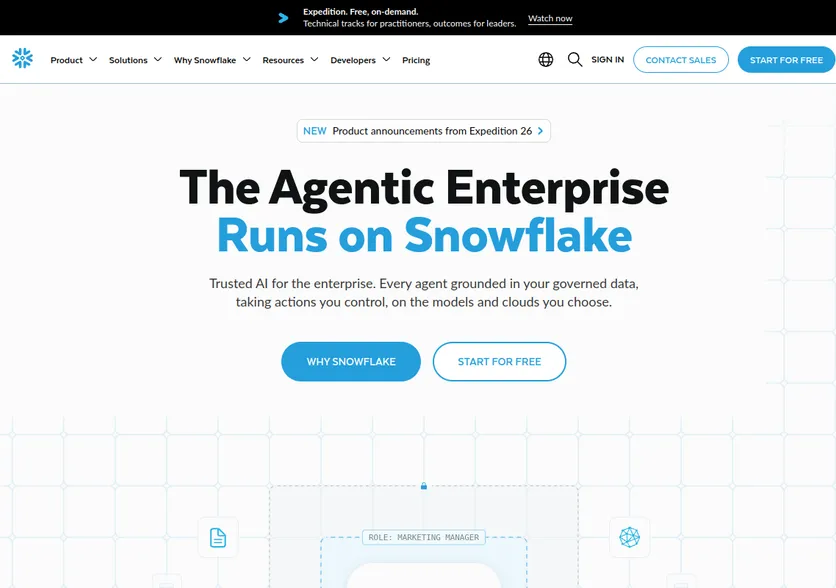
Snowflake is a cloud data platform that separates storage from compute, so teams can scale warehouses up and down without touching hardware. This Snowflake Standard edition costs two dollars per credit on demand, with higher editions adding governance and compliance for regulated industries. An enterprise that runs heavy analytics across many teams will value the elastic scaling more than any single feature.
What we like
- Storage and compute scale separately
- No servers or patching to manage
- Strong sharing across teams and partners
Watch out for
- Usage bills can surprise without monitors
- Credit prices vary by region
How to try it
- Open the Snowflake pricing guide and pick your region
- Start the free trial and load a sample data set
- Run a heavy query and watch the credits it uses
2. MongoDB Atlas
Best for: Enterprises that need a managed document database with global clusters
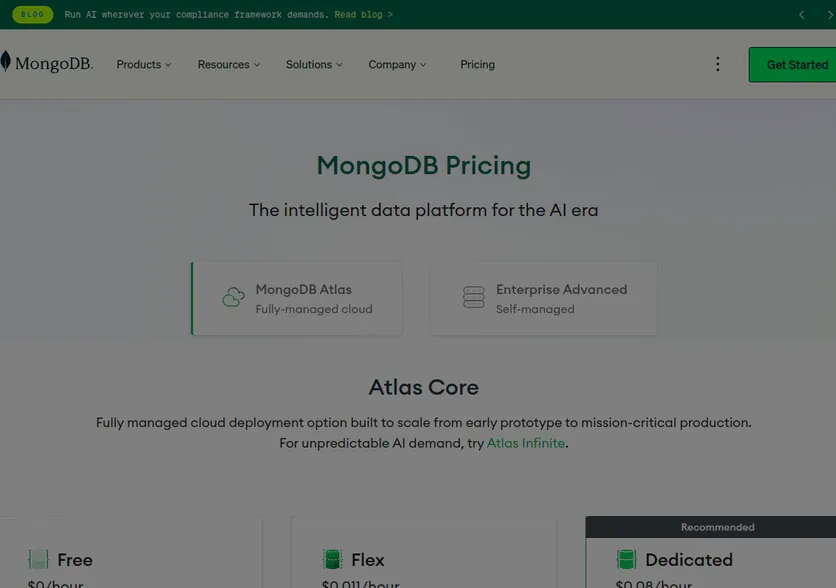
Paid tool Starting price: $57/month · M10 dedicated cluster starting price; the hourly base is eight cents, and MongoDB docs round the monthly figure to sixty dollars
Free plan: Free M0 cluster available
MongoDB Atlas is the managed cloud version of MongoDB, with dedicated clusters, backups and global replication handled for you. This MongoDB Atlas M10 dedicated cluster starts at fifty-seven dollars a month, and larger tiers add more storage, memory and processing power. An enterprise with document data and teams in several regions will value the managed scaling and the free cluster for testing.
What we like
- Managed backups and global clusters
- Free cluster for learning and testing
- Strong search and vector features
Watch out for
- Monthly figure is rounded by MongoDB
- Costs grow fast with storage and backups
How to try it
- Open the MongoDB Atlas pricing page and compare the tiers
- Create a free cluster and load your own documents
- Test a query with an index and check the speed
3. Databricks
Best for: Enterprises running large analytics and machine learning workloads
Paid tool Starting price: $0.55/DBU · All-Purpose Compute rate per Databricks Unit; Jobs Compute is lower and serverless is higher; cloud instance costs are extra on classic compute
Free plan: 14-day free trial
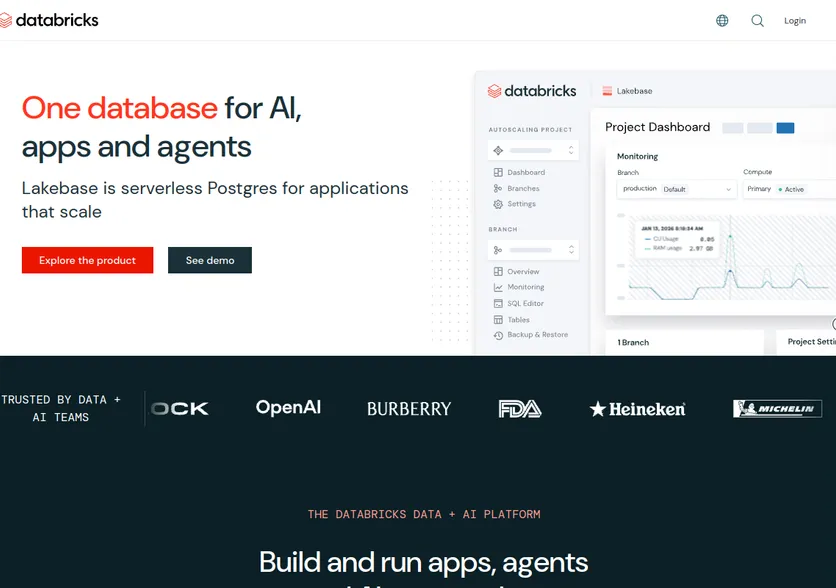
Databricks is a unified platform for data engineering, analytics and machine learning, built on open formats and Apache Spark. This Databricks All-Purpose Compute rate is fifty-five cents per Databricks Unit, with Jobs Compute lower and serverless higher. An enterprise that trains models and runs big pipelines on the same platform will value the shared workspace more than any single tool.
What we like
- Analytics and machine learning in one place
- Open formats with no lock-in
- Strong notebooks for data teams
Watch out for
- Pricing is hard to predict at scale
- Classic compute adds cloud instance costs
How to try it
- Open the Databricks pricing page and pick a compute type
- Start the free trial and run a sample notebook
- Compare Jobs Compute and All-Purpose rates for your workload
4. Redis Cloud
Best for: Enterprises that need sub-millisecond caching and real-time data
Paid tool Starting price: $5/month · Essentials plan starting price for a small database; larger sizes and Pro plans cost more
Free plan: Free 30 MB plan available
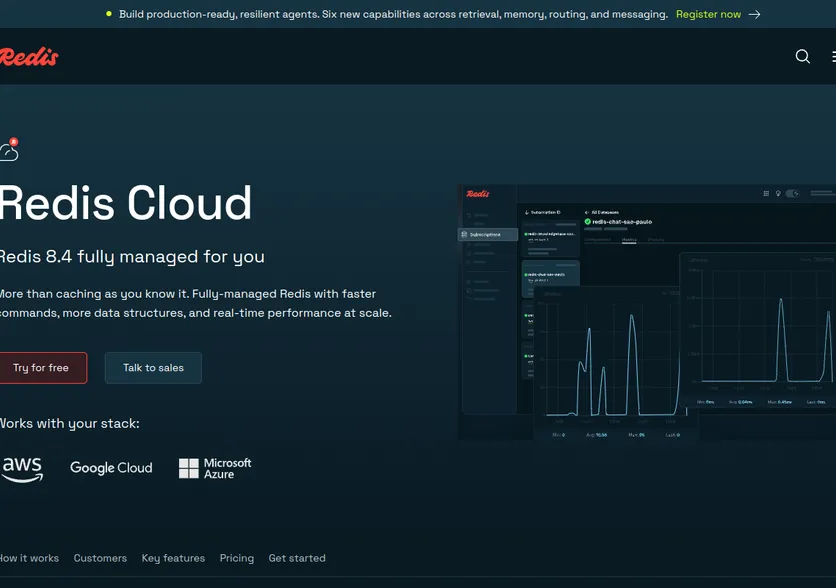
Redis Cloud is the managed version of Redis, built for caching, sessions and real-time features that must answer in milliseconds. This Redis Cloud Essentials plan starts at five dollars a month for a small database, with larger sizes and Pro plans for production workloads. An enterprise with a busy app that reads the same data thousands of times a second will value the speed more than the storage.
What we like
- Sub-millisecond reads for hot data
- Simple fixed monthly pricing
- Free plan for learning and testing
Watch out for
- Essentials caps throughput and connections
- Not a full replacement for a disk database
How to try it
- Open the Redis Cloud pricing page and pick a plan size
- Create a free database and connect your app
- Cache a hot query and measure the speedup
5. Couchbase Capella
Best for: Enterprises that need a multi-model NoSQL database with mobile sync
Paid tool Starting price: $0.15/hr per node · Basic tier starting price per node per hour; Developer Pro and Enterprise tiers cost more per node
Free plan: Free tier with a single-node cluster
Couchbase Capella is a managed NoSQL database that handles documents, search, analytics and mobile sync in one platform. This Couchbase Capella Basic tier starts at fifteen cents per node per hour, with higher tiers adding uptime guarantees and enterprise support. An enterprise with mobile apps that must work offline will value the built-in sync more than any single feature.
What we like
- Documents, search and sync in one platform
- Per-node hourly pricing is predictable
- Free tier for prototyping
Watch out for
- Node costs add up with cluster size
- Smaller community than MongoDB
How to try it
- Open the Couchbase Capella pricing page and pick a tier
- Start a free cluster and load sample data
- Test a query and a full-text search on the same data
6. Amazon Aurora
Best for: Enterprises that want MySQL or PostgreSQL compatibility at cloud scale
Paid tool Starting price: $0.26/hr · Provisioned db.r6g.large instance price for Aurora Standard; storage and input-output charges are extra
Free plan: Free trial available through the AWS free tier
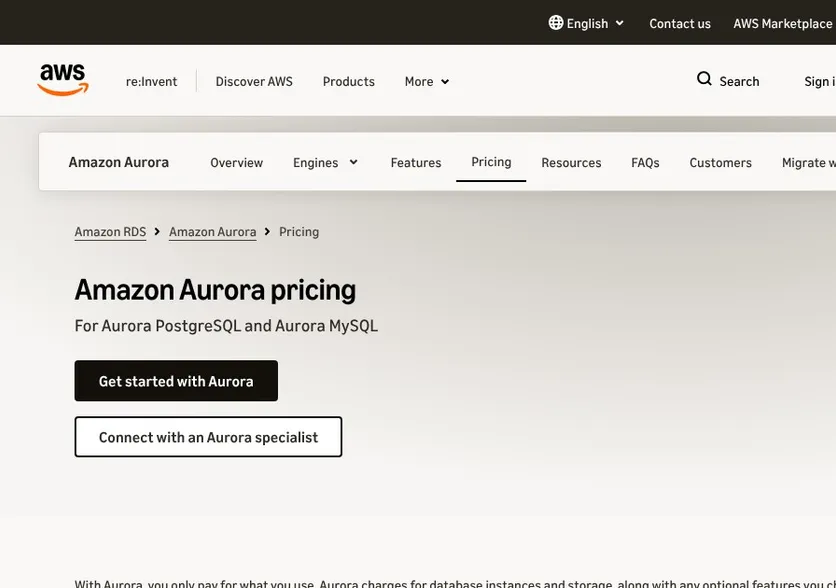
Amazon Aurora is a managed relational database from Amazon Web Services, compatible with MySQL and PostgreSQL and built for cloud scale. This Amazon Aurora provisioned instance price is twenty-six cents an hour for a memory-optimized instance, with storage and input-output charges on top. An enterprise already running on Amazon Web Services will value the familiar engines with far less admin work.
What we like
- MySQL and PostgreSQL compatibility built in
- Scales storage automatically as data grows
- Deep integration with Amazon Web Services
Watch out for
- Instance price is from a 2023 AWS post
- Storage and input-output add to the bill
How to try it
- Open the Aurora pricing page and pick an instance size
- Launch a test cluster with your own schema
- Run a heavy query and check the storage bill
7. Azure SQL Database
Best for: Enterprises standardized on Microsoft tooling and SQL Server skills
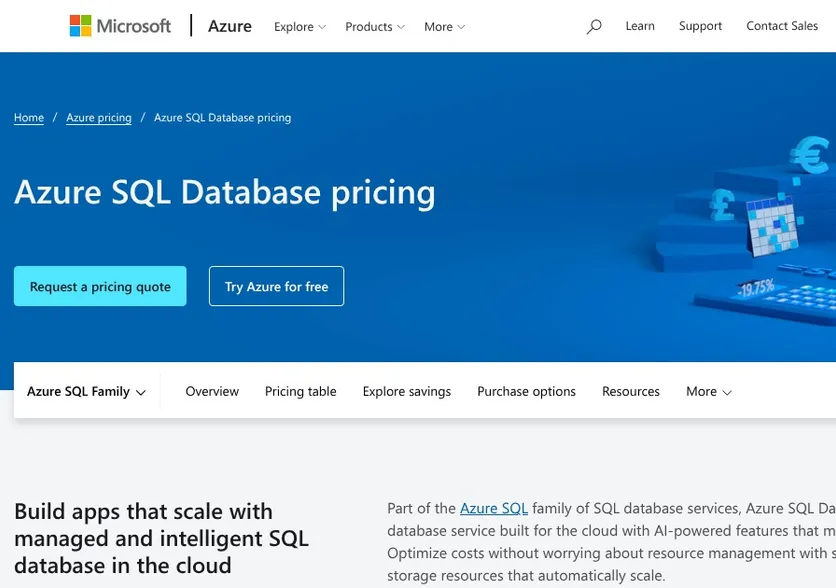
Paid tool Starting price: $0.52/vCore-hour · General Purpose Standard-series pay-as-you-go compute; the pricing page lists about fifty-two cents per vCore-hour; storage is extra
Free plan: Free trial available through Azure free account
Azure SQL Database is the managed SQL Server database on Microsoft Azure, with automatic patching, backups and scaling built in. This Azure SQL Database General Purpose tier costs about fifty-two cents per virtual core per hour on pay-as-you-go pricing, with storage billed separately. An enterprise with SQL Server skills and Microsoft tooling will value the familiar language with no server to run.
What we like
- Familiar SQL Server language and tools
- Automatic patching and backups
- Scales from half a core to eighty cores
Watch out for
- Pay-as-you-go costs need monitoring
- Storage is billed on top of compute
How to try it
- Open the Azure SQL pricing page and pick a tier
- Create a test database and load your schema
- Run a query and check the compute and storage charges
Prices above were checked on each vendor’s own website on Nov 26, 2026 and can change — the vendor’s page is the final word. Vendor links are editorial: nobody paid to be listed or ranked here. Vendors who want a featured listing can see how it works on our Get listed page.
What enterprise database software costs in 2026
Most enterprises pay by usage, so the headline rate is only the start, and this list runs from five dollars a month to two dollars a credit. The cheapest rate is not always the cheapest bill, because storage, backups and data transfer add to the total, while a cluster you can pause saves money overnight. The headline rate each vendor shows on its own pricing page is the number in the table above, checked on November 26, 2026.
Start with the free tier or trial on two platforms and run your own queries through each, from a simple lookup to a heavy report. Compare how fast the results return, how the bill grows with load, and whether the dashboard shows costs clearly. Pick the platform your team can monitor and afford at real scale, because a database that surprises the finance team is a problem.
Before you buy
- Model your real workload first, because usage pricing can beat a flat fee or cost far more.
- Check the storage charge, because Snowflake and Azure bill storage on top of compute.
- Test the free tier or trial, because a small cluster shows real speed before you commit.
- Confirm the region price, because Snowflake credits cost more outside the US.
- Compare pause and scale options, because a cluster you can switch off saves money overnight.
Official websites
Official websites of the products reviewed above. Features and prices were checked against these sites when this guide was written, and they can change, so confirm on the vendor site before you buy.
Frequently asked questions
Which database software is best for enterprise use in 2026?
Snowflake, at two dollars a credit on Standard, is the safest default for analytics because it separates storage from compute and scales without servers. MongoDB Atlas wins for document data at fifty-seven dollars a month for a dedicated cluster, while Databricks is the pick for teams that run analytics and machine learning on one platform. Redis Cloud is the cheapest start here at five dollars a month for caching.
How much does enterprise database software cost?
There is no single monthly price, because most enterprise databases bill by usage. Snowflake charges two dollars a credit, Databricks charges fifty-five cents per Databricks Unit, and Aurora charges twenty-six cents an hour for a mid-size instance. Fixed-price starts exist too, with Redis Cloud from five dollars a month and MongoDB Atlas from fifty-seven dollars a month.
Is there a free enterprise database worth using?
Yes, MongoDB Atlas offers a free cluster, Redis Cloud offers a free thirty-megabyte plan, and Couchbase Capella offers a free single-node cluster. Snowflake and Databricks offer free trials instead, and Azure and Amazon Web Services offer free tiers for new accounts. A free tier suits testing and learning, while production needs a paid plan.
Snowflake vs MongoDB Atlas vs Databricks — which should I pick?
Snowflake wins for analytics and warehousing, MongoDB Atlas wins for document data with global clusters, and Databricks wins when analytics and machine learning share one platform. Aurora and Azure SQL Database win for teams that want familiar relational engines with managed scaling. Pick the engine that matches your data shape, not the brand.
What should I look for in database software for enterprise?
Look for managed backups, automatic scaling, security controls and a price model you can predict, plus support that answers fast when production breaks. Test the free tier or trial with your own data and queries before you commit. The best database is the one your team can run, monitor and afford at your real workload.
Need everyday developer help too? Try Toolsvine's free developer tools right in your browser.
Browse Developer Tools tools