On this page
A startup ships fast or it dies, and testing is usually the first thing that gets skipped when the release date slips. TestMu AI is the pick that makes testing cheap enough to keep: live cross-browser testing from $15 a month, with a free tier for the first runs. This guide compares seven software testing tools for startups, from a $15-a-month browser grid to a $47-a-user test management platform, with live 2026 prices, free plans and trials, so a small team can test like a big one without the big bill.
How we researched this
We checked the pricing page of every vendor on this list on November 26, 2026, and kept only tools that publish a real dollar price. Each tool had to fit a startup team: a low entry price, a free plan or trial, setup in hours rather than weeks, and pricing that scales with the team instead of demanding an enterprise contract, and we compared entry prices, free limits and how the bill grows with usage.
Compare the tools
| Name | Best for | Starting price | Free plan | |
|---|---|---|---|---|
 TestMu AI | Startups that want the cheapest cloud browser grid with a free tier | $15/month | Free plan | Visit |
 BrowserStack | Startups that want the widest browser and device coverage available | $29/month | Free trial | Visit |
 Sauce Labs | Startups in regulated industries that need compliance and analytics | $39/month | 28-day free trial | Visit |
 TestRail | QA teams that want the category-standard test case management tool | $39/user/month | 30-day free trial | Visit |
 Qase | Modern teams that want clean test management with AI test creation | $35/user/month | Free plan | Visit |
 Testmo | Small teams that want manual and automated results in one flat plan | $59/month | Free trial | Visit |
 PractiTest | Teams that want end-to-end test management with regional data centers | $47/user/month | Free trial | Visit |
The testing tools, compared
1. TestMu AI
Best for: Startups that want the cheapest cloud browser grid with a free tier
Paid tool Starting price: $15/month · Live virtual testing from $15 a month billed annually; real-device live testing from $39 a month; automation from $29 a month
Free plan: Free plan
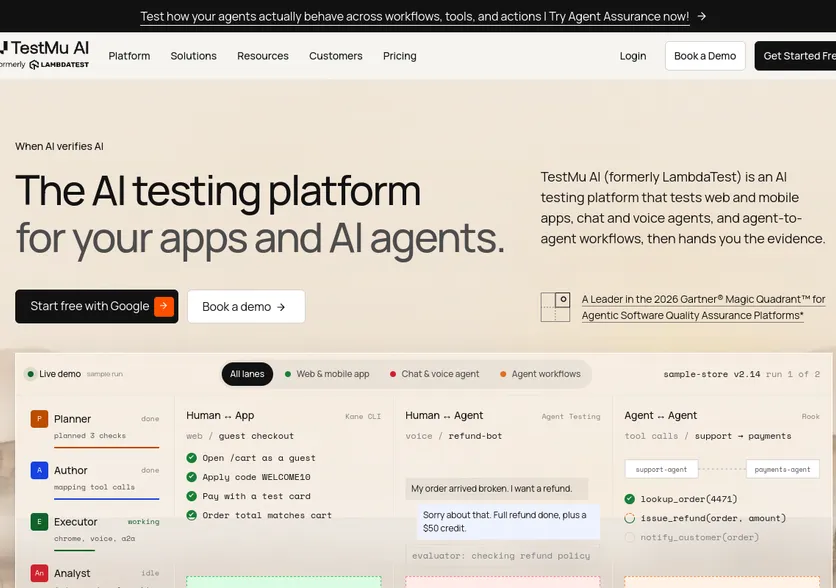
TestMu AI, formerly LambdaTest, runs web and mobile tests on thousands of browser and device combinations without the startup buying a device lab. This TestMu AI virtual live plan starts at $15 a month billed annually, with a free tier for the first automation minutes and real-device sessions. It is the pick when the budget is tight and the product still has to work on real phones.
What we like
- Cheapest entry price on this list
- Free tier for first runs
- Real devices plus emulators included
Watch out for
- Rebrand from LambdaTest may confuse procurement
- Real-device automation costs much more
How to try it
- Open the TestMu AI pricing page and start the free tier
- Pick a browser and device combination for a live session
- Run the first automated suite and check the results
2. BrowserStack
Best for: Startups that want the widest browser and device coverage available
Paid tool Starting price: $29/month · Live Desktop from $29 a month billed annually; Live Desktop and Mobile $39 a month; Automate from $175 a month for desktop and mobile
Free plan: Free trial
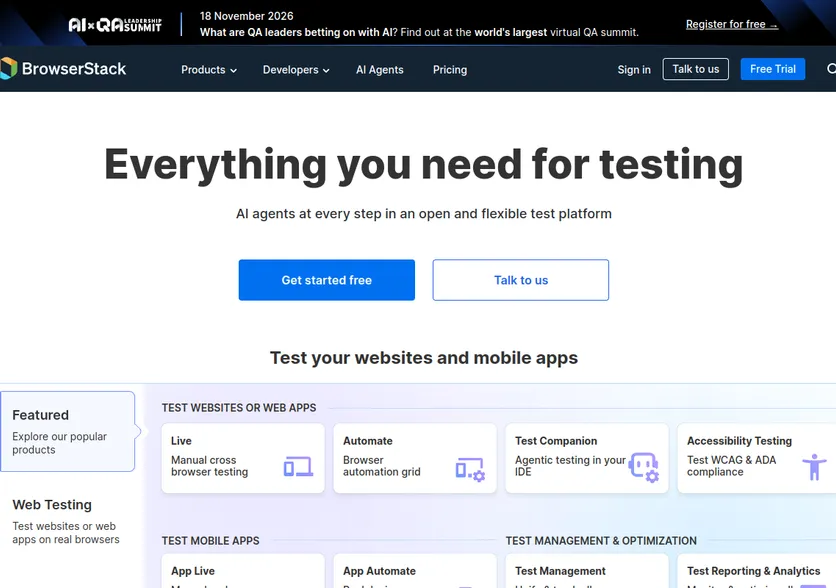
BrowserStack is the largest cross-browser testing cloud, with thousands of desktop browsers and real mobile devices on demand. This BrowserStack Live Desktop plan starts at $29 a month billed annually for manual testing on desktop browsers. It fits a startup that needs the widest coverage matrix and wants the default name every hiring QA engineer already knows.
What we like
- Largest device and browser coverage
- Real devices only, no emulators
- Free trial on every product
Watch out for
- Automation starts much higher than Live
- Per-parallel pricing rises steeply
How to try it
- Open the BrowserStack pricing page and start the trial
- Choose a desktop browser for a live test session
- Add Automate later when the suite needs parallel runs
3. Sauce Labs
Best for: Startups in regulated industries that need compliance and analytics
Paid tool Starting price: $39/month · Live Testing $39 a month billed annually; Virtual Device Cloud $149 a month; Real Device Cloud $199 a month
Free plan: 28-day free trial
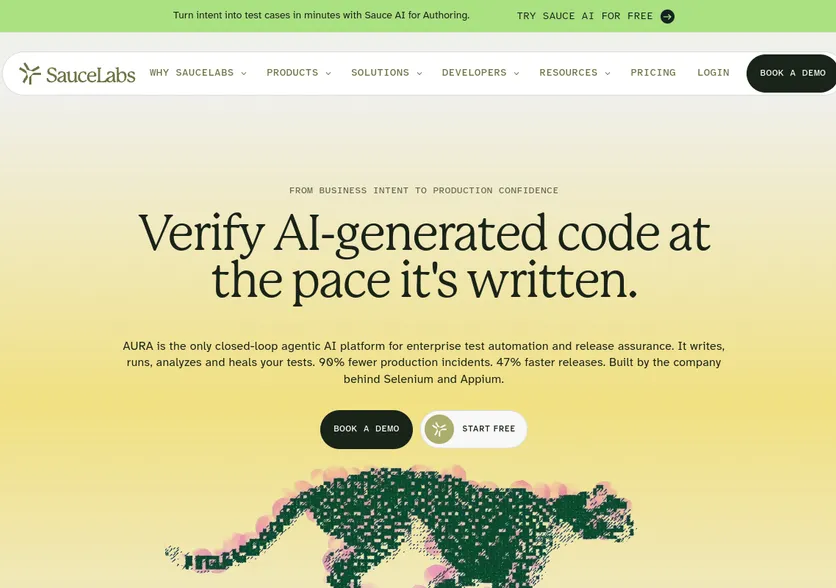
Sauce Labs is the oldest cross-browser testing platform and the strongest on compliance, with deep analytics and error reporting built into every plan. This Sauce Labs Live Testing plan costs $39 a month billed annually for manual testing. It is the pick when the startup sells into regulated buyers and needs certifications and audit-ready reporting from day one.
What we like
- Strong compliance certifications on the pricing page
- Unlimited users and testing minutes
- Deep analytics and error reporting
Watch out for
- Live plan covers manual testing only
- Automation starts at $149 a month
How to try it
- Open the Sauce Labs pricing page and start the trial
- Run a live test on a desktop browser
- Turn on analytics to track failures across runs
4. TestRail
Best for: QA teams that want the category-standard test case management tool
Paid tool Starting price: $39/user/month · Professional $39 per user a month billed annually; Essentials $22 a month for up to 5 users; Enterprise $78 a month billed annually
Free plan: 30-day free trial
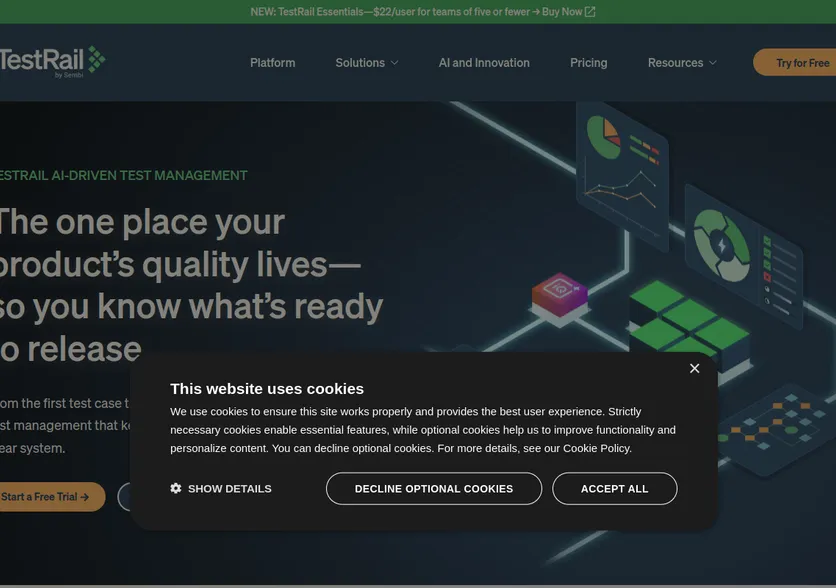
TestRail is the test management tool most QA teams already know, with test cases, runs, milestones and reporting in one mature system. This TestRail Professional plan costs $39 per user a month billed annually and adds the reporting and integrations a growing team needs. It fits a startup whose test cases have outgrown spreadsheets and need one system of record.
What we like
- Most widely adopted test management tool
- Deepest integration ecosystem
- AI test generation included on every plan
Watch out for
- No free plan, trial only
- No viewer or read-only seats
How to try it
- Open the TestRail pricing page and start the trial
- Import test cases from the spreadsheet
- Create the first test run and assign it to the team
5. Qase
Best for: Modern teams that want clean test management with AI test creation
Paid tool Starting price: $35/user/month · Teams $35 per user a month billed annually ($42 billed monthly); free plan available; Enterprise by quote
Free plan: Free plan
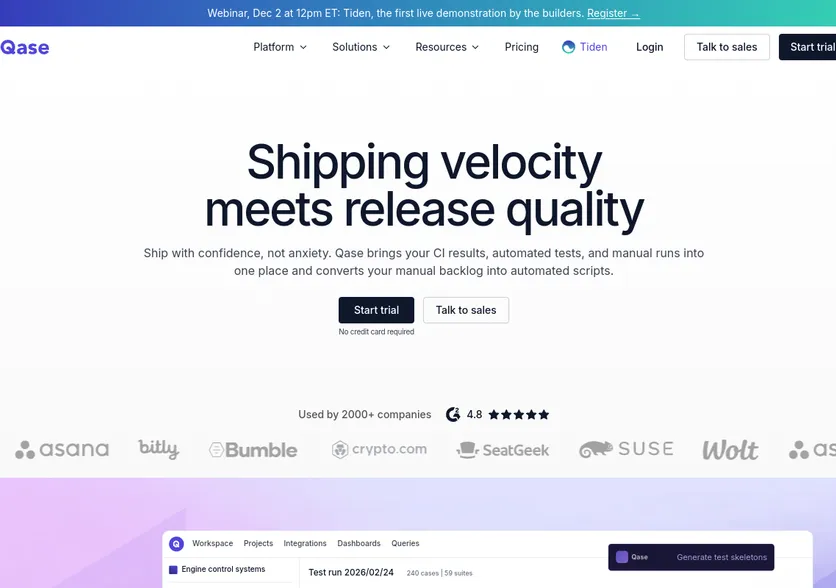
Qase is the modern standalone test management option, with a genuinely usable free plan, published per-user pricing and AI test creation built in. This Qase Teams plan costs $35 per user a month billed annually and includes 2,000 AI credits a month. It is the pick when the team wants a fresh interface, an API-first design and a price that stays transparent as seats are added.
What we like
- Free plan for small teams
- AI test creation included on Teams
- API-first with an MCP server
Watch out for
- AI credits cap at 2,000 a month
- Enterprise pricing needs a quote
How to try it
- Open the Qase pricing page and start the free plan
- Import test cases or generate them with AI
- Connect the CI pipeline to pull in automated results
6. Testmo
Best for: Small teams that want manual and automated results in one flat plan
Paid tool Starting price: $59/month · Team $59 a month with 5 users; Business $249 a month with 15 users; Enterprise $599 a month with 25 users; 15% off billed annually
Free plan: Free trial
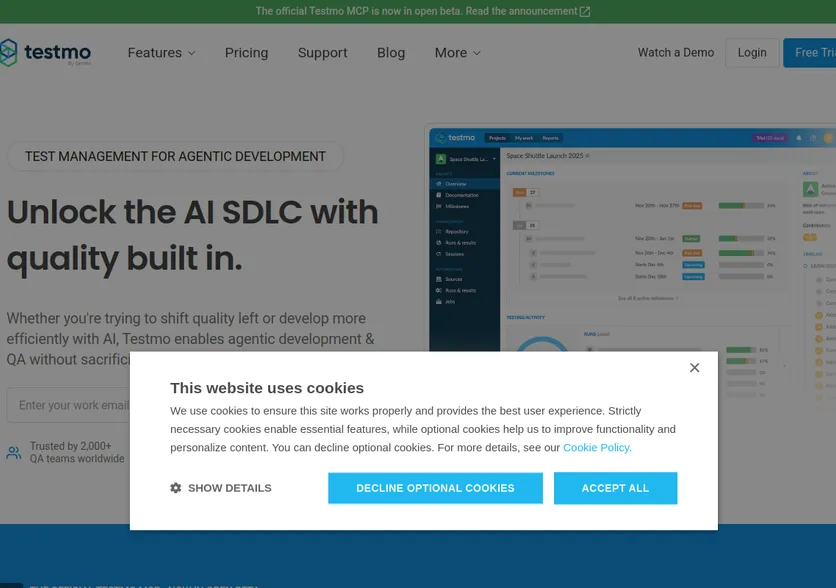
Testmo puts test cases, runs and automated results side by side, priced per team rather than per seat, which keeps the bill predictable as the team grows. This Testmo Team plan costs $59 a month with 5 users included and unlimited projects, cases and runs. It fits a startup that wants one flat number on the invoice instead of a per-seat meter that climbs with every hire.
What we like
- Flat per-team pricing, not per seat
- Manual and automated results together
- Unlimited projects and cases
Watch out for
- Users come in fixed blocks
- Same owner as TestRail and Xray
How to try it
- Open the Testmo pricing page and start the trial
- Create the first project and import test cases
- Connect automation results to the same runs
7. PractiTest
Best for: Teams that want end-to-end test management with regional data centers
Paid tool Starting price: $47/user/month · Team $47 per user a month billed annually (10-tester pack $5,640 for 12 months); Corporate by quote
Free plan: Free trial
PractiTest is end-to-end test management that keeps requirements, tests, runs and issues in one place, hosted in US, EU or AU data centers. This PractiTest Team plan costs $47 per user a month billed annually and includes AI features on every plan. It is the pick when traceability matters, because every test links back to the requirement it proves.
What we like
- Full traceability from requirement to result
- Regional data centers in US, EU and AU
- AI features included on every plan
Watch out for
- 10-license minimum on Corporate
- No free plan, trial only
How to try it
- Open the PractiTest pricing page and start the trial
- Build the requirements tree for the release
- Link test cases to requirements and run the suite
Prices above were checked on each vendor’s own website on Nov 26, 2026 and can change — the vendor’s page is the final word. Vendor links are editorial: nobody paid to be listed or ranked here. Vendors who want a featured listing can see how it works on our Get listed page.
How to read the price before you commit
Prices on this list run from $15 a month to $47 a user a month, and the billing unit decides the real cost: browser grids bill per parallel session, while test management tools bill per user or per team. A $15 TestMu AI plan looks cheap until the team needs real-device automation at $199 a month, and a $39 TestRail seat looks steep until five testers replace a spreadsheet that nobody trusts. Before paying, count the parallel sessions and the testers separately, then run the free tier or trial against the real suite for a full release cycle, because the first month of usage shows the true bill. Check whether automation, real devices and AI features are included or gated behind a higher tier.
Before you buy
- Count parallel test sessions and testers separately, because grids and management tools bill on different units.
- Confirm whether automation and real-device testing are included or gated behind a higher-priced tier.
- Run the free tier or trial through one full release cycle to see the real usage and the real bill.
- Check the free plan limits: board caps, minutes and session counts decide how long free actually lasts.
- Ask how the price changes when a second parallel session or a sixth tester is added to the account.
Official websites
Official websites of the products reviewed above. Features and prices were checked against these sites when this guide was written, and they can change, so confirm on the vendor site before you buy.
Frequently asked questions
What is the cheapest software testing tool for a startup?
TestMu AI is the cheapest entry here, at $15 a month billed annually for virtual live testing, with a free tier for the first runs. Qase is the cheapest test management pick, with a free plan and Teams at $35 per user a month. The right cheap pick depends on the job: browser testing and test case management are different bills, and most startups need one of each.
Do startups need both a browser grid and test management?
Most do, because the two tools solve different problems. A browser grid such as TestMu AI or BrowserStack runs the tests on real browsers and devices, while a management tool such as Qase or TestRail records the cases, the runs and the results. A team that only has a grid cannot prove what was tested, and a team that only has management cannot run the tests at all.
Can a startup test properly on a free plan?
For a while, yes. TestMu AI has a permanent free tier with automation minutes and real-device sessions, and Qase has a free plan for small teams. Free plans cap minutes, seats or boards, so they work for an early product with a small suite and break when the suite grows. Treat free as a way to prove the tool fits, not as a permanent testing strategy.
How much should a startup budget for testing tools?
A realistic starting budget is $50 to $100 a month: a $15 browser grid plan plus a $35 test management seat, or a $59 flat Testmo team plan for five users. Real-device automation is the cost that surprises teams, jumping to $149 to $199 a month on the grids, so budget for it separately and only when the product ships to real phones.
Which tool is best for a startup with no dedicated QA hire?
TestMu AI is the best pick for a team with no QA hire: live testing from $15 a month, a free tier, and no setup beyond picking a browser. Qase is the companion pick for organizing cases, with a free plan and AI test creation that drafts cases from requirements. Together they give a developer-led team real coverage without a full-time tester.
Still testing in your head? Try free developer tools on Toolsvine right in your browser.
Browse Developer Tools tools